
A quoted “99% IR rejection” is not enough to select automotive window film. Band, test method and specimen determine what the figure describes. This guide compares multi-layer and single-layer sputtered films, ceramic examples and PDLC; these four comparisons are not a complete catalog taxonomy. Verify heat, optics, signal behavior and durability on the actual product.
For purchasing, start by confirming the actual construction and test basis before comparing percentages. Construction helps frame questions but does not rank all products. Films from different routes can perform differently under the same stated percentage. Compare compatible reports, samples and the intended vehicle/glazing configuration.
A comparison of four routes
The table gives construction questions and possible trade-offs, not guaranteed route-wide strengths. Confirm actual chemistry, layer design and measured performance. A ceramic category does not identify the composition of CHISI Type IR.
| Technology | Construction to confirm | Potential feature to evaluate | Trade-off to assess |
|---|---|---|---|
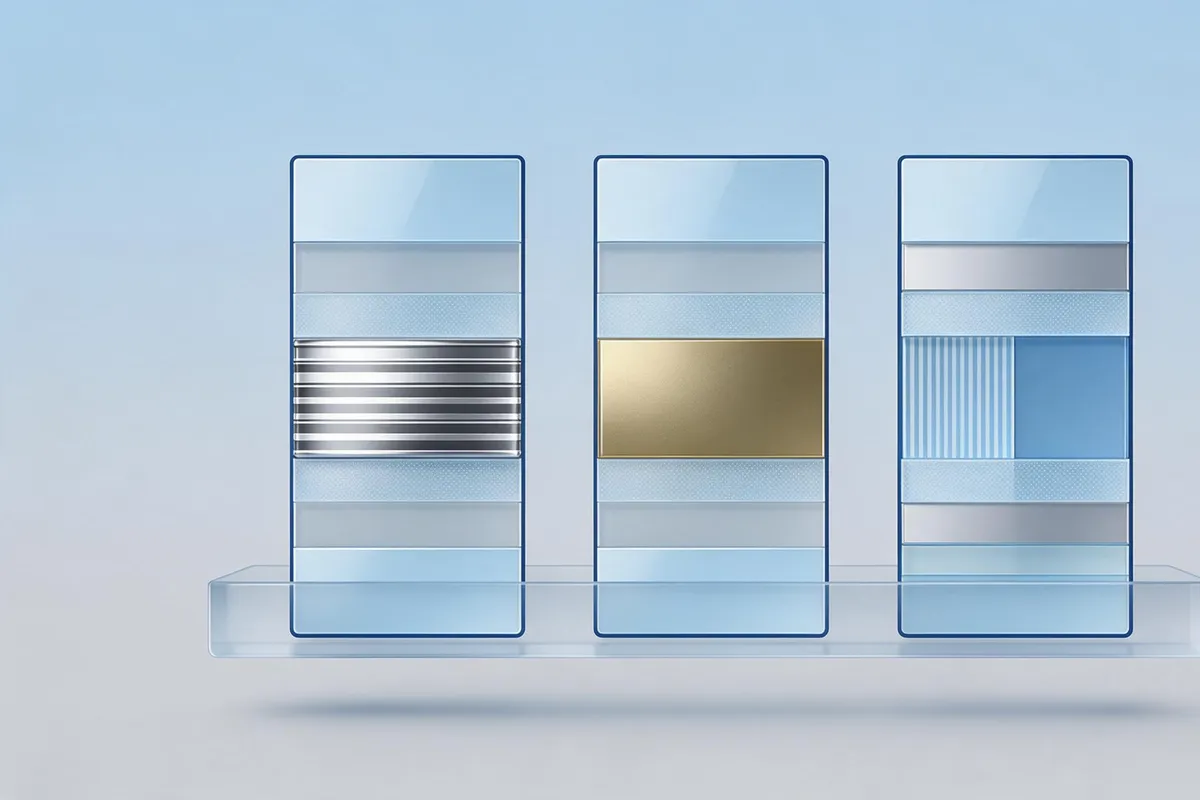
| Multi-layer magnetron sputtering | Multiple deposited functional layers; verify materials rather than assume every layer is a noble metal | Heat-control and optical-selectivity data for the actual stack | Cost and any signal effect, measured in the intended configuration |
| Single-layer magnetron sputtering | The specified sputtered layer; request its material and construction | Heat-control performance and actual quoted cost | Compare selectivity under equivalent test conditions, not layer count alone |
| Ceramic-film examples | Evaluate the complete film and glazing assembly. Match the glass, film model, viewing conditions and any sensors or heating elements used on the vehicle. | Heat, clarity and signal performance must be verified for the product | Confirm materials, layers and the actual production route without inferring confidential composition |
| PDLC switchable film | Polymer-dispersed liquid crystal system with conductive layers | Switchable scattering / privacy appearance, subject to lighting and configuration | Power supply, switching durability, haze and project cost |
Multi-layer and single-layer sputtering
Magnetron sputtering transfers target material onto a substrate in vacuum; the technique can involve different metals or compounds. Optical behavior depends on materials and layer design, not simply “more layers.” Confirm the actual stack and how selectivity is defined. Do not treat a single-layer label as proof of lower cost or inferior heat control.
A distributor may evaluate more than one construction for different use cases. Explain the documented product differences and quote the actual layer specification; do not assign premium or volume status from the word “sputtered” alone.
Ceramic films and signal verification
“Ceramic” is a category, not proof of TiN, a vacuum process or a particular formulation. Its composition is not inferred here. For signals, verify phone, GPS and ETC behavior in the actual vehicle; no universal zero-interference guarantee is made.
Nonmetallic construction may be relevant to signal-sensitive applications, but no category label proves every radio service unaffected. If connectivity matters, confirm the layer structure and test relevant devices under representative conditions. Keep such checks separate from heat and optical reports.
PDLC switchable film
For the conventional PDLC arrangement discussed here, power OFF gives a scattering, frosted appearance and power ON a more transparent state. “Clear” is not haze-free, and frosted does not mean zero light transmission or guaranteed privacy in every lighting condition. Evaluate sunroof, partition or interior applications for the actual film/glass assembly and intended use.
Check supply and wiring requirements, switching durability, and on-state haze under stated lighting and viewing angles. A showroom impression does not establish suitability for every vehicle position. Confirm the intended location and glazing requirements with the supplier and project team.
Reading window-film specifications
Read these four metrics with the measurement method, spectral basis and specimen configuration.
| Metric | Meaning | What to confirm |
|---|---|---|
| VLT: visible light transmission | Reported visible-light transmission under the stated method | Spectral weighting, method, glass/film configuration and measurement conditions |
| IR rejection | Rejection within the specified infrared band; not total solar performance | Band, definition, weighting and whether the specimen is film alone or a glass assembly |
| TSER: total solar energy rejected | Total-solar rejection reported for the specified specimen and method | Compare only with compatible glass, method and boundary conditions |
| UV rejection | Ultraviolet rejection under the specified band and method | UV range, specimen, method and construction; do not infer a mechanism from the percentage |
TSER addresses a broader solar-energy basis than a narrow-band IR figure, but is comparable only when method, glazing and conditions agree. Request both the metric definition and report. Do not treat any one percentage as proof of cabin temperature, air-conditioning savings or universal heat superiority.
Match product evidence to the vehicle and market
Consider climate, target glazing, desired VLT and connectivity needs together. Do not assume multi-layer metal films always outperform others in heat or that ceramic films guarantee signal reliability. Compare the actual models under compatible conditions and confirm relevant devices in the vehicle.
Fleet projects may also prioritize quoted cost, usable roll width and installation consistency. Verify rather than presume the best volume route. Evaluate PDLC primarily for the required switching/privacy function, while separately checking any claimed heat-control data and actual glazing compatibility.
A portfolio can include two or three documented routes where demand supports them, but this is not a required product count. Explain intended uses, actual specifications and conditions rather than assigning every route one fixed buyer or one headline heat number.
Verification before ordering
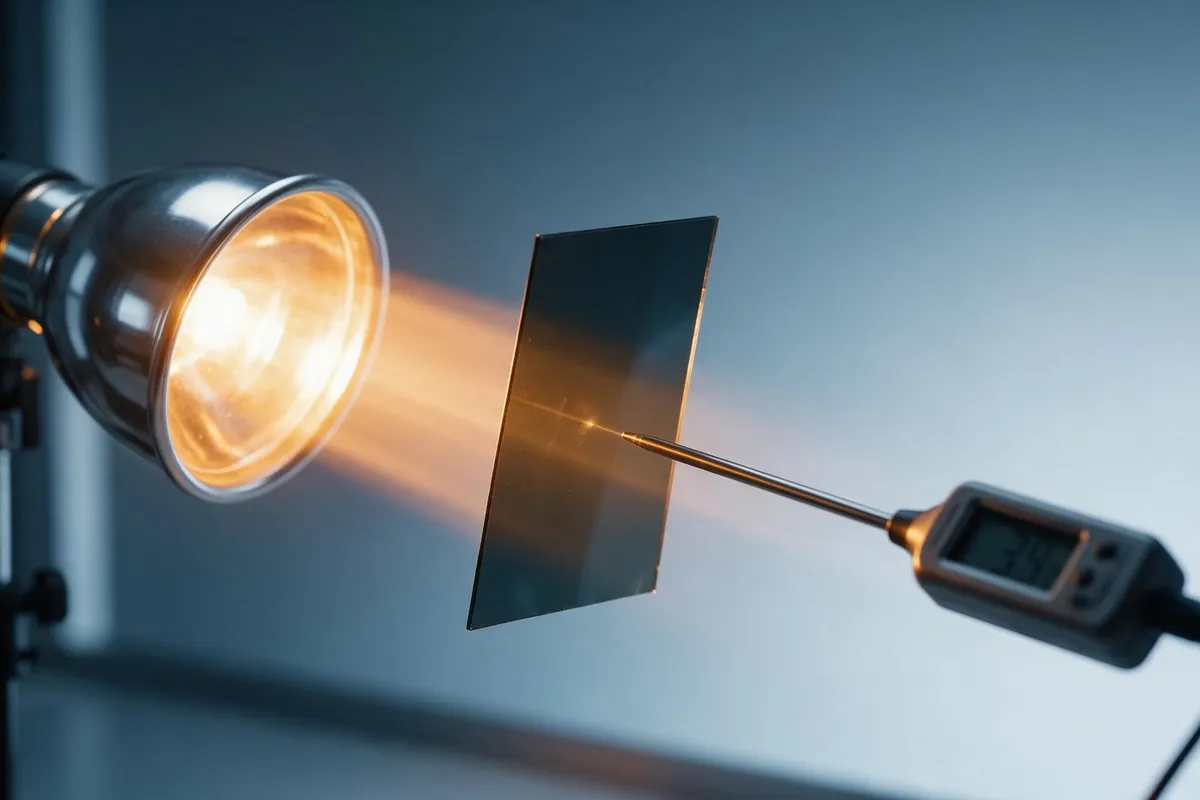
Request a report identifying method, specimen, glazing and instrument. A controlled heat-lamp demonstration may help compare that setup, but is not a standardized solar-performance or cabin-temperature test. Record lamp, geometry, samples, timing and sensors. Where needed, check phone, GPS or transponder behavior separately in the actual vehicle.
Buyer verification checklist
| No. | Item | Evidence to request |
|---|---|---|
| 1 | Actual construction | Materials, layer structure and documented production route |
| 2 | Heat-control data | TSER and IR definitions, methods and actual film/glass specimen |
| 3 | Signal behavior | Relevant phone, GPS or transponder checks in the intended vehicle |
| 4 | Optical quality | Haze and VLT with specimen and measurement conditions |
| 5 | Durability and warranty | Applicable weathering report and model-specific warranty terms |
| 6 | Roll format | Actual width, length and splice policy; no uniform dimensions across all products |
Frequently asked questions
Which film offers the best heat control?
No route label alone identifies the best product. Compare relevant TSER, IR, VLT and optical results on equivalent glazing and methods, alongside cost and signal checks. Layer count or “ceramic” wording is not a universal performance ranking.
Does ceramic mean no signal interference?
No universal guarantee follows from the category. Verify the actual construction and relevant devices in the vehicle. CHISI Type IR is confirmed as double-layer nano-ceramic and metal-free, but that does not establish zero interference for every service or vehicle configuration.
What does TSER tell a buyer?
TSER reports total solar energy rejected under the specified method and specimen configuration. It uses a broader solar basis than a selected IR band, but comparisons still need compatible glazing and conditions. It does not by itself prove cabin cooling or energy savings.
Is PDLC mainly a heat-control film?
Evaluate the required switching and privacy function first, then supply, wiring, on-state haze and switching durability. Any thermal claim needs its own report for the actual assembly; the PDLC label alone does not establish heat rejection or universal installation suitability.
How should samples be evaluated before purchase?
Request applicable reports with method, glazing and specimen details. Use a controlled demonstration only for its stated setup; do not substitute it for standardized solar data. Check relevant signals in the actual vehicle and document conditions and limitations.
Can installation affect performance?
Contamination, incomplete adhesive wet-out or lifted edges can affect the finished installation. Follow the product method and inspect appearance and edges. Assess training, product compatibility and warranty scope together; do not infer a universal service-life ranking from installation labels alone.
A practical selection rule
Use construction to frame the inquiry, then qualify the actual product through comparable reports and relevant trials. Do not assign a universal heat, cost or signal ranking to a route. Demonstrations and device checks are supporting observations, not certification or a complete solar-performance report.
Suggested next step
To review actual products, see the window-film range, then request model-specific samples and available reports through the contact page. For OEM projects, the OEM/ODM catalog sets out options to discuss and confirm for the project.
References
- CHISI window-film documents: source route names RS, MS, CS and AS, formats and data; verify the current model. Type IR follows the owner-confirmed double-layer nano-ceramic, metal-free description, not a generic sputtering example.
- Relevant automotive-glazing measurement standards: confirm applicable version, method and specimen; no full-standard compliance is established here.
- General process and metric references do not identify a CHISI formulation or verify its product results; no study or measured values are invented.