
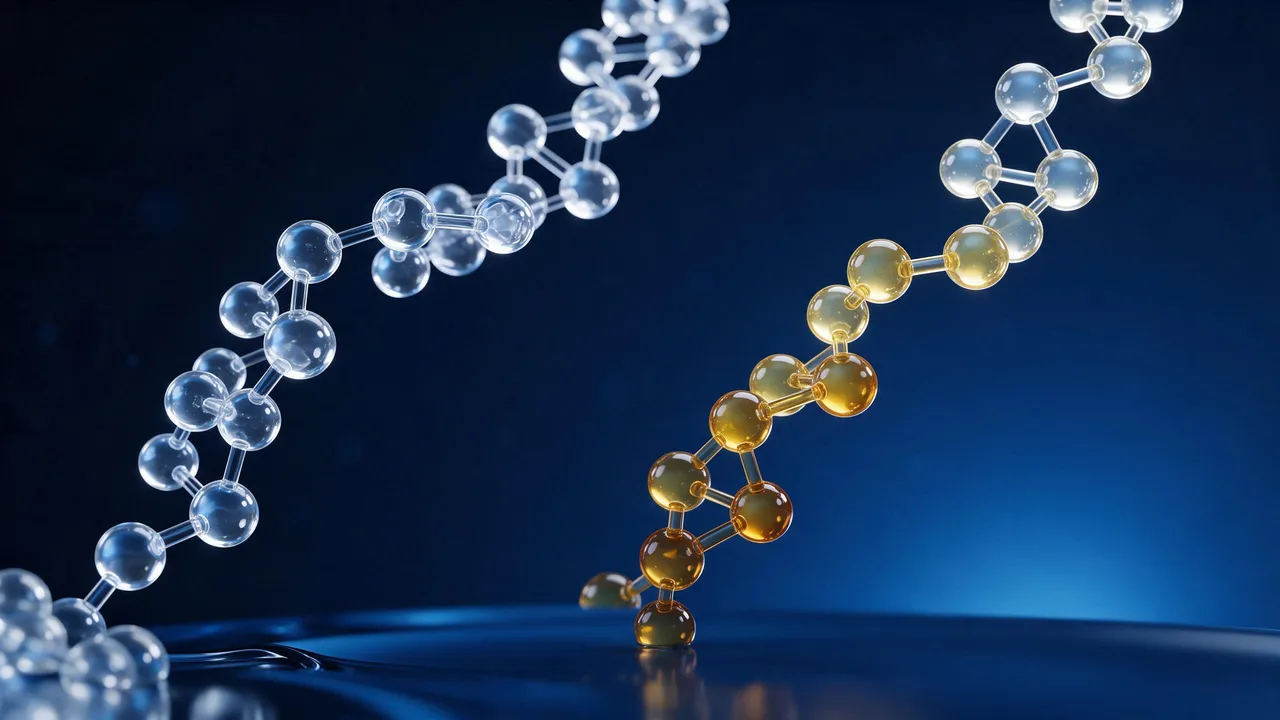
PPF yellowing is a color-stability issue involving the TPU substrate, topcoat, adhesive and exposure. Aromatic polyurethane can form colored degradation products under UV through formulation-dependent reactions. Non-aromatic aliphatic and cycloaliphatic routes are used to improve light stability, but they do not guarantee that a complete film never discolors. Polyol chemistry, additives and layer interfaces also matter.
This article explains the mechanism in plain terms, shows how yellowing is measured, and gives buyers a way to read yellowing data without being misled by a single number. It draws on polyurethane photochemistry and the material routes and aging data recorded in the CHISI knowledge base.
What yellowing is measured as
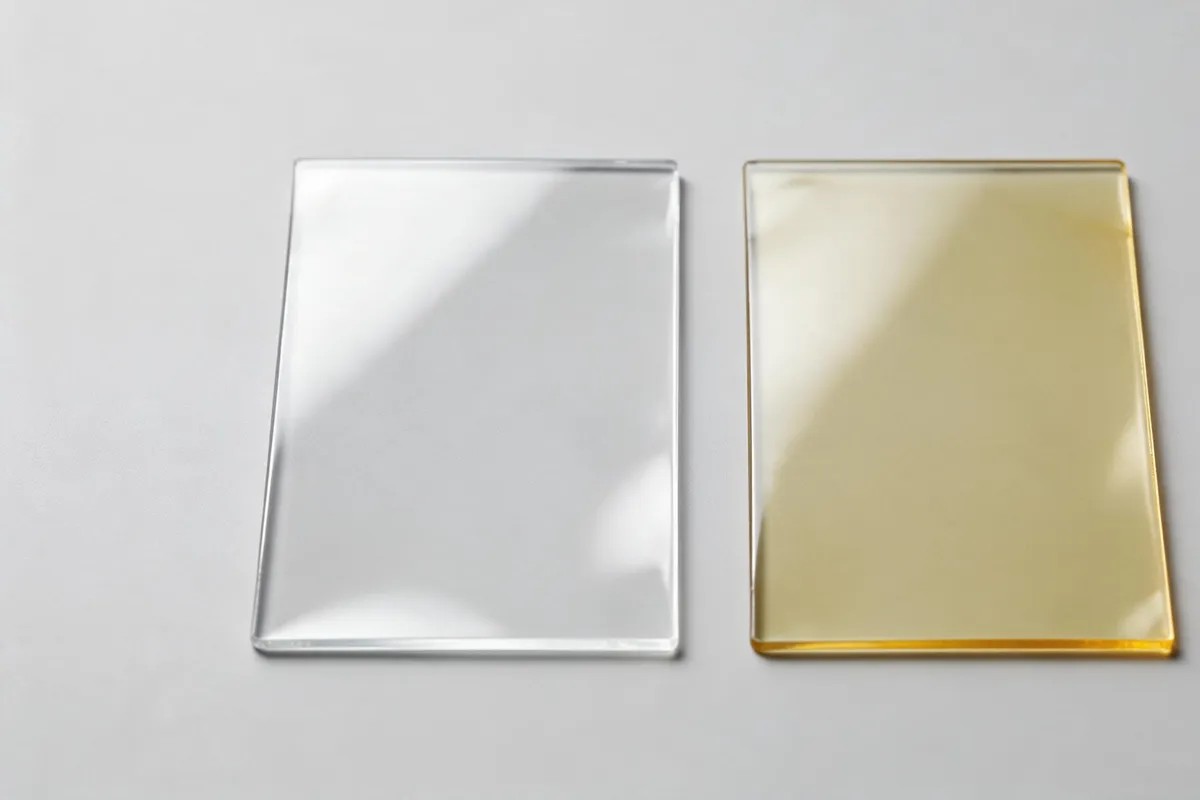
Yellowing is a color shift, not a change in transparency alone. It is reported as a color difference: ΔE for overall color change and Δb for the yellow-blue axis specifically. A positive Δb means the sample has moved toward yellow. Lower values mean less shift.
The number is meaningless without the test condition. "Δb < 1.0" after 1,500 hours of xenon exposure describes a different result from the same figure after 500 hours. Always pair the value with the method and the hours.
Aromatic TPU and the benzene ring problem
Aromatic TPU is built with diisocyanates such as MDI or TDI, which contain a benzene ring. That ring is what gives the material useful mechanical properties at low cost — and it is also the weak point under UV.
Ultraviolet exposure can create colored degradation products in aromatic polyurethane through formulation-dependent photochemical reactions. The resulting appearance change depends on the resin, additives and exposure. Do not infer a single degradation mechanism or a service-life result from the presence of an aromatic ring alone.
An aromatic TPU film may start clear and become amber during weathering. An observed color shift cannot be attributed solely to the backbone from appearance: distinguish resin aging from adhesive staining, coating changes or contamination.
Aliphatic and cycloaliphatic TPU routes
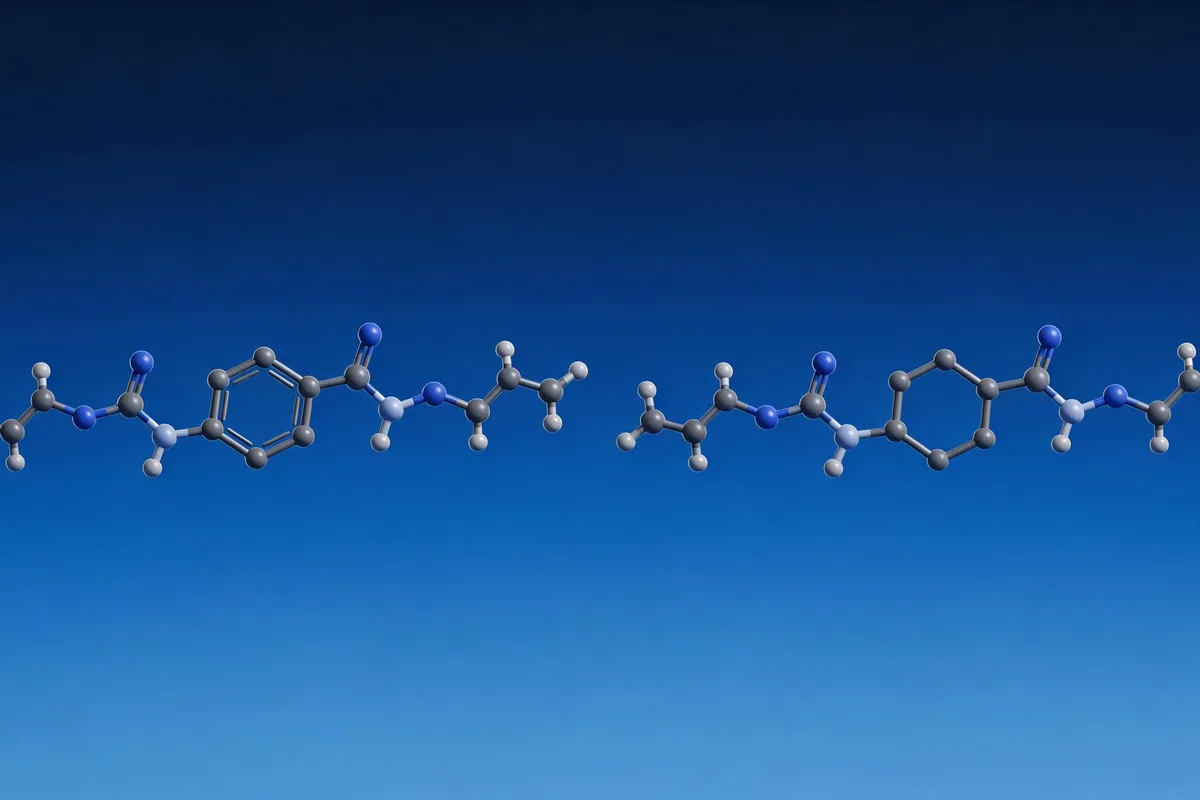
Aliphatic and cycloaliphatic are related but distinct descriptions. HDI is an acyclic aliphatic diisocyanate; H12MDI and IPDI are cycloaliphatic examples. These non-aromatic routes are used for light-stable polyurethane formulations, but the complete film still needs an appropriate weathering evaluation. A non-aromatic resin label does not mean the film can never discolor.
Non-aromatic aliphatic and cycloaliphatic routes are considered when light stability is a priority in transparent PPF. Select the complete construction from weathering data rather than a material label alone; topcoats may reduce exposure but do not change backbone chemistry.
The material route affects cost. Compare quotations for the selected grade and construction against documented clarity and service requirements, without treating price as proof of durability.
Why the polyol matters too
The isocyanate route and polyol system influence different aspects of TPU. Polycaprolactone is a polyester polyol; the generic name alone does not establish hydrolysis immunity. Confirm the actual grade and compare moisture, heat and color-stability results under stated conditions.
The practical implication is that "alicyclic TPU" alone is not the full specification. The polyol system belongs in the same conversation, because a film that resists yellowing but hydrolyzes will still fail — just in a different way.
What the topcoat contributes
Depending on the formulation, a topcoat may use UV absorbers and cross-linked networks to limit substrate exposure. The coating name alone does not prove UV protection. Nanocomposite coatings may also improve surface hardness and stain resistance, supporting appearance.
A topcoat may reduce UV exposure, but cannot make the substrate immune to aging or change its chemistry. Similar coating descriptions can therefore conceal different aging behavior; test the complete system.
How environment and installation change the rate
Identical films can age differently with cumulative UV dose, surface temperature and contamination. Outdoor parking, altitude, climate and paint color change exposure. These factors alone do not predict a number of years before yellowing; relate the tests to the intended market.
Trapped moisture, dust or residue can cause localized discoloration. Edge lifting may expose interfaces to more UV and moisture. A uniform or localized change can guide investigation but does not prove the cause by itself. Distinguish material aging, installation and contamination using the product record and controlled inspections.
For a distributor, the warranty discussion should include usage conditions, not just years. A hypothetical ten-year warranty under extreme UV has different conditions from one in a temperate market. Test data should address the intended market; this example does not define a CHISI product warranty.
How yellowing is tested
Three accelerated methods are common, and each stresses the film differently.
| Method | What it simulates | What to ask |
|---|---|---|
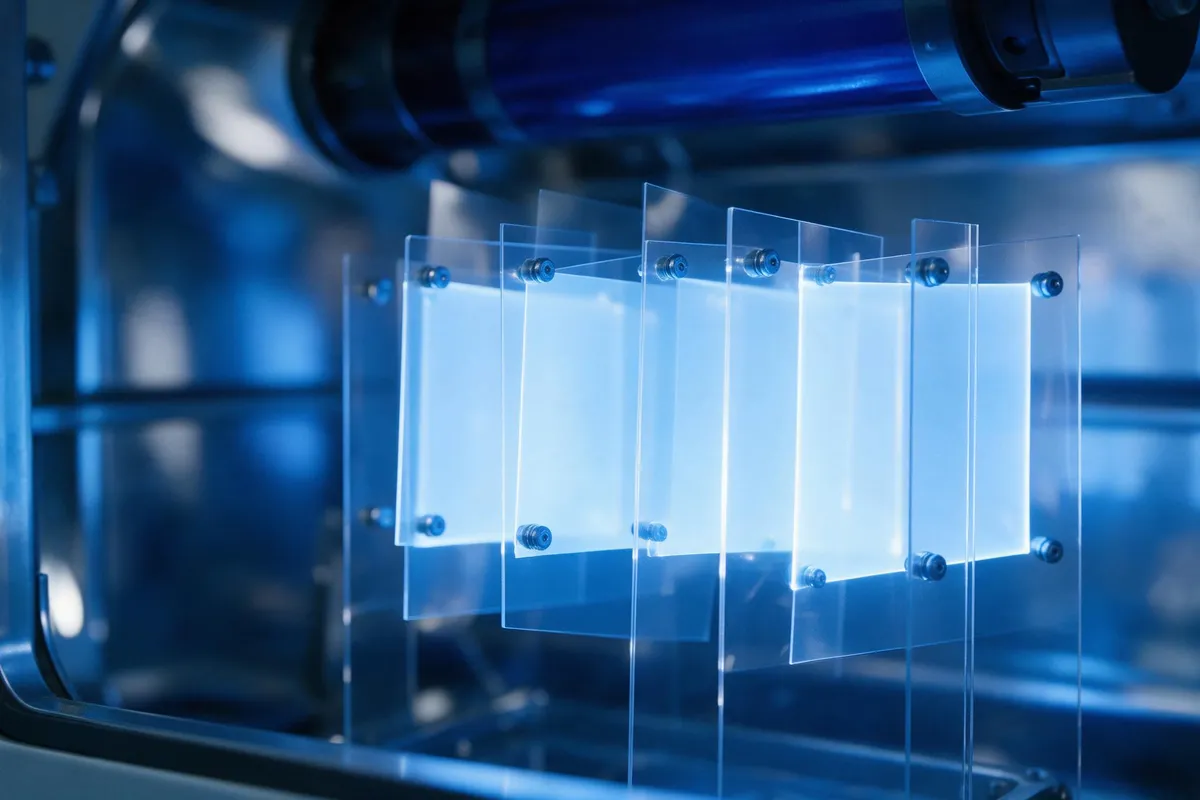
| Xenon arc | Simulated sunlight, including visible and UV according to filters and settings | Irradiance, black-panel temperature, hours |
| QUV | UV plus condensation cycling | Cycle profile, irradiance, hours |
| UV aging | UV exposure without the full solar spectrum | Wavelength band, intensity, hours |
The methods stress different failure modes; request tests relevant to the risks. A difference between xenon and QUV can involve several factors, including moisture, but cycles, specimens and criteria must be reviewed before diagnosing a cause.
Reading yellowing data
It is neither a universal limit nor a report validating the target product. Confirm the model, construction, cycle, method and duration before comparison.
| Test | Reference result | Interpretation |
|---|---|---|
| Xenon aging | Δb < 0.6 at 1,500 h | Low color shift in this source xenon reference; not an outdoor-life equivalence |
| QUV aging | Δb < 1.4 at 2,000 h | Source UV–moisture reference; the cycle must be identified |
| UV aging | Δb < 1.3 at 2,000 h | Source UV exposure reference; spectrum and dose must be identified |
| Source color-difference band | ΔE*ab < 1.5–2.5 | Compare finished-film performance before and after a defined exposure. Record the exposure, sample construction and measured change together. |
A Δb of 0.8 at 2,000 hours and 0.5 at 800 hours cannot be ranked from those figures alone. Compare identical exposure methods, cycles, specimens and durations, or use a validated correlation. Do not normalize durations with a simple ratio.
Common myths about PPF yellowing
- "All TPU eventually turns yellow." Polymers age. Non-aromatic routes may reduce risks associated with aromatic chemistry, but do not remove the need to evaluate the complete film’s color stability.
- "A thicker coating prevents yellowing." A coating may reduce UV exposure; it does not change substrate chemistry.
- "Yellowing is caused by the adhesive." Adhesive staining or haze and substrate or coating color changes can all contribute. Identify the affected layer through controlled tests, not the film label alone.
- "A single Δb number proves performance." Without method and hours, the number cannot be compared to anything.
A buyer's verification checklist
| # | Checklist item | Evidence to request |
|---|---|---|
| 1 | Diisocyanate type | Isocyanate type: HDI, H12MDI/IPDI or aromatic grade, stated explicitly |
| 2 | Polyol system | Polycaprolactone or other, with hydrolysis data |
| 3 | Yellowing data | Δb or ΔE with method and hours |
| 4 | Multiple test methods | Xenon plus QUV or UV results |
| 5 | Topcoat UV protection | UV absorber or coating structure description |
| 6 | Warranty alignment | Warranty terms aligned with model-level evidence and market conditions |
Frequently asked questions
Why does PPF turn yellow?
Exposure can form colored degradation products, especially in aromatic polyurethanes. The formulation and complete layer system influence the result. Non-aromatic routes aim for improved light stability, not a guarantee that the finished film never discolors.
Is alicyclic TPU always clear?
These routes are used for light-stable formulations, but still age. The polyol system, topcoat, adhesive and environmental exposure affect long-term clarity.
What Δb value is acceptable?
Agree a product-specific color-stability tolerance rather than adopting a universal numerical band. Record the exposure method, duration, specimen, color-difference calculation and acceptance criteria in the specification.
Does a ceramic or graphene coating stop yellowing?
A coating may reduce UV exposure and improve surface durability, but does not change substrate chemistry. A ceramic or graphene label alone proves neither color stability nor warranty life.
How can I compare yellowing claims from two suppliers?
Request the full report and compare Δb using the same method, cycle, specimen and duration. Do not extrapolate linearly between durations or compare headline numbers alone.
Final rule
Treat yellowing as a complete-system color-stability question. Review the non-aromatic isocyanate route, polyol, topcoat, adhesive and usage conditions, then require data identified by method and hours. Select from model-level evidence, not a chemical description alone.
Suggested next step
To compare material routes on real products, review the Type R PPF and Type B PPF ranges, then request the aging reports for the target product. For a broader evaluation sequence, see how to choose a PPF manufacturer.
References
- CHISI material documentation: cycloaliphatic TPU routes, polycaprolactone polyol and source xenon, QUV and UV reference data.
- Industry discussions on TPU yellowing mechanisms and coating evolution, CMPE PPF category (brand-agnostic).
- Scientific background: polyurethane photochemistry and color-difference measurement; not a cited product test result.
Method and material references: Evonik: aliphatic and cycloaliphatic diisocyanates. These explain general principles, not test results for a CHISI product.