
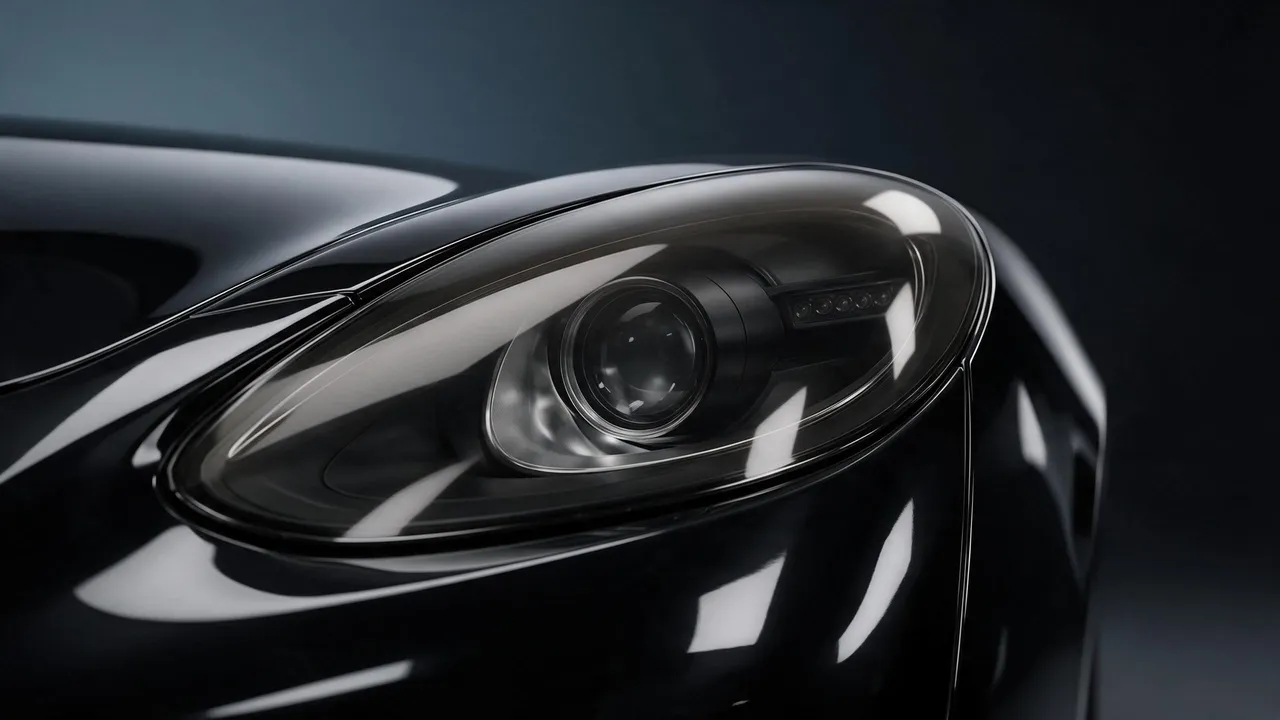
Headlamp lenses and glazed sunroofs need an application-specific assessment rather than automatic use of a body-panel PPF. Consider heat exposure, optical behavior, geometry and the vehicle's requirements. Appearance alone does not establish compatibility, road-use suitability or a protective result.
This procurement guide uses the CHISI Type HL car-light-film and Type SR sunroof-film categories as distinct applications. The new sunroof version selected here comprises SR150 (VLT 70%) and SR150S (VLT 35%). Keep historical SR records separate and do not infer a sunroof construction from a body-film series name.
Why the application matters
Heat exposure, optical requirements and geometry differ by vehicle and surface. Use the following comparison as an assessment framework, not proof of a film's compatibility with every lamp or sunroof.
| Surface | Heat exposure to assess | Optical requirements | Geometry to confirm |
|---|---|---|---|
| Body panel | Ambient conditions and solar exposure | Finish and color, matched to the project | Confirm actual curves and edges |
| Lamp lens | Lamp operation and solar exposure | Light transmission, haze, beam behavior and permitted use | Actual compound curves and recesses |
| Sunroof glazing | Solar exposure of the actual glazing assembly | Transmission, haze, distortion and glazing-system requirements | Actual curvature, size, seals and moving components |
Neither application has one universal temperature or difficulty ranking. Request evidence for the actual lamp or glazing assembly, including its thermal conditions and optical function. A film name alone cannot establish suitability or compliance.
Car-light film: heat and optics
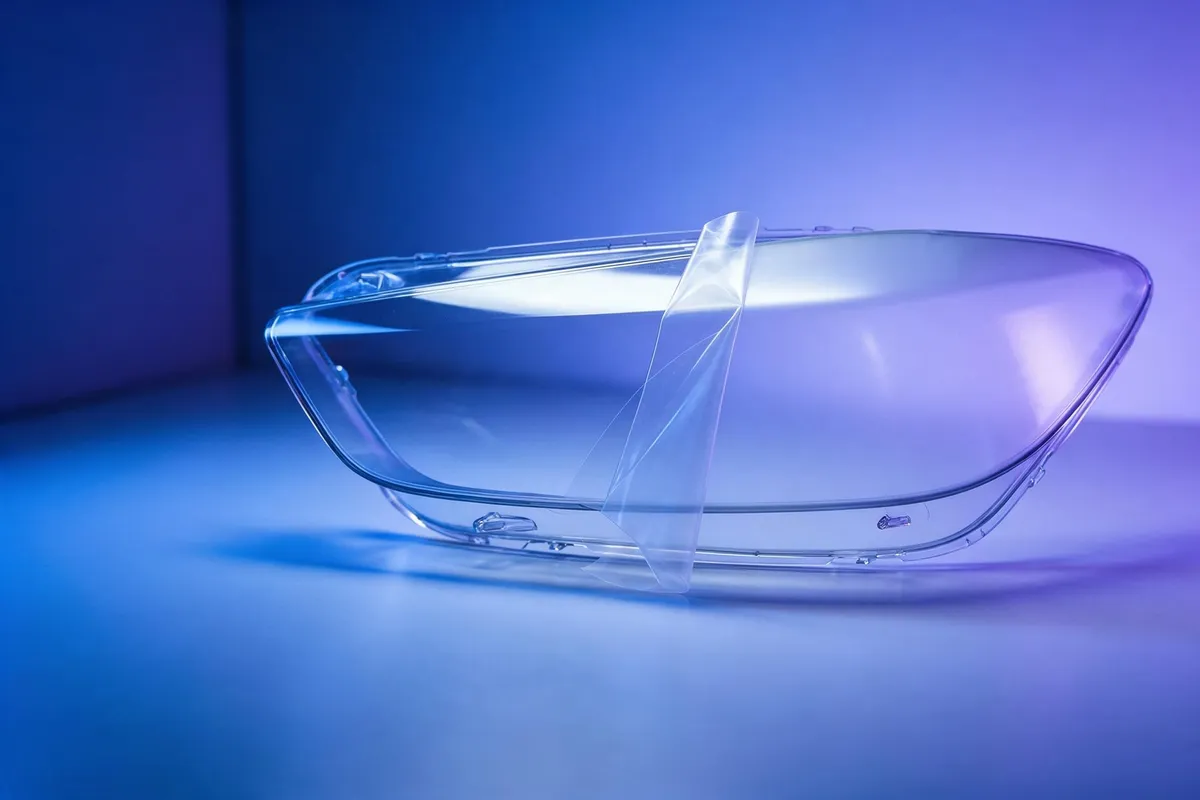
For a light-film order, define the intended lens protection and appearance, then assess light transmission, haze, beam behavior and the intended use. No tint name or generic protection statement establishes road-use permission, full compatibility or protection from every impact.
Confirm the film's permitted heat exposure with the actual lamp, lens material and surface treatment. A product sold for lighting still needs relevant compatibility and optical evidence; do not infer it from a body-film rating or prescribe extra heating without instructions.
Request the VLT for each actual Type HL SKU from its parameter image or confirmed data, not from its color name. Check the intended vehicle and destination-market requirements before supply; this guide supplies no statutory tint threshold or approval for tinted road lighting.
Sunroof film: thermal and glazing assessment
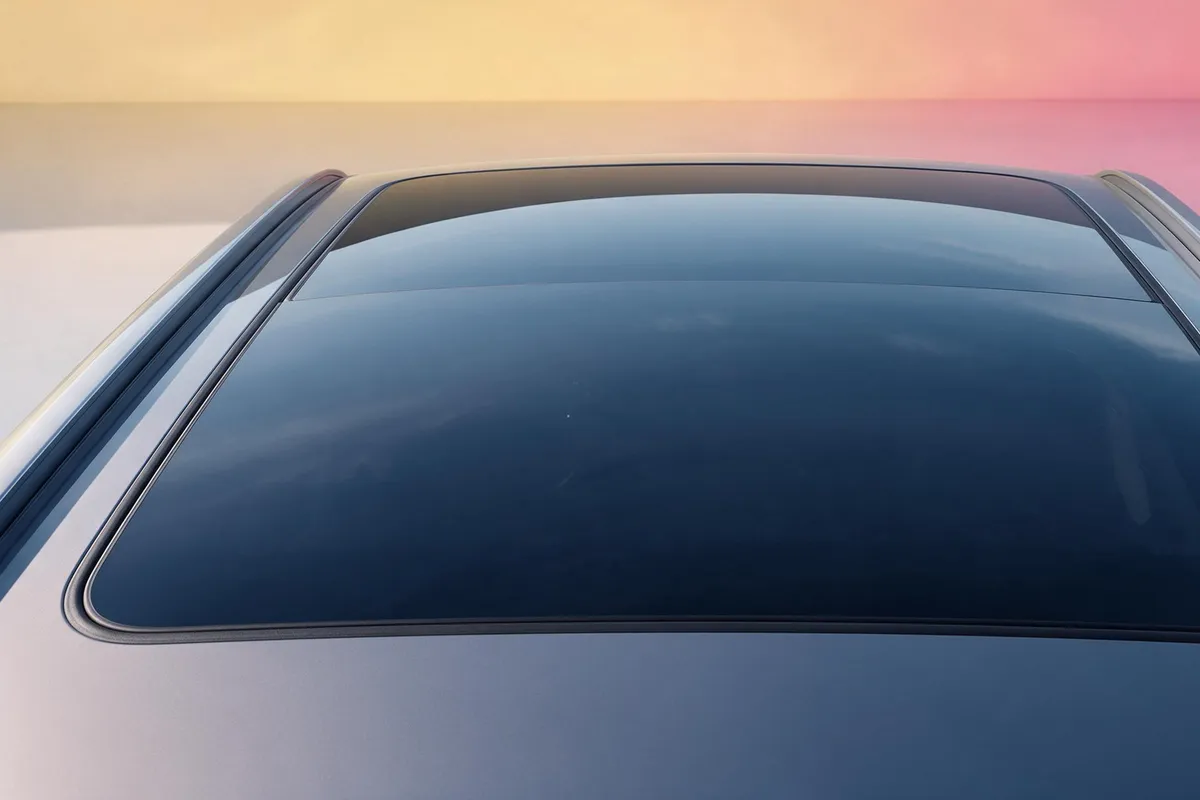
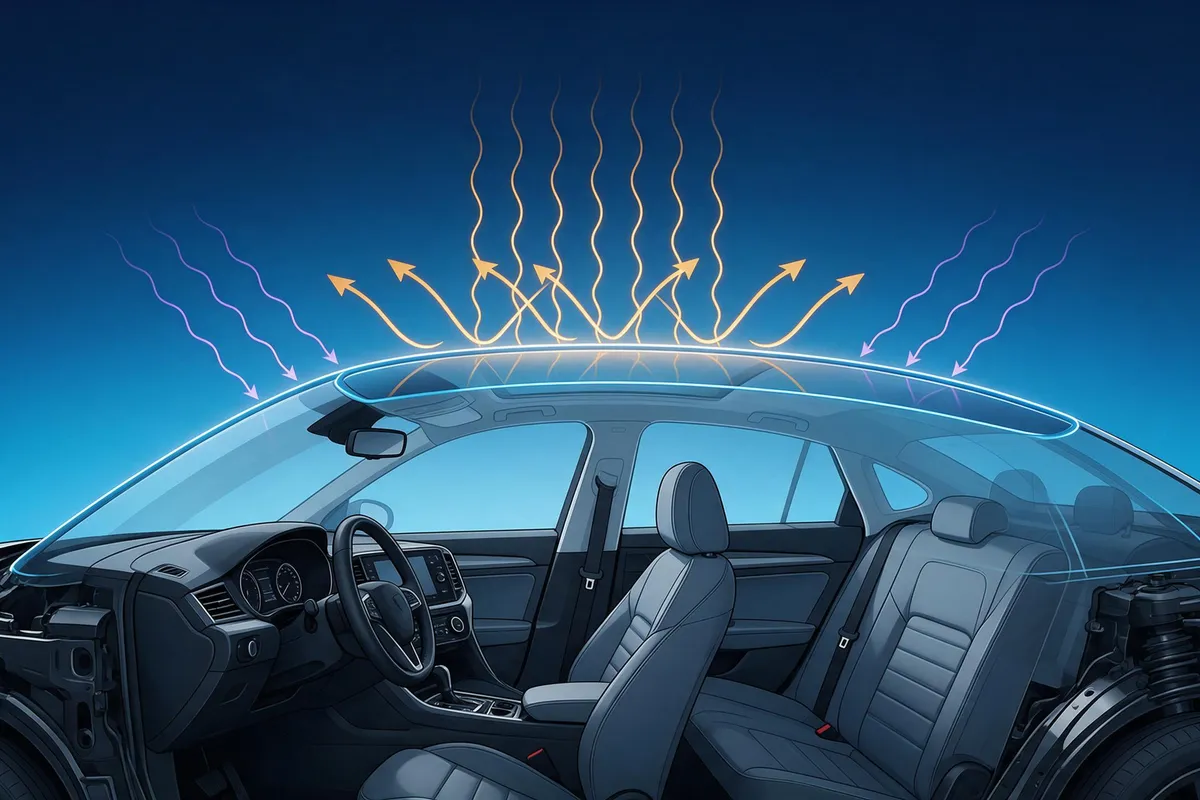
Assess solar performance and visible light on the intended film-and-glass assembly. Glazing construction, installation side and vehicle conditions matter; do not infer cabin temperature or a “highest heat load” ranking from the roof's position alone.
Choose sunroof film by the glazing construction, installation side and optical and solar requirements. Use the specification for the exact SR150 or SR150S version you plan to order.
Compare stated VLT with measured solar-performance data for the same assembly and method. A darker appearance does not by itself prove greater total heat rejection, thermal-stress compatibility or an acceptable cabin result.
Requirements by surface
| Requirement to verify | Car-light film | Sunroof film |
|---|---|---|
| Base material | Current Type HL TPU range: Covestro base, within the confirmed product scope | Use the thickness and measurement basis for the selected SR150 or SR150S version. |
| Heat compatibility | Evidence for the actual lamp and lens | Evidence for the actual glazing, exposure and installation side |
| Clarity / haze | Assess light output and beam behavior after film application | Assess haze and distortion on the actual glass assembly |
| UV-related performance | Request relevant lens/film aging and transmission evidence | State the wavelength range, method and measurement assembly |
| Color / tint options | 11 confirmed Type HL colors; use actual SKU-specific VLT | Confirm actual VLT and glass configuration |
| Impact / fragment retention | Request application-specific impact evidence; not protection from every strike | Require evidence for the actual filmed-glass assembly and failure mode |
| Signals and vehicle systems | Check nearby sensors and systems where relevant; do not assume no effect | Confirm construction and actual reception/system compatibility; “non-metallic” is not a universal guarantee |
Installation assessment
Do not transfer a body-panel procedure automatically to a lens or glazed roof. Confirm film, substrate, vehicle and equipment instructions before planning installation.
Lamp lenses may have compound curves, recesses and surface coatings. Assess fit and optical effects using the approved model-specific method. This guide authorizes no extra heat, relief cutting, stretching limit or lamp removal; those require the relevant product and vehicle instructions.
Sunroof glazing requires assessment of glass configuration, installation side, edges, seals, drainage and moving parts. Do not assume wrapping into a seal channel is permitted or prevents water ingress. Keep vehicle functions and thermal-stress compatibility within the approved application scope.
Planning the product range
Plan headlamp and sunroof film assortments separately. Track vehicle fit, installation time, stock turnover and return reasons for each application.
The confirmed current Type HL TPU range uses Covestro base material and has 11 colors. For all 11 colors, the confirmed formats and stated weights are 30 cm × 15 m: 2.50 kg, and 1.524 m × 15 m: 12.00 kg; no net/gross distinction is added. Confirm each SKU's VLT from its parameter image. Existing body-PPF skills do not establish lamp-film compatibility or remove the need for relevant training.
Sunroof film may be considered alongside window film, but evaluate the actual vehicle and glazing need rather than assuming a higher order value or a universally compatible cabin package. Film construction and performance must be confirmed independently.
Choose roll format from the exact model, panel size and permitted installation detail; do not reduce Type HL to one narrow format. Light, sunroof and body films may have different construction or packaging, so do not assign identical storage conditions from a shared TPU label. For the inventory framework, see PPF shelf life and storage for the distinction between source examples and product-specific instructions.
Purchase-order details
Beyond the product name, define the intended application and the following specification details for the exact model and version.
- Application surface — actual lamp or sunroof assembly, substrate treatment, installation side and vehicle systems involved.
- Color and VLT — SKU-specific data and the required market/vehicle assessment, not permission inferred from a color name.
- Thickness and measurement scope — list the film layers included in the measurement for the exact model.
- Roll format — actual width and length, usable panel coverage, and model-specific cutting and edge requirements.
Purchasing checklist
| # | Item | Evidence to request |
|---|---|---|
| 1 | Intended application | Manufacturer's exact model, substrate and installation scope; not blanket vehicle approval |
| 2 | Heat compatibility | Relevant test object, exposure, duration and acceptance criteria |
| 3 | Clarity and haze | Identify whether data concern film alone or the actual filmed lens/glass assembly |
| 4 | Color / VLT | Actual SKU, measurement method and substrate; do not infer values from shade |
| 5 | UV-related data | Wavelength range, test method, object and conditions |
| 6 | Thickness | Stated unit and layers included, for the exact model |
| 7 | Roll format | Actual width and length; Type HL's two confirmed formats remain distinct |
Frequently asked questions
Can PPF be used on a lamp lens?
Only assess a product for its specified lighting application and actual vehicle. Confirm lens material, surface treatment, heat and optical behavior and intended use. A body-film rating or a “clear” label does not establish compatibility or road-use permission.
Can light film affect light output?
Assess the actual filmed lens, not color or nominal film VLT alone. Clear and tinted films require relevant transmission, haze and beam assessment. Request Type HL SKU-specific data and verify the intended vehicle and market requirements; no universal legal threshold or “minimal effect” guarantee is supplied here.
Is sunroof film the same as window film?
Compare the installation side, glazing compatibility and measured optical and solar properties for the specific sunroof or window film.
Can sunroof film affect phone, GPS or vehicle systems?
Confirm construction and compatibility on the actual vehicle and glazing. Neither a ceramic nor a non-metallic description alone guarantees reception or ADAS/sensor compatibility. Do not transfer Type IR's confirmed double-layer, metal-free ceramic construction to Type SR or another sunroof model without its own evidence.
Why might light film lift at an edge?
Investigate heat exposure, curvature, substrate condition, adhesive behavior and installation records together. Appearance or timing alone does not establish the cause. Use the product's approved assessment and rework guidance; this article does not authorize heating, cutting or removal of the lamp.
What thickness should be specified for a sunroof film?
Use the SR150 or SR150S specification for the thickness, measured layers and optical properties of the version ordered.
Purchasing principle
Specify the actual application, construction and test object. Keep lamp optics, glazing thermal behavior, fragment retention and vehicle-system compatibility as separate evidence questions. A body-panel result is not automatic approval for a lens or sunroof, and a model prefix does not transfer another series' material or warranty.
Next steps for sourcing
For the distinct product categories, review the car-light film range and the sunroof-film rangeand request the relevant model's current data. For broader window-film technology, read window film technology explainedfor further context.
References and evidence limits
- CHISI product records and current owner decisions: confirmed Type HL TPU uses Covestro, 11 colors and the two stated formats/weights. VLT remains SKU-specific. Type SR version differences must not be silently merged; body K/B/R data do not automatically apply to KWS/BWS/RWS or other sunroof identifiers.
- Obtain the requirements for the actual use and destination before a compliance claim; no local legal threshold is invented here.