

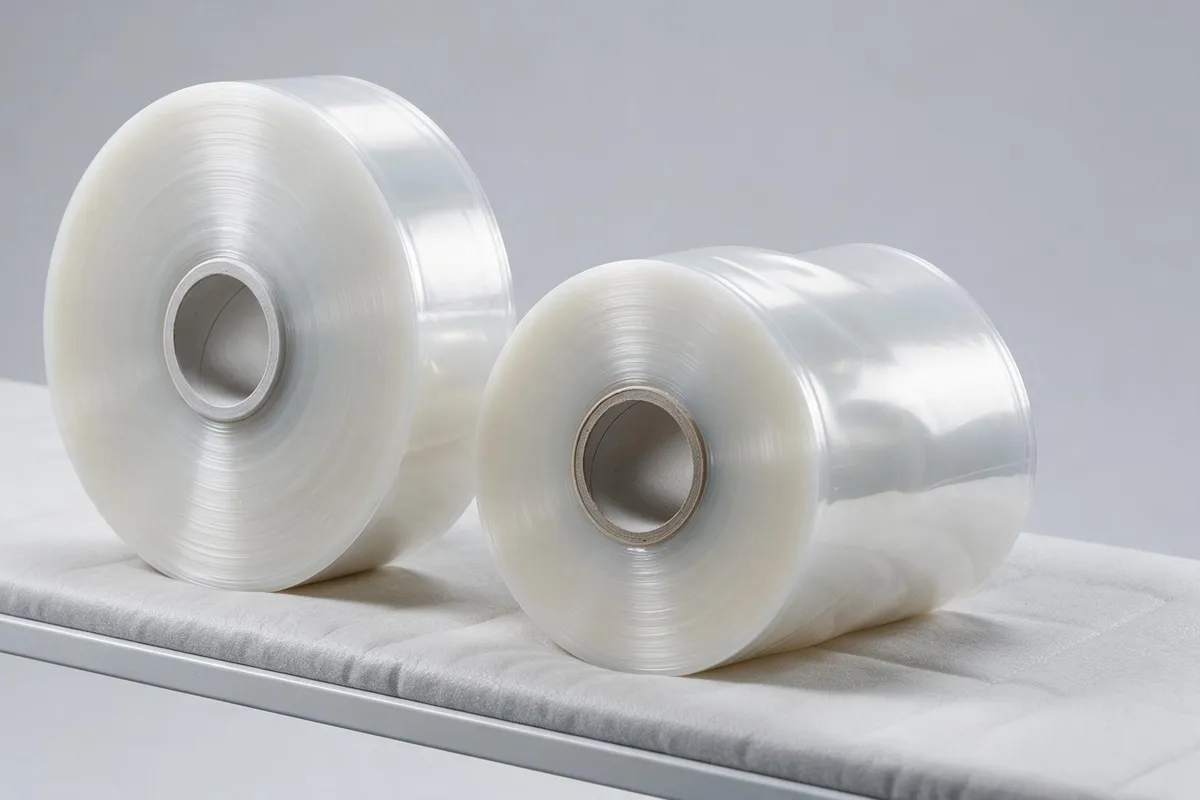
Store unopened PPF rolls in their original packaging at 15–25°C and 45–50% relative humidity. Record the batch, receipt date and model-specific shelf life.
For distributors, brands and installers, this guide separates stored-roll shelf life from service life and warranty. It explains what to monitor, what records to request and how to assess older inventory without creating a universal storage or acceptance rule.
What shelf life means
Shelf life refers to the period specified for a product stored under its stated conditions. It is separate from installed service life and product warranty. The handling of a roll beyond that period depends on the actual specification and assessment; do not infer either safety or danger, or a new warranty exclusion, from the date alone.
Request separate instructions for unopened and opened rolls where the manufacturer defines them. Opening changes exposure to dust, light and the workshop environment, but does not justify inventing one shorter limit for every film.
Four exposure factors
| Factor | Components to assess | Possible observations—not a diagnosis |
|---|---|---|
| UV exposure | Film and adhesive, depending on formulation and exposure | Color change, tack change or surface changes to investigate |
| Heat | Adhesive, liner and roll construction | Transfer, blocking or liner wrinkles to investigate |
| Moisture | Assess the actual TPU formulation, adhesive and packaging; hydrolysis is not universal to all TPU or PCL | Haze or mechanical changes require evidence, not a visual diagnosis of hydrolysis |
| Pressure and deformation | Roll and core geometry | Flat areas, telescoping, wrinkles or edge damage |
Light, heat and moisture effects depend on formulation, dose, time and packaging. Owner-confirmed non-hydrolysis wording for the specified Type B models must not be expanded to every TPU/PCL film or reversed by this general discussion. For the related material distinctions, see polycaprolactone and hydrolysis resistancefor the scope of the comparison.

Adhesive aging
Film, adhesive and liner can change differently during storage. Examine the complete roll system instead of assuming which component will fail first.
Changes in tack, release or adhesive transfer are possible observations to compare with the model's specification and storage record. Sliding or edge lift during a trial does not by itself prove heat aging; substrate, environment and method also need assessment.
A clear-looking roll may still require assessment of adhesion and release.
Storage conditions to document
| Condition | CHISI storage conditions | Reason to monitor |
|---|---|---|
| Temperature | Keep the storage temperature at 15–25°C. | Review heat exposure, adhesive condition and blocking |
| Humidity | Maintain 45–50% relative humidity. | Assess formulation-specific moisture sensitivity, not universal TPU hydrolysis |
| Light | Use the specified protection from light and UV exposure | Exposure can affect film or adhesive; verify the actual construction |
| Orientation and support | Source examples: upright on a padded rack or supported through the core; confirm the permitted arrangement | Support and loading must suit the roll; neither orientation guarantees freedom from deformation |
| Stacking | Use the packaging's stated load and stacking limits; avoid unsupported point loads | Assess core, edge and carton deformation |
| Packaging | Keep the specified protective packaging intact until use | Inspect protection against dust, light and moisture; not every wrap is a moisture barrier |
Treat these as risk examples, not a measured ranking of the most common failures. Record conditions and inspect before assigning a cause.
Opened-roll storage
After opening a roll, record the date and protect the unused film from dust, direct sunlight and heat. Use the model’s storage instructions for how long it can be kept.
For leftover film after opening, remove the temporary surface protection but keep the adhesive release liner in place. Protect the remaining material from dust and record when the roll was opened.
Assessing older rolls
Use the following as an assessment checklist, not a complete release test for every product.
- Check dates and records. Compare the batch or manufacturing date with the actual shelf-life instructions and storage history. Segregate out-of-period or uncertain stock pending disposition; do not automatically sell it or relabel it as an acceptable sample.
- Inspect the surface and edges. Record yellowing, haze, liner wrinkles, adhesive bleed or edge damage; compare with the model's acceptance criteria.
- Confirm the assessment method. A small panel trial may inform an assessment if specified and controlled. Define substrate, environment, dwell and observations. Sliding or lifting after a few hours does not uniquely diagnose aging, and a satisfactory tack check does not establish long-term performance or paint-safe removal.
Keep questionable stock separate until the agreed assessment and disposition are complete. Do not treat appearance or one informal tack check as authorization to release it as first-quality inventory.

FIFO and inventory rotation
FIFO supports orderly stock rotation, but receipt order alone does not establish remaining shelf life. Retain manufacturing dates, model-specific limits and actual storage records when deciding what can be released.
Its 200-color distributor is an example, not a current CHISI inventory count or guaranteed sales pattern. Set the review frequency to the actual stock and product limits.
Transit conditions are part of the record
Transit may involve temperature and humidity changes, vibration and stacking loads. Record route and handling conditions where available, and inspect the packaging and roll on arrival without assuming that every route causes damage.
Agree packaging and pallet-loading controls for the actual route, including moisture protection or desiccants only where appropriate. Record crushed cartons, condensation and core or liner damage on receipt. Observations support investigation; they do not alone assign responsibility or determine a claim outcome.
Assess time and exposure against the actual product's dated instructions and arrival records.
Storage checklist
| # | Item | Storage and handling |
|---|---|---|
| 1 | Temperature | Maintain 15–25°C and keep rolls away from direct heat and sunlight. |
| 2 | Humidity | Maintain 45–50% relative humidity. |
| 3 | Light | Specified light protection; avoid unapproved direct-sun exposure |
| 4 | Orientation and support | Confirm permitted orientation, core support and rack loading; no universal upright rule |
| 5 | Stacking | Follow carton and pallet load limits; inspect compression and edge damage |
| 6 | Packaging | Preserve the specified packaging and check its condition |
| 7 | Rotation | Receipt and batch dates, FIFO and actual product deadlines |
| 8 | Date check | Use the stated model-specific shelf life and documented disposition |
Frequently asked questions
How long can a PPF roll be stored?
Use the dated shelf-life information for the film and packaging you ordered. Check the storage and opening history before releasing older inventory.
Does PPF have an expiry date?
Follow the actual manufacturer's dated shelf-life and disposition instructions. A date alone does not prove safety, danger or normal performance after storage. Segregate uncertain stock for assessment rather than inventing an automatic extension or warranty exclusion.
Can rolls be stored horizontally?
Store complete rolls upright in their original packaging and keep them sealed. Avoid direct sun, heat sources and loads that deform the packaging.
How should an older roll be assessed?
Check batch date, storage and opening records, packaging and visible condition. Use the product's agreed assessment method. A small tack trial alone cannot prove remaining life, establish the cause of edge lift or authorize release as first-quality stock.
Does refrigeration extend shelf life?
Do not infer an extended shelf life or permission to refrigerate from “cool storage.” Confirm the actual temperature limits, packaging and equilibration instructions. Temperature changes may introduce condensation concerns; this article supplies no validated refrigeration or warm-up procedure.
Inventory principle
Keep product-specific instructions, storage and opening history, and batch traceability together. Rotate stock and investigate uncertainty before release. Neither appearance nor a generic “cool, dry, upright” rule establishes remaining shelf life or transfers responsibility for a product issue.
Next steps for sourcing
For product-specific inventory planning, review Type B and Type GC color and request the applicable storage and opened-roll instructions. For moisture-related material distinctions, read polycaprolactone and hydrolysis resistancefor the scope of the comparison.
References and evidence limits
- CHISI product documentation: request the current shelf-life, packaging and opened-roll instructions for the exact model. This article does not establish new common limits.