
Under suitable moisture and temperature conditions, hydrolysis can reduce molecular weight and mechanical properties in polyester-based TPU. Grade, stabilization and exposure matter. Polycaprolactone (PCL) is a polyester-polyol route to assess, not proof by itself of humid-climate durability or superiority over every formulation.
This guide explains hydrolysis, how to assess PCL and other polyol routes, and what test evidence to request. General chemistry and CHISI’s model-specific statements are separate: the confirmed “does not hydrolyze” wording for applicable Type B models is not extended to all PCL or TPU.
What hydrolysis means
Polyester segments contain ester bonds that water can cleave under suitable conditions, shortening chains and lowering molecular weight. Carboxyl end groups may contribute to further hydrolysis in some systems. Such mechanisms do not establish the rate, sequence or failure cause of a finished PPF; formulation and exposure must be documented.
Molecular changes can affect strength and extensibility, but loss of elasticity, haze, cracking or delamination is not a universal sequence or a diagnosis by appearance alone. Compare mechanical and optical results and investigate other possible causes before attributing a complaint to hydrolysis.
Comparing named polyol routes
Polycaprolactone is a polyester polyol. Compare TPU grades by how much strength, elongation and clarity they retain under the same humidity-aging test.
| Polyol route | Hydrolysis resistance | Mechanical properties | What to verify |
|---|---|---|---|
| Conventional polyester examples | Compare finished-film performance before and after a defined exposure. Record the exposure, sample construction and measured change together. | Compare finished-film performance before and after a defined exposure. Record the exposure, sample construction and measured change together. | Response of ester-containing formulations to moisture and temperature |
| Polyether | Compare finished-film performance before and after a defined exposure. Record the exposure, sample construction and measured change together. | Compare finished-film performance before and after a defined exposure. Record the exposure, sample construction and measured change together. | Hydrolysis, mechanical, chemical and weathering evidence for the actual formulation |
| Polycaprolactone (PCL): a polyester-polyol route | Compare finished-film performance before and after a defined exposure. Record the exposure, sample construction and measured change together. | Compare finished-film performance before and after a defined exposure. Record the exposure, sample construction and measured change together. | Confirm grade, evidence and quotation; “premium” alone establishes neither durability nor cost |
Compare complete TPU grades for the intended use. Polyether is often considered for hydrolysis resistance; polyester and PCL formulations have varied property combinations. Verify mechanics, weathering and cost for the actual grade instead of assigning a universal best-to-worst order by polyol name.
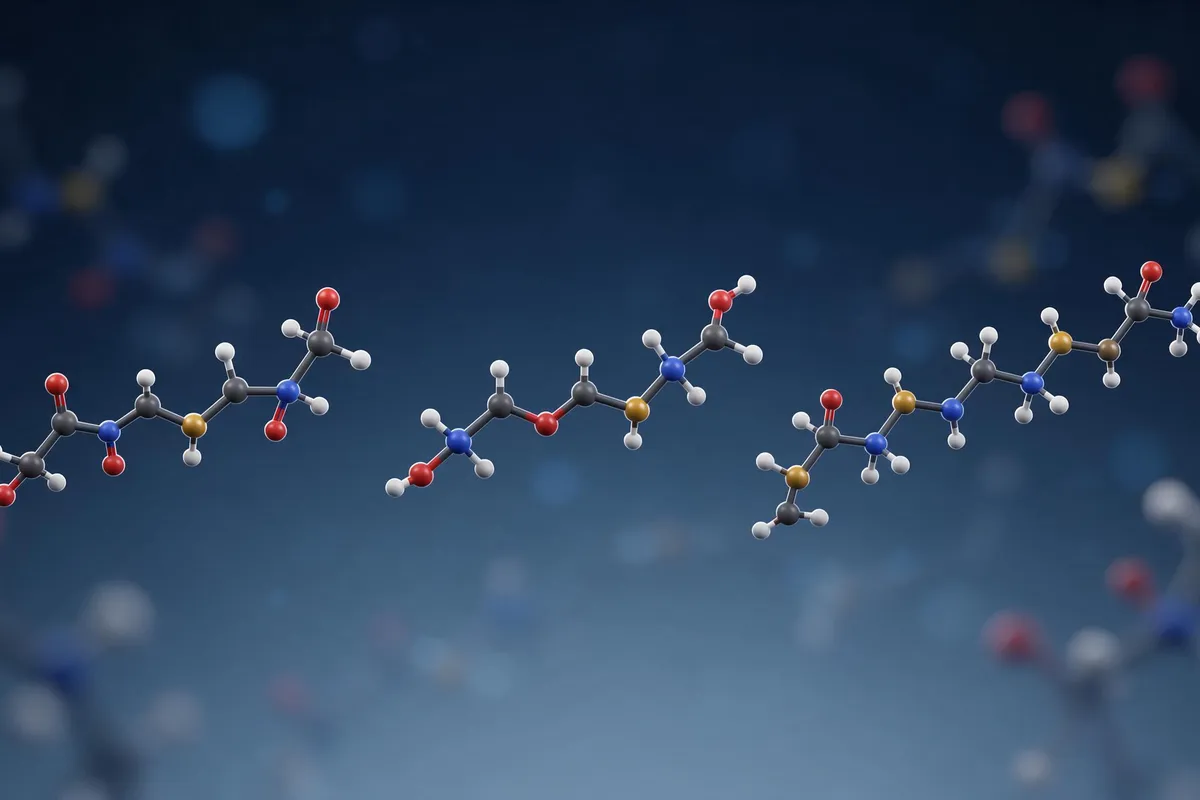
Assessing PCL-based hydrolysis resistance
PCL polyols contain ester linkages. Structure, crystallinity, grade and additives can influence moisture response, but the morphology of a starting polyol is not automatically retained in the finished TPU. Evaluate the formulated film under documented conditioning.
Do not infer lower water uptake, strength retention or lasting clarity in Southeast Asia, the Middle East or Latin America from “PCL” alone. Those require data for the complete film and actual exposure. Regional names do not establish one climate or one service life.
Do not generalize “never hydrolyzes” from a polyol name. CHISI’s confirmed statement for the applicable Type B models is “does not hydrolyze”; it remains specific to those models, not all PCL or TPU. Other formulation comparisons require documented exposure and retained-property data.

Considering hot-humid exposure
Temperature, moisture, formulation and time affect hydrolysis behavior. A fixed doubling for each 10-degree rise is not a universal TPU rule. Accelerated results cannot become outdoor years without a justified correlation for the relevant product and environment.
Check the applicable product and warranty conditions for the intended market. Do not predict claims from a polyol label or diagnose hydrolysis from yellowing alone: haze, discoloration and mechanical change can have different causes. Investigate the actual sample and exposure.
Specifying hydrolysis performance for OEM sourcing
Agree the intended material route without assuming every product must use PCL. Define the selected exposure protocol, duration, retained-property limits and measurement method.
For purchasing discussions, also define sampling, acceptance and how a nonconforming batch will be handled. Replacement or credit are examples to agree, not automatic entitlements.
A duration is a commercial coverage term, not proof of a universal outdoor lifetime or immunity for every formulation.
Designing the test
Treat this as a proposed condition, not the only valid hydrolysis method. Specify film construction, conditioning, duration, sampling and pre/post tensile, elongation and any molecular-weight measurements before comparing results.
| Test item | What it assesses | What to request |
|---|---|---|
| 85/85 aging reference | Response to the specified combined heat and humidity exposure | Duration, specimen thickness, conditioning and measurement intervals |
| Tensile-strength retention | Measured strength after the selected exposure | Baseline, post-aging value and percentage retention |
| Elongation-at-break retention | Remaining elongation at break, not every measure of flexibility | Baseline, post-aging value and percentage retention |
| Molecular-weight distribution (GPC) | Molecular-weight changes that may support a degradation investigation | Method and distributions before/after, with specimen and conditioning |
Read absolute values and retention together. A higher percentage alone does not prove a better film if baselines, specimens or conditions differ.
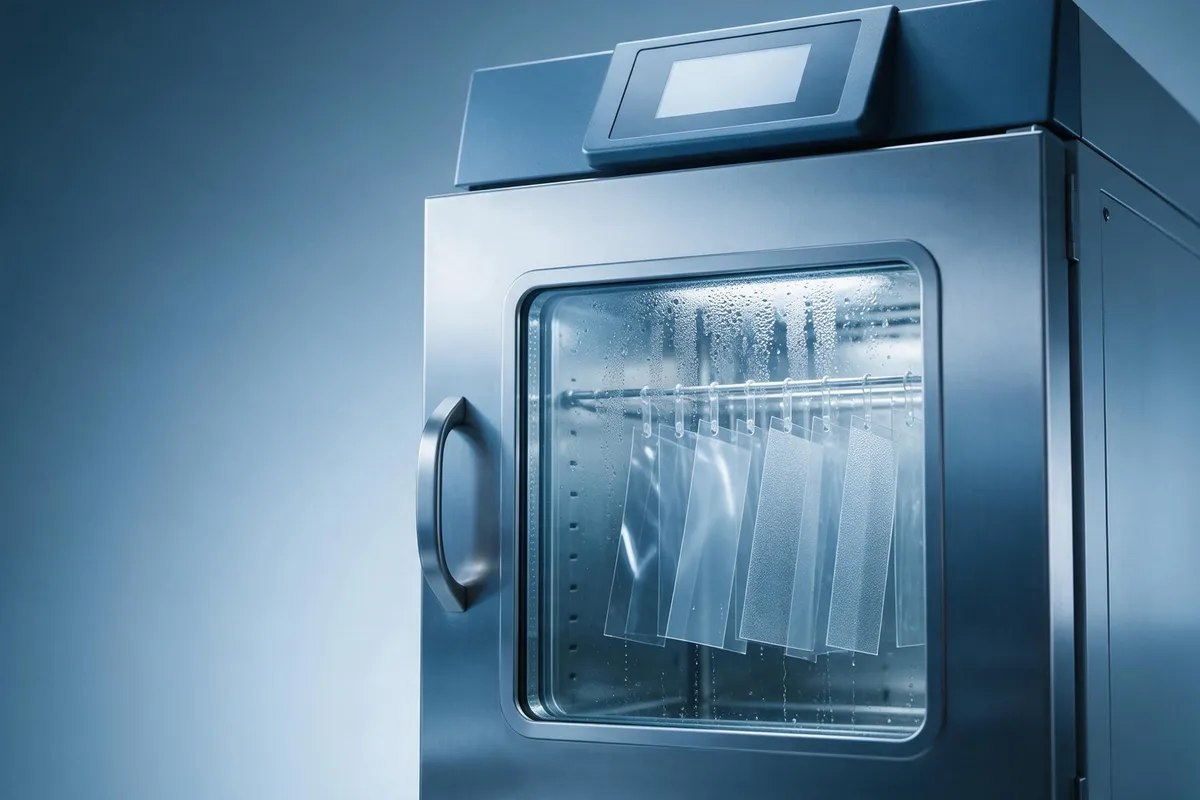
Reading hydrolysis results
Compare finished-film performance before and after a defined exposure. Record the exposure, sample construction and measured change together.
A hydrolysis-resistance statement without retained-property data is not a measured result. Request baseline and post-exposure values, duration and method.
Common misconceptions about hydrolysis
- “All TPU is waterproof, so hydrolysis cannot matter.” Resistance to water penetration and resistance to chemical hydrolysis are different. Moisture and heat can affect ester-containing formulations under relevant conditions.
- “A thicker film always resists hydrolysis better.” Thickness can influence transport and the measured response, but it does not by itself change the underlying chemistry or establish a longer lifetime. Compare the intended construction and thickness under documented exposure.
- “Polyether is always the best choice.” Compare hydrolysis, mechanical, chemical and weathering data for the actual grades. A polyol family name does not establish a universal ranking for every use.
- “It has a warranty, so the material is proven.” A warranty defines commercial coverage and conditions; test data provides technical evidence. Read both for the actual model and market, without treating years of coverage as a test result.
A buyer’s verification checklist
| No. | Item to verify | Evidence to request |
|---|---|---|
| 1 | Polyol route and grade | State the actual route and grade; PCL is a polyester polyol, not a separate non-polyester family |
| 2 | Hot-humid exposure data | Protocol, hours and before/after results; identify any 85/85 condition explicitly |
| 3 | Tensile-strength retention | Baseline strength, post-exposure strength and percentage retained |
| 4 | Elongation-at-break retention | Baseline elongation, post-exposure elongation and percentage retained |
| 5 | Haze and appearance | Baseline and post-exposure haze, surface condition and method |
| 6 | Applicable warranty | Model, market, duration, exclusions and conditions for the intended exposure |
Frequently asked questions
What is polycaprolactone in PPF?
Polycaprolactone is a polyester-polyol route used in some TPU formulations. Assess the complete film grade under documented conditions; its polyol name alone does not establish an outdoor lifetime.
Does a polyol name establish that every PPF will never hydrolyze?
No. General comparisons need formulation, conditioning, duration and retained-property evidence. PCL remains a polyester route; its name alone establishes no immunity. CHISI’s confirmed “does not hydrolyze” statement remains specific to the applicable Type B models, not all PCL or TPU.
Why consider hot-humid exposure for the target market?
Temperature and moisture can influence hydrolysis rates. Do not infer a single tropical, coastal or regional lifetime: compare the actual product and exposure, including relevant environmental and usage conditions.
How should hydrolysis resistance be evaluated?
Define a suitable protocol, specimen and duration, then measure relevant properties before and after exposure. This is not a universal mandatory method or a supplied CHISI result.
Is polyether always better than PCL?
No universal ranking applies. Polyether-based TPU can offer useful hydrolysis resistance, but mechanical, chemical, weathering and low-temperature behavior must be compared on actual grades. Do not infer an unavoidable mechanical-strength loss from the family name.
A practical purchasing rule
Identify the material route, request the agreed hot-humid protocol with absolute and retained-property results, and read the applicable warranty for the actual climate and use. Clarity alone does not demonstrate retained mechanical performance. Keep material explanations separate from model-specific product statements.
Suggested next step
To compare product-specific material routes, review the Type R PPF and Type B PPF ranges, then ask what relevant hot-humid evidence is available for the target model. For yellowing, see why PPF turns yellow; for supplier evaluation, see how to choose a PPF manufacturer.
References and scope
- CHISI material documentation is a product-specific source when the relevant document and model are identified. This article’s general discussion is not a supplied hot-humid test report or a declaration of every product’s polyol system.
- No unnamed paper is presented as a verified CHISI result; general material research is not a finished-product test report.
General material reference: Covestro: TPU chemical properties. This source explains material principles, not test results for a CHISI finished product.