
A PPF adhesive must balance retention on paint with removability at the end of service. That balance depends on the pressure-sensitive adhesive (PSA), the coating system and exposure. Edge lift, bubbles and residue need investigation; their appearance alone does not establish an adhesive or film defect.
This guide compares adhesive families, explains tack, peel and shear, and separates peel measurements from the assessment of paint condition after removal. CHISI material records identify product-specific adhesive routes; the general discussion is not a universal product specification or removal guarantee.
Three PSA families
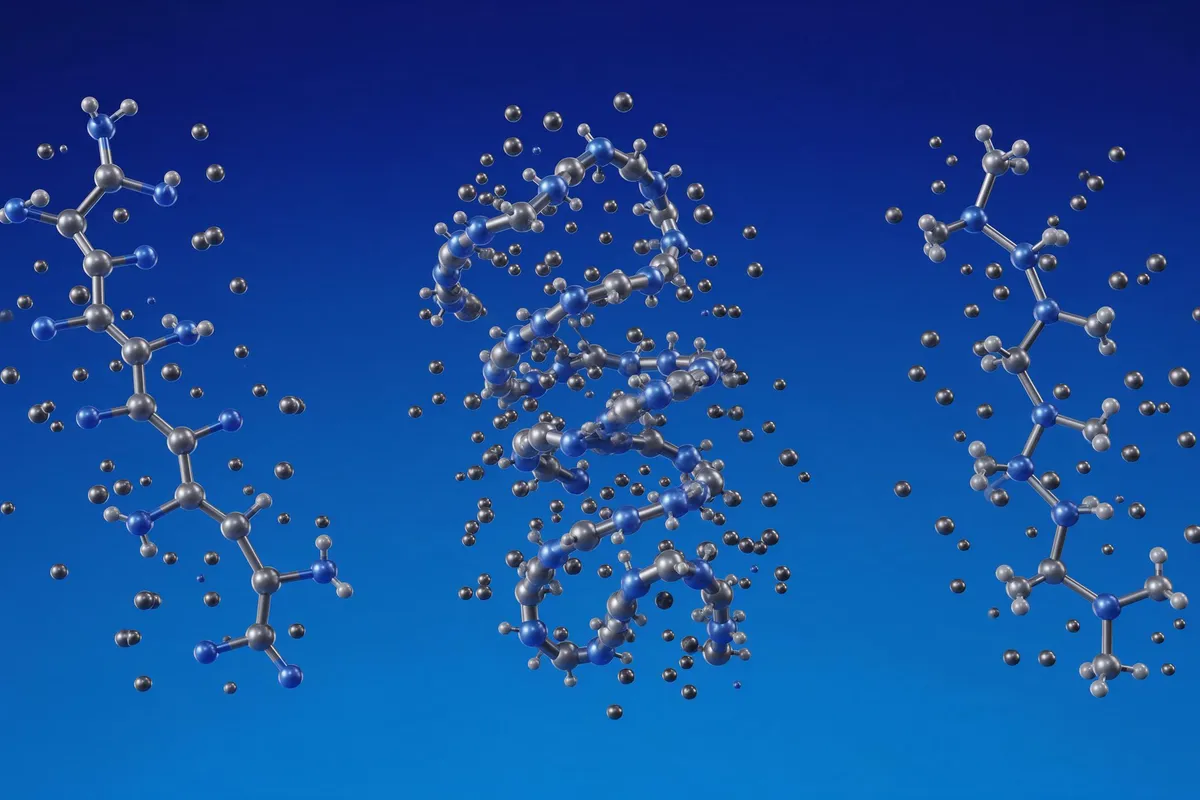
Acrylic, rubber and silicone describe different families of pressure-sensitive adhesive. Compare formulations using the same substrate, temperature and test conditions for the application.
| Chemistry | Potential strengths | Limitations to check | What to record |
|---|---|---|---|
| Acrylic | Weathering and optical properties; adjustable peel behavior | Initial tack must be checked for the formulation, rather than ranked by family alone | Common in automotive PPF; chemistry alone does not establish quality |
| Rubber-based | Initial tack and cost can be selection factors | Verify UV and heat aging and yellowing for the actual formulation | Record the film and paint system, preparation, installation conditions and location of the issue. Use the product’s approved procedure before deciding on rework. |
| Silicone | Heat-resistant formulations are available; verify the actual rating | Cost and converting requirements depend on the system | Specialty applications, including some high-temperature uses |
Acrylic PSAs are used where optical and weathering properties matter. Aging, adhesion and removal still depend on formulation, substrate and exposure. Request comparable aging and removal evidence; the adhesive family alone cannot predict a failure date or guarantee residue-free removal.
Tack, peel and shear
Assess the adhesive as a balance of properties. One measured value cannot describe all installation and service behavior.
- Tack — initial grip on contact. Its level affects positioning and repositioning; higher is not automatically better.
- Peel — force needed to peel the film under stated angle and speed conditions.
- Shear holding power / cohesion — resistance to displacement under sustained load. Cohesion and test conditions need to be considered when investigating creep or edge lift.
High peel force does not establish adequate holding power at an edge. Evaluate geometry, stress, cohesion and installation conditions together instead of relying on a single “high adhesion” claim.
What peel force measures
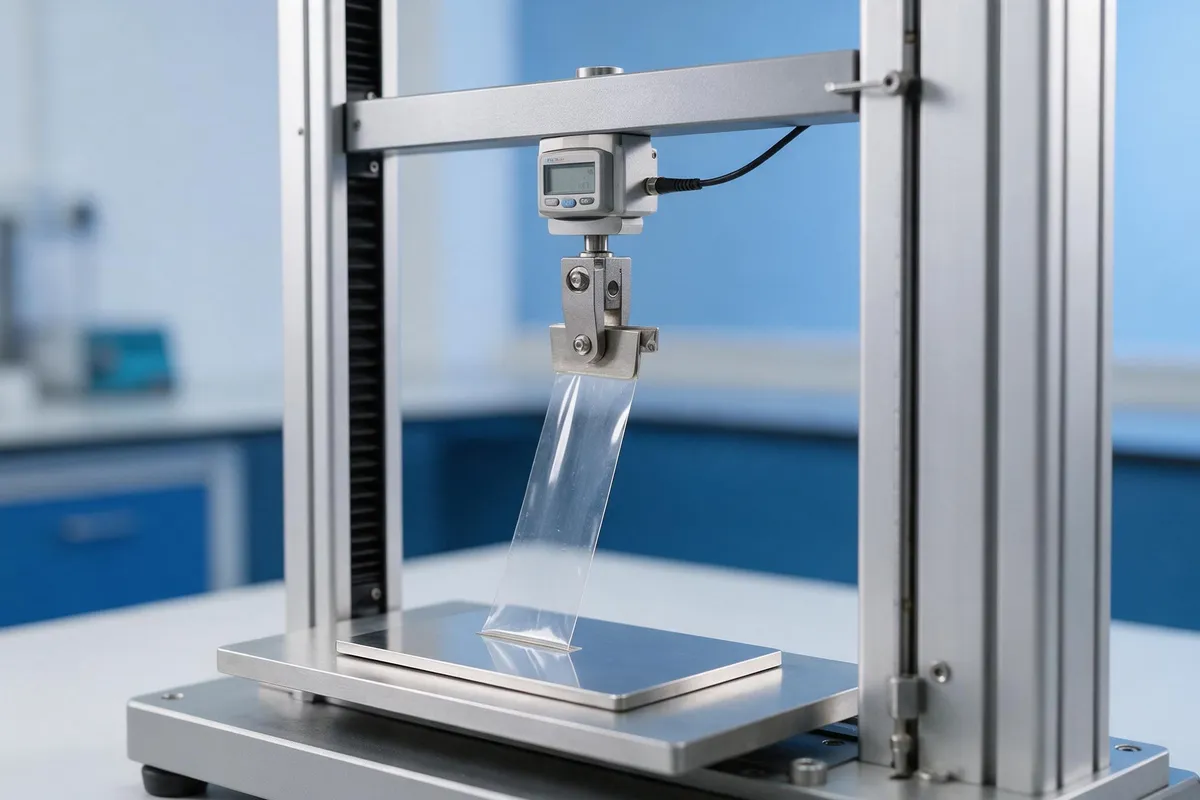
A peel test bonds a strip to a specified panel and peels it at a defined angle and speed. Reports may use g/inch or N/25 mm; keep the stated unit and full method, and do not treat unlike tests as interchangeable.
Record peel force with its unit, test angle, speed, dwell time and substrate. Use comparable measurements when selecting an adhesive.
Substrate and dwell time matter. A painted panel, glass and plastic may give different results.
Assess paint condition separately
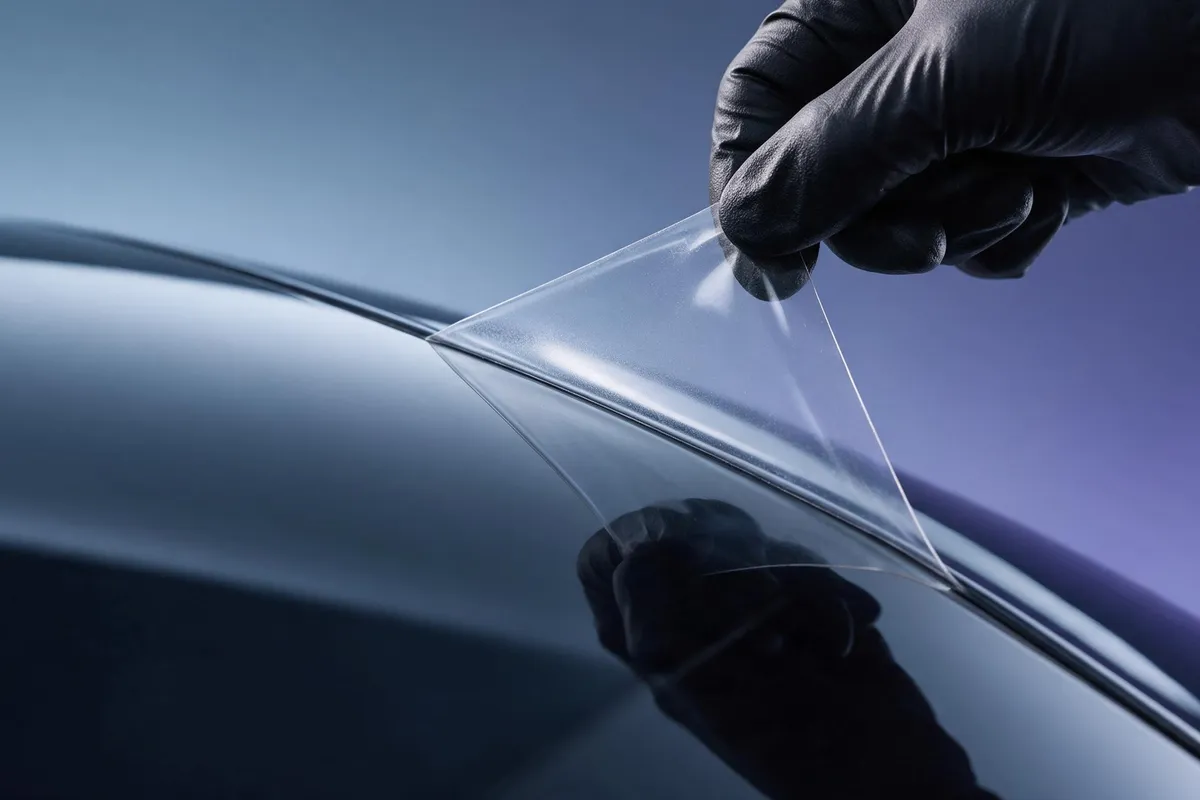
Strong adhesion does not prove that removal will leave paint unchanged. Assess adhesive cohesion and aging alongside the condition, cure and adhesion of the paint system.
Request a documented removal assessment after defined dwell and aging conditions. Record heat and UV exposure, removal conditions, residue, staining and clear-coat changes. An accelerated assessment is not proof of years of clean removal, especially on repainted or aged paint.
Specify how removal is assessed, as well as peel force. Repainted, recently cured, weak or aged coatings need a separate condition assessment and product-specific guidance; no adhesive family guarantees damage-free removal on every paint.
Temperature and adhesive behavior
PSAs are viscoelastic, so temperature can affect wet-out, tack and holding behavior. The following temperatures are source discussion references, not approved installation or removal limits for every CHISI film.
Record the film and paint system, preparation, installation conditions and location of the issue. Use the product’s approved procedure before deciding on rework.
Record workshop conditions and use the instructions for the exact film and substrate. Seasonal changes are a reason to review the process, not proof of a product defect or a guaranteed reduction in claims.
Adhesive coating during manufacturing
One manufacturing route coats an adhesive solution or dispersion at controlled thickness, dries it as required and combines it with a release liner. The actual coating, drying and curing route depends on the system; this description does not disclose a CHISI formulation or universal line process.
Coat weight, often reported as dry adhesive mass per square meter, and uniformity across the web are useful process controls. Ask for the target, tolerance and batch evidence. Neither a higher nor a lower coat weight alone proves better adhesion or removability, or identifies the cause of edge lift.
Drying or curing conditions can affect tack and cohesion in the relevant system. Review the defined process and batch records when investigating residue or installation variation; an isolated laboratory result cannot establish production consistency.
Ask the manufacturer what coating controls and batch-consistency evidence are available. Purchased adhesive and in-house process control are separate questions; using an external adhesive supplier does not itself establish poor control.
Investigating residue and bubbles
- Contamination beneath the film. Dust, wax or polish residue can interfere with contact; document the actual surface condition.
- Squeegee process. Check for retained air or moisture and whether the product-specific method was followed.
- Conditions outside the specified working window. Review temperature records and adhesive behavior rather than diagnosing from appearance alone.
- Possible cohesive failure. Internal adhesive splitting can leave residue; distinguish it from separation at an interface and from paint delamination.
- Chemical exposure. Check cleaner and solvent compatibility for both film and paint; do not assume a solvent is safe from a generic description.
Investigate material, installation, substrate and exposure together. These observations do not automatically exclude a film defect or establish responsibility for a claim.
Adhesive purchasing checklist
| # | Item | Evidence to request |
|---|---|---|
| 1 | Adhesive chemistry | Identify the family for the exact product; do not infer a confidential formulation |
| 2 | Peel measurement | Value, unit, method, angle, speed, substrate and dwell time |
| 3 | Shear holding / cohesion | Defined load, environment, duration and failure mode |
| 4 | Removal after dwell and aging | Removal conditions, residue and paint condition; scope of tested paint systems |
| 5 | Installation window | Temperature, humidity and instructions for the exact model |
| 6 | Chemical compatibility | Product-specific guidance for cleaners, solvents and substrate condition |
Frequently asked questions
Which adhesives are used in PPF?
Acrylic PSAs are common in automotive PPF where clarity and weathering matter. Rubber and silicone systems also exist for other needs. Confirm the adhesive route for the exact CHISI model; family names alone do not establish performance or disclose the formulation.
Can removal damage paint?
It can. Adhesive aging and cohesion, removal conditions and the paint system all matter. Repainted, weak, aged or insufficiently cured coatings need particular assessment. Do not promise residue-free or damage-free removal on all OEM or repainted finishes; request relevant removal evidence and instructions.
What peel strength should a buyer specify?
Specify the unit and complete method, including angle, speed, substrate and dwell, then assess suitability for the actual construction and use.
Why can bubbles appear after installation?
Possible factors include retained air or moisture, contamination, installation conditions and material behavior. Record the evidence and assess the exact product and substrate before assigning a cause or claim responsibility.
Can removed PPF be reinstalled?
Do not assume removed film is reusable. Removal may deform the film or alter or contaminate the adhesive. Distinguish manufacturer-permitted repositioning during installation from removal after service, and follow the exact product's replacement or rework guidance.
How long does adhesion take to develop?
Adhesion builds at a rate that depends on the adhesive, panel and conditions. For CHISI vehicle films, avoid washing and prolonged rain exposure during the first week after installation.
Purchasing principle
Specify the actual adhesive family, request peel results with full conditions, and assess removal and paint condition separately. Procurement needs evidence for the intended product and paint system, not an unqualified “premium” or “clean removal” claim.
Next steps for sourcing
For product-specific adhesive information, review Type B and Type R and request the relevant peel, removal and installation records. For a broader supplier assessment, see how to choose a PPF manufacturerfor the purchasing framework.
References and evidence limits
- CHISI material records: confirm adhesive supplier route and test or removal evidence for the exact model; this article does not create a new universal specification.
- For peel and shear records, request the actual method, edition, specimen and conditions. A generic reference to 180-degree peel testing is not proof of a PPF-specific standard, paint safety or compliance.