
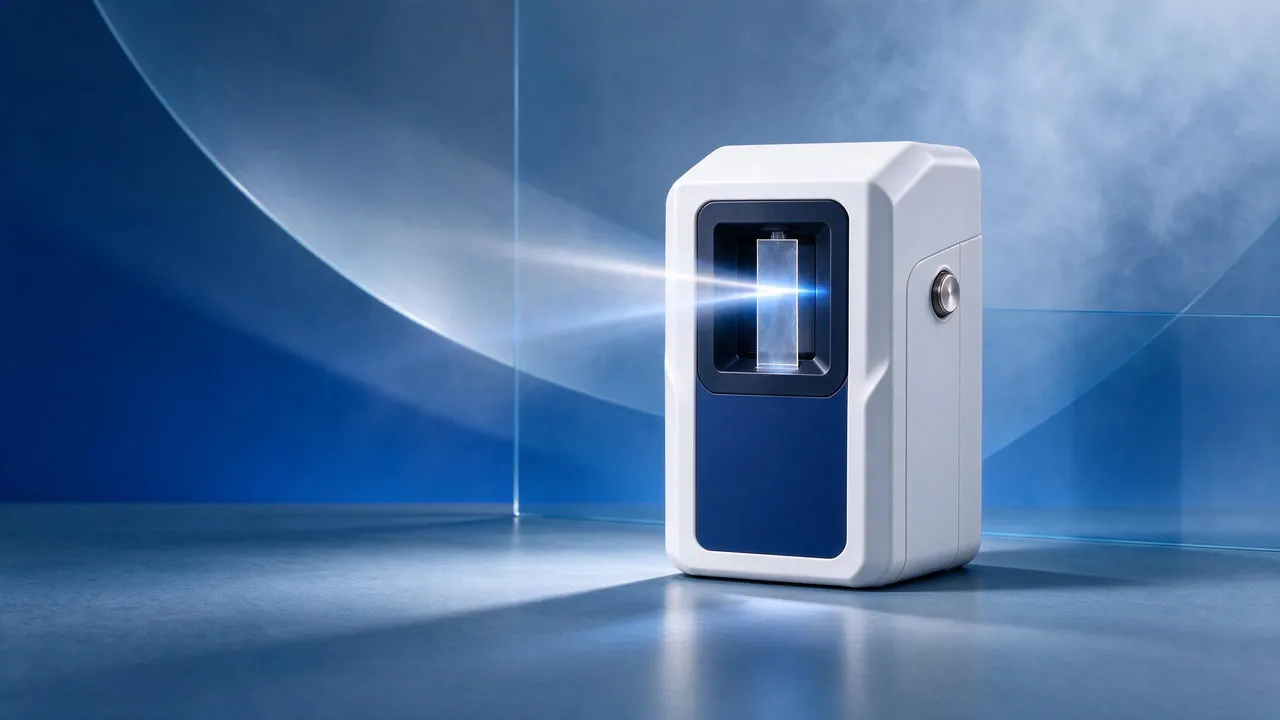
Quick guide: Total transmission, transmission haze and clarity describe different optical behavior. Define the complete film-and-adhesive specimen, preparation and instrument. Roughness, voids, particles or nonuniform structures can scatter light; a refractive-index difference at a smooth, homogeneous planar boundary alone does not establish haze or poor image clarity.
“Clear” is not a complete purchasing specification. Light throughput, scattered light, fine-detail visibility and reflected appearance may differ between specimens. Define the intended use and viewing conditions rather than assuming that a visually transparent film is suitable for every painted panel, lamp, window or optical system.
This guide separates the optical metrics and the possible contributions of surfaces, layers and interfaces. The tables support a measurement and investigation plan, not universal acceptance bands or CHISI test results. A changed reading after lamination or adhesive removal needs interpretation because those operations change the specimen.
On this page
- 1. Defining the optical requirement
- 2. Transmission, haze and clarity
- 3. Refractive index and interfaces
- 4. Surface and internal scattering
- 5. Metrics and measurement scope
- 6. Investigating haze observations
- 7. Receiving and visual references
- 8. Frequently asked questions
- 9. Discuss the optical requirement
Defining the optical requirement
A film’s appearance depends on how it transmits, scatters and reflects light, as well as its substrate and installation. Viewing a film over paint is not the same measurement as looking through a free film or a glass laminate. Define the specimen and finish before assigning an optical value or calling a milky appearance a specific defect.
The complete construction matters: base film, coating, adhesive and any retained or removed layers affect the optical specimen. Do not assume that the TPU base is always clear while all scatter comes from other layers. Total transmission concerns throughput; haze and clarity address different angular distributions of transmitted light under their defined methods.
A favorable total-transmission value can coexist with an unwanted appearance. Define which optical properties and viewing conditions matter to the application; no universal relationship between a small haze change, perceived quality and customer acceptance is established here.
Transmission, haze and clarity
Total luminous transmittance describes transmitted light relative to incident light under a defined spectral method. A high total value does not establish image sharpness, low haze, installed-glazing compliance or suitability for a particular optical system.
In transparency measurement, clarity concerns fine-detail visibility and narrow-angle scattering under the selected instrument method. Keep it distinct from total transmission, wide-angle haze and reflected-image metrics such as DOI. Record the method and specimen-to-target arrangement instead of treating every “clarity” label as one interchangeable result.
Transmission haze is a method-defined proportion of transmitted light scattered outside the specified forward angular region. High total transmission does not by itself guarantee low haze.
Refractive index and interfaces
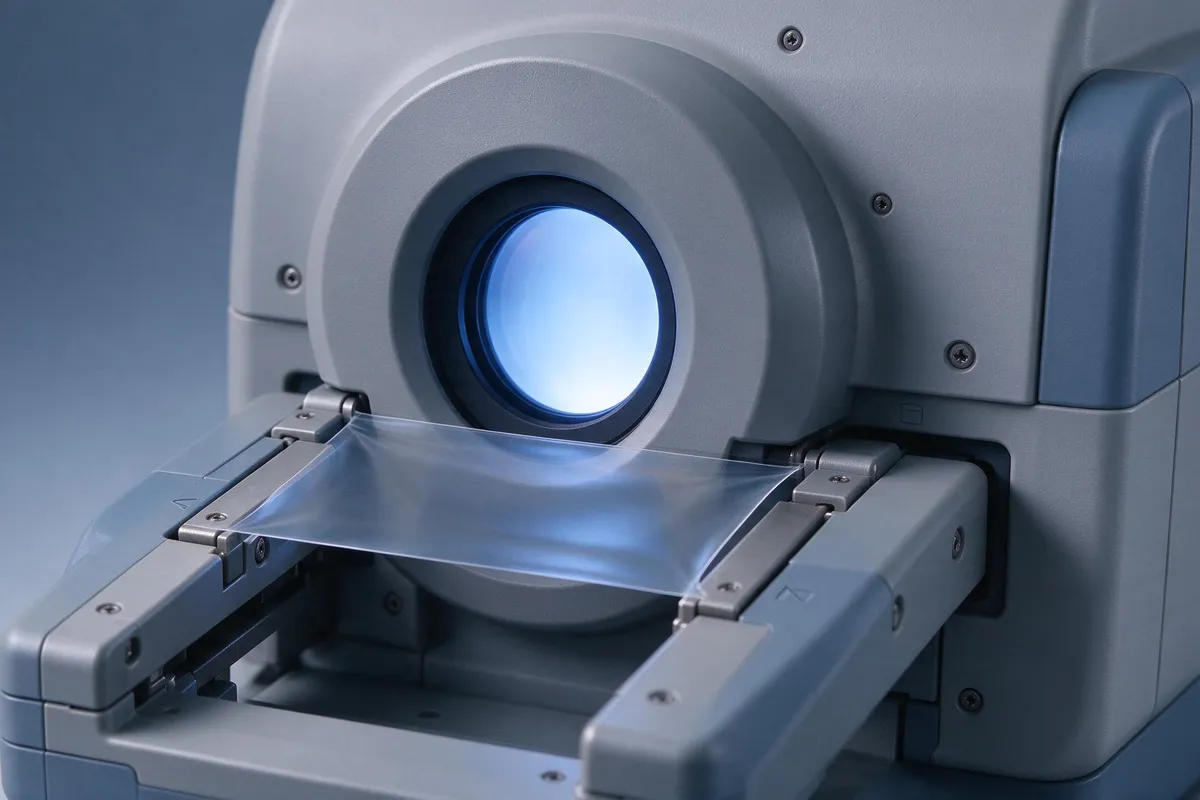
Different refractive indices can produce reflection and refraction at a boundary without producing haze at a smooth, homogeneous planar interface. Scattering requires consideration of structures such as roughness, voids, particles or nonuniform regions; index difference alone is not a measured haze value or proof of an optical defect.
Evaluate the actual laminate and its surfaces, bubbles, contamination and uniformity. Index matching may reduce scattering at some irregular boundaries, but it does not by itself set a universal haze floor or identify the contributing layer. Compare defined specimens before assigning a cause.
Adhesive selection, thickness and process uniformity should be assessed as part of the complete optical construction rather than solved by one index-matching rule. The cast and calendered film discussionprovides process context, not a direct ranking of optical quality or proof of a particular manufacturing route from haze alone. The gloss and haze discussion distinguishes reflected appearance from transmission measurements; a glossy coating does not establish low transmission haze or resolve every internal scattering issue.
Surface and internal scattering
Both surface structures and internal nonuniformities may contribute to transmission haze. Define the specimen layers, exposed interfaces and measurement before investigating either. A visible change or one comparative reading does not uniquely identify a surface or bulk cause.
Surface texture, transferred liner patterns, contamination or handling may affect scatter, but no one feature is a universal cause. Laminating to glass changes the interfaces, support and possibly trapped liquid or air. A lower haze reading after lamination does not by itself prove that the original scatter was entirely at the surface.
Voids, particles, gels or phase nonuniformity can contribute to internal scattering. Use controlled comparisons to investigate the contributing layers. Removing adhesive or adding glass changes the specimen and may introduce damage or residue, so the resulting difference needs its own documented interpretation.
Metrics and measurement scope
The table defines measurement questions rather than common CHISI ranges. Specify thickness, retained layers, adhesive, substrate, conditioning and method. Different instruments or procedures may produce different readings; do not convert them into one scale or infer an acceptance band from a generic clear-film description.
| Metric | Meaning to define | Method or instrument | Scope to agree |
|---|---|---|---|
| Total luminous transmittance | Transmitted relative to incident light under the stated method | Suitable integrating-sphere or specified optical method | Confirm model-specific value and specimen; no universal TPU percentage |
| Transmission haze | Method-defined scattered fraction of transmitted light | Applicable haze method, such as ASTM D1003 | Record the specimen, measurement method, instrument settings and test conditions. Compare results obtained on the same basis. |
| Clarity | Fine-detail visibility under the selected narrow-angle method | Instrument configured for the stated clarity measurement | Agree the method and criterion; not interchangeable with haze or DOI |
| Refractive index | Material’s optical response at the stated wavelength and conditions | Suitable refractometry; an Abbe instrument only where applicable | Characterize the actual materials; index difference alone is not haze |
Keep the value with its method, geometry, spectral conditions and specimen preparation. Model-specific reports, including GCX and windshield-film data, retain their own units and scope. A film label alone does not establish performance of a glass-and-film assembly.
Investigating haze observations
The following areas are investigation examples, not an exhaustive list or proof of a particular cause. Check source records, specimen handling and measurement before changing raw materials or the process; a haze observation alone does not identify which layer or supplier is responsible.
| Area to investigate | Possible contribution | Evidence to examine |
|---|---|---|
| Base material | Particles, gels or material nonuniformity | Check the lot and prepared specimen; do not change filtration from appearance alone |
| Coating | Texture, contamination or coating nonuniformity | Review the actual surface and process evidence; clean-room class alone is not an optical result |
| Adhesive and interfaces | Bubbles, irregular boundaries or thickness variation | Evaluate the actual laminate; index difference alone does not identify haze |
| Release liner and handling | Possible texture transfer, contamination or release-related change | Use controlled comparisons; do not diagnose silicone residue from haze alone |
A liner can influence adhesive texture or handling, but a haze complaint does not prove liner contamination or one release mechanism. Compare documented liner, adhesive and preparation conditions before changing components. The OEM and ODM overview provides program context. Confirm the actual liner, coating options and development feasibility rather than assuming every optical complaint can be resolved by choosing another catalog option.
Receiving and visual references
Agree the specimen, applicable methods, sampling plan and model-specific acceptance criteria. Instrument readings and controlled visual references can support different decisions; neither automatically replaces the other. A supplier report should be assessed for its actual sample and method, not automatically accepted or dismissed as insufficient.
| Check | Method to define | Decision basis |
|---|---|---|
| Transmission-haze criterion | Applicable method and defined specimen | Compare with agreed criterion and measurement conditions |
| Transmission requirement | Defined optical and spectral method | Use the model-specific criterion, not a universal percentage |
| Visual reference | Agreed light, distance, target and specimen arrangement | Compare with the agreed master under the same relevant conditions |
Record lighting, viewing distance, target and the distance between the specimen and target where relevant. A contact view can differ from a separated see-through view. A visual master does not replace applicable instrument or installed-glazing requirements, and this article sets no universal pass threshold.

Frequently asked questions
Does high transmission guarantee low haze?
No. Total transmission measures light throughput under the stated method, while haze concerns a defined scattered share of transmitted light. A favorable transmission reading alone does not establish fine-detail clarity, low haze or suitability for every installation. State the specimen and the relevant optical requirements separately.
How can the adhesive affect the optical result?
The adhesive and its interfaces are part of the specimen. Evaluate uniformity, roughness, voids, particles and the actual layer stack. A refractive-index difference at a smooth planar interface alone is not a haze measurement; compare controlled complete specimens before attributing the result to one adhesive property.
How can surface and internal contributions be investigated?
Use a method and controlled specimen comparisons suitable for the actual construction. Laminating to glass or removing adhesive changes interfaces, support and possibly contamination or damage. A changed haze reading is not by itself proof of a unique surface or bulk cause; document what changed and how the comparison is interpreted.
Does a glossy coating establish low transmission haze?
No. Specular gloss, reflected-image appearance and transmitted-light scattering are different measurements. Assess the actual coating and laminate using applicable methods. A gloss value cannot quantify bulk scatter or show that an adhesive-interface issue has been resolved; index mismatch alone is not proof of that issue either.
Can the liner contribute to haze?
Texture transfer, contamination or handling related to a liner may contribute in some constructions. Confirm the actual liner, adhesive and removal conditions. Haze alone does not establish silicone transfer or prove that substituting a smoother liner will resolve the complaint; assess controlled specimens and relevant release evidence.
Which measurement conditions should be reported?
Report the applicable standard and procedure, instrument, spectral and geometric conditions, specimen layers, substrate and preparation. Do not directly rank results obtained from different specimen systems or methods.
How should a supplier report be used?
Check its model, lot, specimen, method, units and acceptance basis. Agree any receiving measurements and visual references needed for the actual purchase. A report is not automatically invalid, nor proof that every roll, future lot or installed assembly has identical optical performance; investigate discrepancies with traceable samples and conditions.
Discuss the optical requirement
Specify the actual film, finish, support and viewing conditions before choosing an optical target. Separate total transmission, haze, clarity and reflected appearance. Request relevant model-specific evidence and discuss development feasibility; no generic “clear” label or single numerical value establishes all optical or installed-system requirements.
Our R&D and factory overview provides capability background. Confirm which optical methods, apparatus and reports are available for the actual model; a complete dataset or any chosen target is not promised for every product. Default A4 samples are free worldwide, and the free offer excludes logistics charges; other sizes are quoted on request. To review your optical requirements, contact our team with the intended film, application and comparison criteria.
Method and material reference: BYK: transparency and scattering principles. This reference discusses general optical principles, not test results or certification for a CHISI product.