
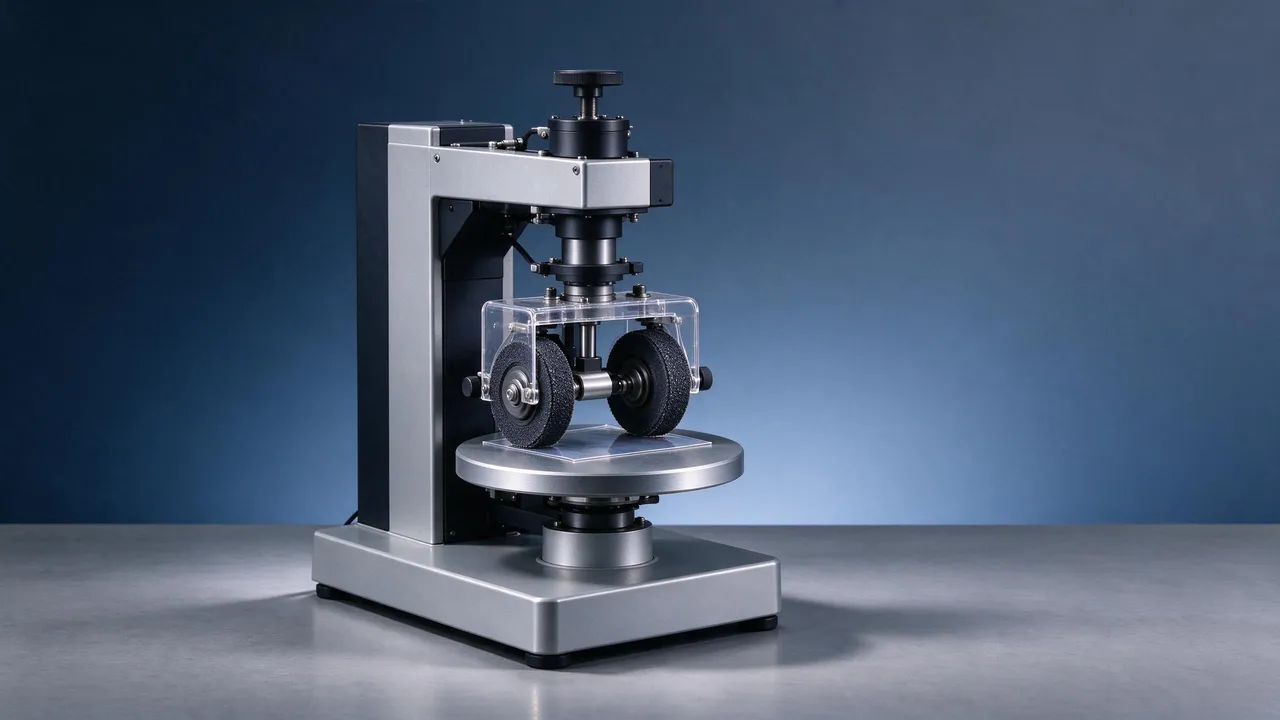
Quick guide: Abrasion results depend on the contact, load, cycles, specimen and reading method. Rotary wheels, linear wiping, wash brushes and falling abrasive are four examples, not a complete classification of vehicle damage. No single result establishes overall scratch or stone-impact resistance. If the film can recover visible marks, define the reading time, temperature and any recovery treatment as part of the comparison.
Ask which kind of wear a quoted result addresses. A controlled wheel or brush test does not reproduce every wash, wiping action or road impact. A recoverable surface mark may change between abrasion and inspection; that change should be recorded rather than treated as proof that no damage occurred or that one formulation is universally tougher.
This guide compares four test approaches, their reporting limits and the effect of recovery before reading. The tables are discussion tools, not CHISI test reports, acceptance limits or a universal inspection procedure. Agree the applicable method and specimen before comparing results; abrasion, scratching and stone impact are related questions, not interchangeable measurements.
On this page
- 1. Contact modes to distinguish
- 2. Methods and reporting metrics
- 3. Recovery before measurement
- 4. Rotary-wheel abrasion
- 5. Linear contact and wash brushes
- 6. Falling abrasive and impact limits
- 7. Reading and comparing results
- 8. Agreeing a test plan
- 9. Frequently asked questions
- 10. Discuss the required evidence
Contact modes to distinguish
Rotating wheels, reciprocating contacts, wash brushes and falling abrasive impose different contact conditions. They are useful examples for planning a comparison, not exact replicas of polishing, hand wiping, a particular car wash or gravel striking a vehicle. Other wear and impact mechanisms may need separate evaluation.
Contact material, motion, load, support and environment affect the result. The hardness and modulus discussion provides mechanical background. Hardness or modulus alone cannot predict abrasion, recovery or stone-impact performance for a complete film.
Methods and reporting metrics
The table relates example contacts to possible readings. Select the actual method and specimen first: a transparent-plastics haze method, a coating-loss method and a scratch-visibility assessment do not produce one common scale. A field scenario indicates a question to investigate, not a validated service-life prediction.
| Approach | Contact or application question | Reading to define |
|---|---|---|
| Rotary wheels | Controlled rotating abrasive contact | Method-specific haze change, mass loss or gloss; not interchangeable |
| Linear reciprocating contact | Defined wiping contact and number of passes | Defined appearance or surface measurement |
| Wash-brush method | Brush type, motion, load and wash conditions | Haze, gloss or marking under the selected procedure |
| Falling abrasive | Specified particles falling onto a prepared specimen | Applicable abrasion or coating-loss endpoint; not automatic puncture or gravel equivalence |
Use the table to identify missing conditions, not to prescribe the same test combination for every film. More tests are useful only when their methods and endpoints address the actual application; the number of cycles alone is not a quality ranking.
Recovery before measurement
Some film surfaces can recover certain light marks under defined conditions. Record initial damage and any later appearance change separately. Recovery does not necessarily replace lost material or establish resistance to every scratch; a recovered appearance and unrecovered wear are different endpoints.
Specify the interval and temperature before each reading, along with any heating or recovery step. Compare films under the same applicable protocol and distinguish measurements taken before and after recovery. This article supplies no universal recovery temperature, heat-gun setting or waiting period. The care and maintenance discussion addresses service conditions. A care instruction is not itself an abrasion-test method or permission to heat every product in the same way.
Rotary-wheel abrasion
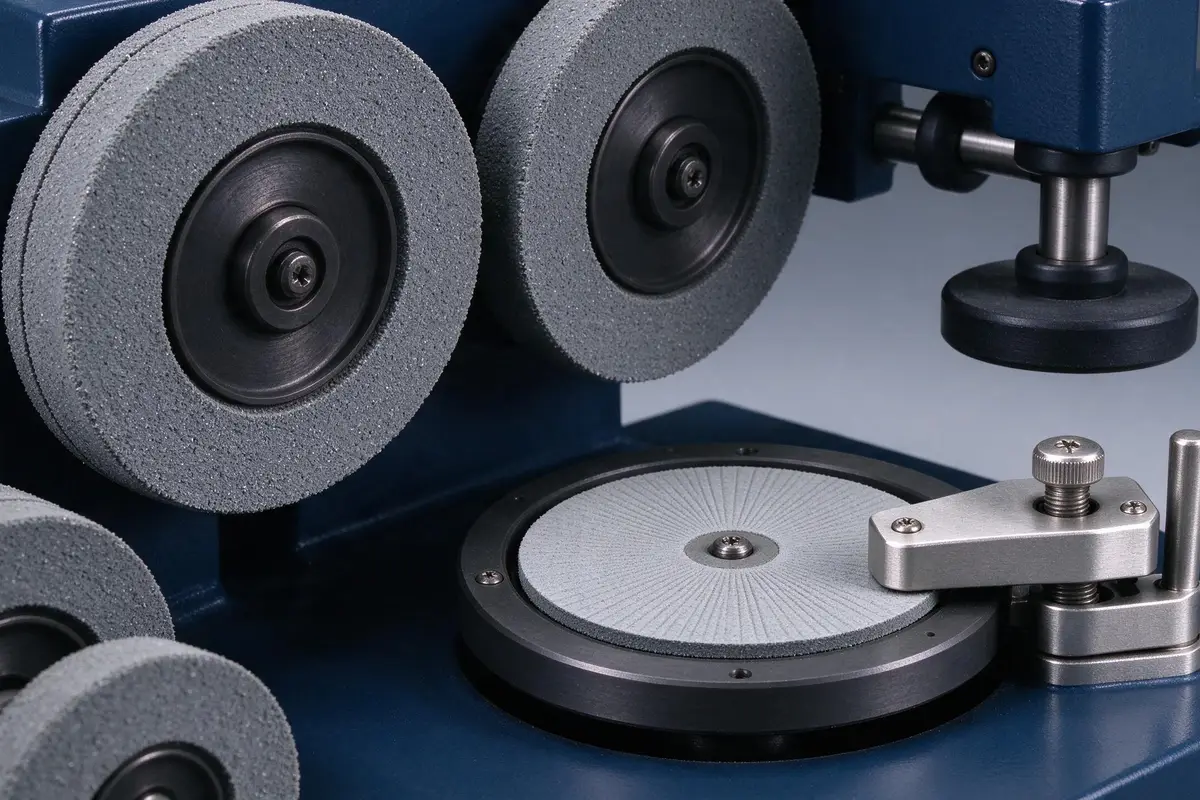
A rotary-wheel test exposes a supported specimen to abrasive wheels under defined conditions. Wheel type, load, cycles, preparation and the selected endpoint belong with the result. For example, ASTM D1044 addresses abrasion of transparent plastics through a haze-change method; that scope is not a universal mass-loss or polishing-equivalence claim for every PPF construction.
A rotary result does not reproduce a wash brush, projected gravel or every curved installation. Even repeatability depends on the selected apparatus and procedure. Keep the result within its specimen and method scope rather than converting a large cycle count into road durability, service life or warranty coverage.
Linear contact and wash brushes
A reciprocating contact moves along a defined path; a brush method uses a specified brush and motion. The tool name alone does not define an applicable film test. Contact material, force, stroke or brush conditions, fluid and number of passes need to be specified before comparing the resulting marks or optical change.
Neither approach automatically replaces the other or reproduces a customer’s wash. Select the relevant contacts for the intended use and agree laboratory conditions. Do not infer that an omitted data-sheet item proves poor performance, or that one supplier’s brush result can be ranked against another’s different procedure.
Falling abrasive and impact limits
A falling-abrasive method directs specified particles onto a prepared specimen. ASTM D968 concerns abrasion of organic coatings on a flat, rigid support; it is not automatically a PPF puncture, gravel-impact or whole-vehicle test. Any adaptation to a flexible film requires its specimen preparation and reporting basis to be defined, without claiming conformity merely from the method name.
Particle properties, delivery, support and the chosen endpoint affect the result. Do not call falling sand the closest road-impact simulation or assume it matters most for every front-facing panel. If stone impact is the question, select a separate applicable impact method and assess its own limitations.
Reading and comparing results
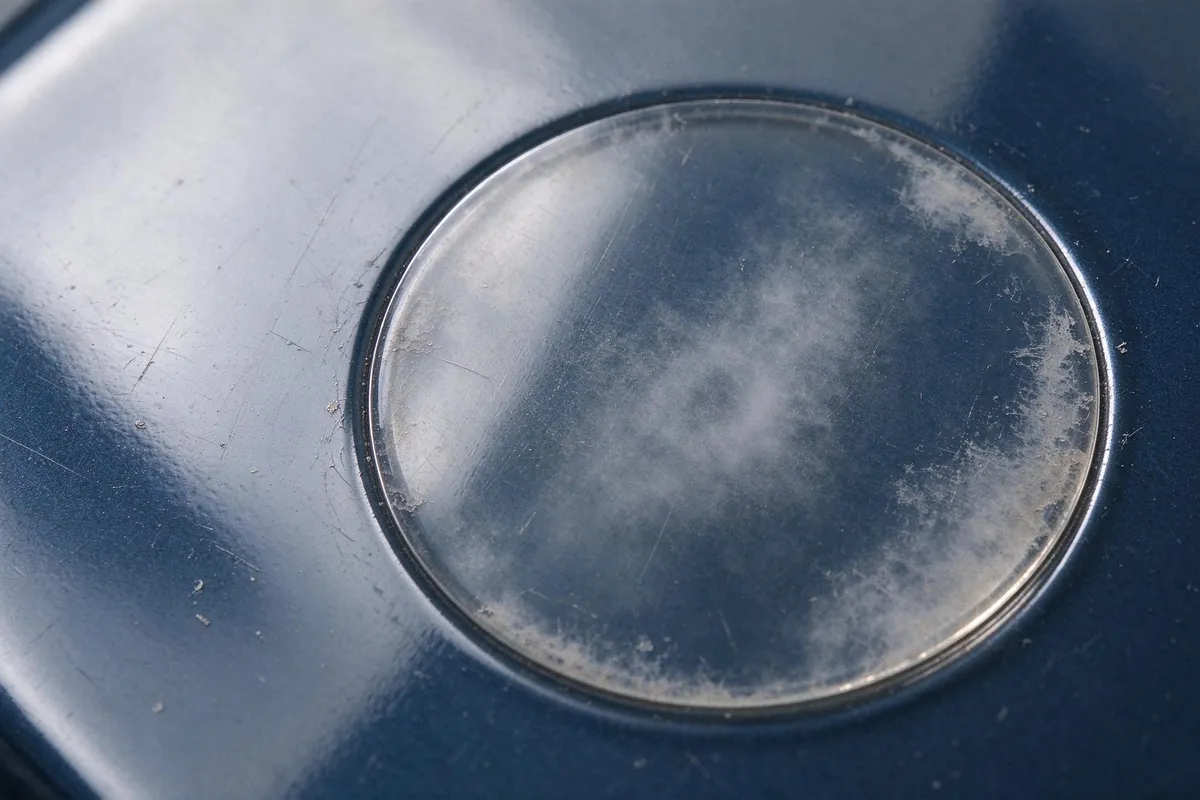
Define the actual reading: transmission haze, reflection haze, gloss, mass loss and visible marking describe different endpoints. Record the instrument, geometry, specimen layers and viewing conditions. A milky appearance over dark paint alone does not identify transmission haze or quantify any of these results.
A film can retain gloss while another optical reading or visible marking changes. Conversely, small mass loss does not guarantee an unchanged appearance. Choose the readings and viewing conditions that address the intended finish; do not rank all films by one metric or assume a visible complaint has a single material cause.
| Reading | Information provided | Limit to record |
|---|---|---|
| Defined haze measurement | Scattered light under the selected optical method | Record specimen, geometry and recovery before reading |
| Gloss retention | Change relative to the initial reading at the same geometry | Does not establish every haze, texture or scratch result |
| Visible marking | Appearance under specified viewing conditions | Define illumination, distance and assessment criteria |
Agreeing a test plan
Build a plan around the actual film, substrate and expected contact. Select relevant abrasion, wiping or brush methods and, if needed, a separately appropriate impact test. Specify load, contact material, cycles or abrasive quantity and the reading endpoint. A falling-sand result does not automatically qualify a film against road stones.
The examples below are discussion prompts, not a fixed test prescription or service guarantee. Keep specimen preparation, conditioning, recovery and reading conditions traceable. Matching a few headline settings is not enough if the methods, apparatus or specimen systems differ.
| Use context | Approaches to discuss | Readings and limits |
|---|---|---|
| Urban use and covered parking | Consider relevant wheel and wiping contacts | Defined appearance change; no universal cycle threshold |
| Frequent automatic washing | Consider the actual brush and wash conditions | Agreed optical and visible-mark assessments |
| Highway or off-road exposure | Separate abrasion questions from suitable impact testing | Report the selected method, not a generic road-durability score |
Frequently asked questions
Is one abrasion number enough?
One result describes the tested specimen under a particular procedure. It cannot establish every scratching, washing or impact response. Choose the relevant endpoints and any additional methods for the intended film and use; a large cycle count alone is not an overall quality or lifetime claim.
How does recovery affect a reading?
A recoverable mark may change before inspection. State reading time, temperature and any recovery treatment, and distinguish before- and after-recovery endpoints. Recovery does not prove that abrasion caused no damage, restore all lost material or establish a universal recovery process for every film.
What does a rotary-wheel result establish?
It describes the selected wheel contact and reading method on the prepared specimen. Wheel type, load, cycles, support and conditioning matter. It is not automatically equivalent to polishing, wash-brush wear or stone impact, and different haze or mass-loss procedures do not produce interchangeable results.
How should wash-brush exposure be assessed?
Select a brush procedure relevant to the intended washing system and define brush material, motion, load, fluid and reading conditions. A laboratory result is not proof of compatibility with every automatic wash, nor a replacement for the film’s actual care guidance or warranty terms.
Is falling sand a stone-impact test?
Do not treat them as equivalent. A falling-abrasive method has its own particles, support and endpoint; ASTM D968 concerns organic coatings on flat, rigid specimens. Road-stone or puncture performance requires an applicable separate assessment. A sand result alone does not prove front-panel protection or all-road suitability.
Should we measure haze or gloss?
Choose measurements relevant to the specimen and appearance requirement; more than one may be needed. Define reflection or transmission haze, gloss geometry and visible-mark assessment separately. No single favorable reading establishes all optical properties, customer satisfaction or an automatic acceptance decision.
How can suppliers’ results be compared?
Check the method and edition, apparatus, specimen layers, substrate, load, cycles, preparation, conditioning, recovery and reading criteria. Different protocols cannot be ranked from their headline numbers alone. Matching conditions supports a defined comparison, not a guarantee that different laboratories or future batches are identical.
Can an OEM/ODM project target abrasion behavior?
Discuss the model, intended use, relevant endpoints and development feasibility. An OEM/ODM service does not guarantee any chosen cycle count, surface property or road result. Agree the available evidence and acceptance requirements for the actual project rather than borrowing a coating-research or another series’ result.
Discuss the required evidence
Start with the actual film, support and expected wear rather than one universal scratch-resistance number. Tell the team which contacts and appearance changes matter to the project. Define applicable methods and recovery conditions, while keeping laboratory response, field experience and warranty terms as separate forms of evidence.
Our R&D and factory overview provides manufacturing background. Confirm which model-specific methods, apparatus and reports are actually available; do not assume that every abrasion approach is already tested in-house for every product. Default A4 samples are free worldwide, and the free offer excludes logistics charges; other sizes are quoted on request. To discuss the intended tests, contact our team with the film, intended application and comparison criteria.