
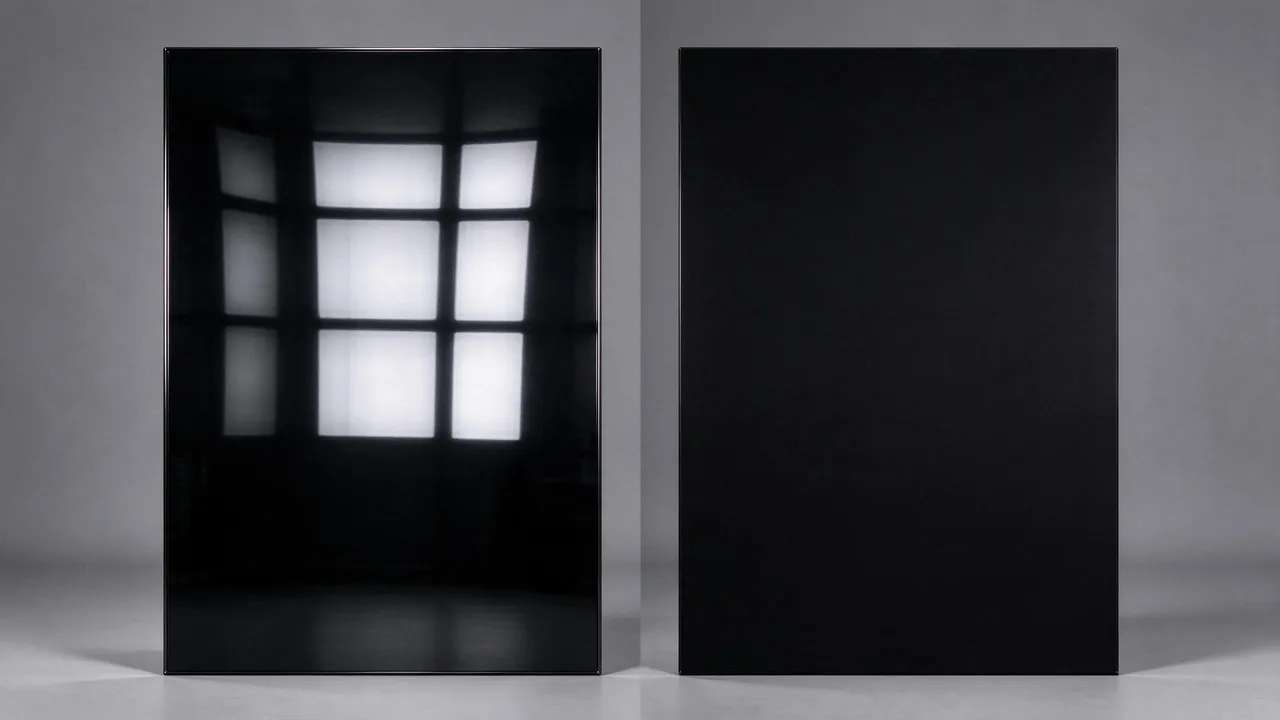
Quick guide: Distinguish specular gloss, reflection haze and DOI, or distinctness of image. They describe different aspects of a reflected appearance; transmission haze is a separate measurement. High gloss does not guarantee a sharp reflected image. Record the method, geometry and specimen rather than selecting an angle from the words matte or satin or transferring one series’ values to another.
A gloss or matte label does not fully describe the appearance of a film. Reflected image definition, scattering, texture, the substrate and installation can contribute to a visible difference. Define the intended finish and a comparison method; one gloss value does not establish overall quality or an exact match to a reference panel.
This guide separates the metrics and reviews texture, instrument choice and receiving checks. Source gloss examples are not a current common range for all CHISI products. Use each model’s applicable reference and agree haze and DOI methods and acceptance criteria; do not infer a satin range or borrow GCX values for RCX.
On this page
- 1. Distinguishing the appearance metrics
- 2. Gloss and reflected-image clarity
- 3. Surface texture and orange peel
- 4. Instrument and geometry selection
- 5. Metrics and reporting scope
- 6. Investigating appearance complaints
- 7. Receiving measurement plan
- 8. OEM and ODM finish specifications
- 9. FAQ
- 10. Discuss the intended finish
Distinguishing the appearance metrics
Specular gloss compares reflection with a calibrated reference under a defined geometry and is reported in GU. It is not simply the percentage of all reflected light, and the angle must accompany the value. A high gloss reading does not by itself describe texture, image clarity or the preferred finish for an application.
Reflection haze concerns scatter near the specular reflection and can affect the appearance of a highlight. State the instrument, method and scale. Do not equate it with transmission haze through a clear film, opaque appearance, or windshield optical approval; those require their own applicable measurements.
DOI means distinctness of image, not “distortion of image.” It describes how clearly an image is reflected under the chosen measurement system. Report its scale and method; a DOI result is not interchangeable with gloss, a particular waviness band or the fidelity of a transmitted view. The related stain-resistance discussion addresses contamination, which can alter appearance but does not make one optical metric a complete stain test.
Gloss and reflected-image clarity
Gloss and DOI measure different aspects and cannot substitute for each other. They can both respond to surface changes, so “different” does not mean physically unrelated in every sample. Compare the relevant measurements and a controlled appearance reference instead of equating a high GU with a glass-like image.
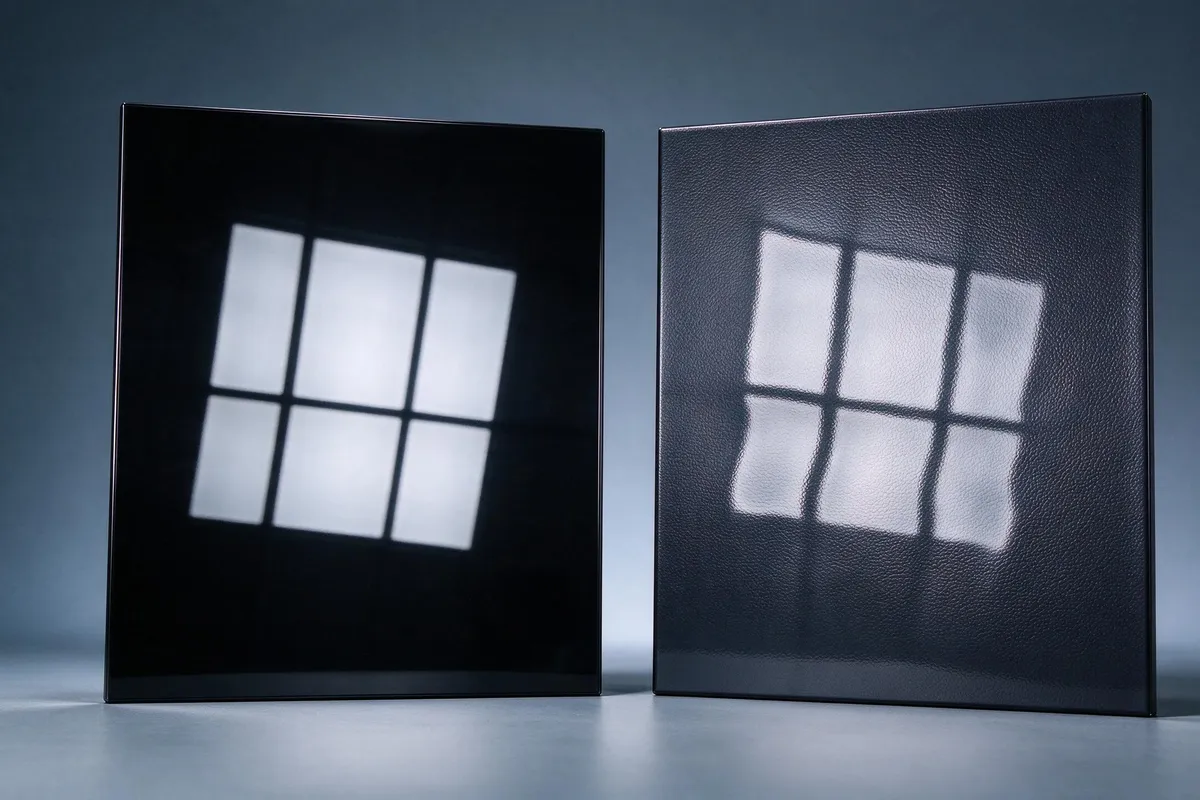
A rippled mirror illustrates how a bright reflection can still be distorted, but it is not a calibrated model of every PPF surface. Assess image definition, haze and texture as required for the intended finish. High DOI is not automatically the design objective for every matte or textured product.
Two films can have similar gloss but different reflected-image definition. Compare gloss and DOI on the same finish and substrate. hardness and modulus discussion
Surface texture and orange peel
Texture can produce waviness or an orange-peel appearance at different spatial scales. Long- and short-wave descriptions depend on the instrument’s defined bands; they are not a universal diagnosis of the coating process. Record the relevant scale and viewing conditions instead of treating all roughness as one defect.
Texture can affect reflected appearance, but its contribution depends on the scale and measurement. CHISI’s documented casting and Class 100 clean-coating capability is manufacturing context, not evidence that every roll has a particular DOI or texture result. Review the actual product measurements before assigning a process cause.
Define which appearance attributes and texture bands matter to the project. A glossmeter does not measure every visual feature, and an instrument’s favorable reading is not an overall quality grade unless the method and agreed criteria support that conclusion.
Instrument and geometry selection
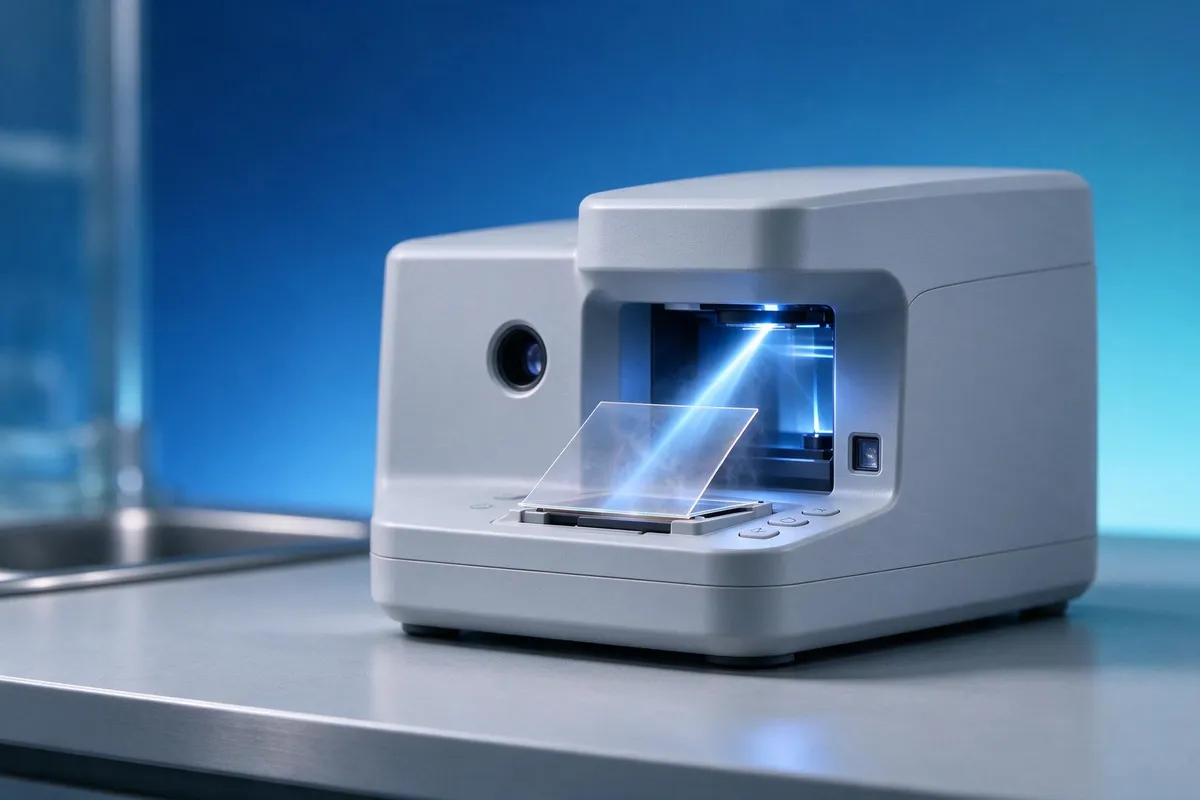
Select instruments and methods for specular gloss, reflection haze and reflected-image definition. Some devices combine several measurements; three separate instruments are not always necessary. Report the metric, geometry and scale rather than assuming every “haze meter” measures reflection haze or every DOI instrument uses the same optical principle.
Common gloss geometries include 60°, 20° and 85°, but choose the applicable procedure for the measured gloss level, sample and purpose. Matte and satin labels do not define common GU ranges; values at different angles are not interchangeable.
Define specimen preparation, support, curvature, conditioning and surface handling under the selected method. Cleaning itself must be compatible and must not change the property under review. Record the sample state and reference so that different roll or panel readings are not compared without context.
Metrics and reporting scope
Use the table to define measurements, not common CHISI acceptance bands. Keep each series’ actual values and finish identity separate; GCX reference data must not fill gaps in RCX, and no shared satin range is inferred.
| Metric | Meaning | Method or instrument | Scope to specify |
|---|---|---|---|
| Specular gloss (GU) | Relative specular reflection under defined geometry | Glossmeter with the stated angle and calibration | Source examples: high 90s GU and about 15 GU at 60°; not common CHISI ranges |
| Reflection haze | Scatter near the specular reflection | Instrument and reflection-haze method to be identified | Agree the scale and criterion; not interchangeable with transmission haze |
| DOI — distinctness of image | Definition of the reflected image under the selected method | Method-specific DOI instrument or combined device | Report the scale and intended target; no universal grade or guaranteed appearance |
Investigating appearance complaints
The table links observations to possible measurements, not unique causes or automatic acceptance decisions. A visual complaint may involve the film, paint or substrate, contamination, forming or viewing conditions. Compare the reference and relevant methods before assigning responsibility or choosing corrective work.
| Observed appearance | Measurements to consider | Limit of the observation |
|---|---|---|
| Orange peel or waviness | Image definition and defined texture bands | A bright wavy reflection does not identify the production or installation cause |
| Hazy reflected highlight | Defined reflection-haze method | Do not infer transmission haze or a particular contaminant from the appearance |
| Clouding or bloom | Gloss, reflection haze and other relevant checks | Check material, surface, fluid and viewing conditions |
| Fine lines or swirl-like marks | Image, reflection haze and surface inspection | Appearance alone does not prove polishing, a specific tool or recoverability |
Receiving measurement plan
Agree the applicable method, geometry and specimen before measurement. Do not replace an existing 60° acceptance value with another angle as if the number were equivalent; define any additional comparison separately.
Agree sample locations across the roll, number of specimens, support and conditioning. One reading cannot describe all variation, but a fixed sampling count is not established here. Record the instrument, calibration, scale and specimen history. Defined aging comparisons can show change under those conditions, not predict a universal lifetime.
| Plan element | Question to agree | Purpose and limitation |
|---|---|---|
| Geometry | Choose 60°, 20° or 85° through the applicable method | Keep the geometry with the reported GU; no direct angle conversion is assumed |
| Sampling locations | Agree width and length positions and sample count | Characterize variation without promising every point or roll is identical |
| Specimen and environment | Record temperature, humidity, support and relevant light conditions | Control the comparison; it does not eliminate every source of variation |
| Aging assessment | Agree the relevant exposure and comparison criteria | Shows change under the stated method, not automatic lifetime or warranty proof |
OEM and ODM finish specifications
Discuss the intended film, substrate, finish and relevant measurements before setting a development target. An OEM/ODM offer does not promise any chosen GU, DOI or haze band. Use applicable methods for the specimen and agree feasibility, sampling and acceptance rather than prescribing 85° for every matte program. Our R&D and factory overview provides capability background. Confirm which model-specific reports, geometries or development measurements are available; do not assume that every product already has a complete gloss, reflection-haze and DOI dataset.
Frequently asked questions
How do gloss and DOI differ?
Gloss is a reference-based specular-reflection measurement at a stated angle. DOI means distinctness of image and evaluates reflected-image definition under a particular method. They are not interchangeable; a high gloss reading alone does not establish a sharp image, an absence of texture or overall quality.
Must every matte film be measured at 85°?
No. Choose the applicable method using the measured gloss level, specimen geometry and purpose. Do not replace or convert angle-specific limits without agreement.
What can affect DOI when gloss is high?
Texture and other surface, substrate or installation conditions may affect the reflected image. Compare defined measurements and the actual reference before assigning an orange-peel or process cause. A high-gloss/low-DOI combination does not identify one unique mechanism or establish a universal reject criterion.
How many locations should be measured on a roll?
Agree the sampling plan for the roll, width and length variation, batch and decision required. This article supplies no fixed universal count. Keep positions, preparation and method traceable; several readings improve coverage but do not prove that every unmeasured point or later shipment is identical.
Is reflection haze the same as transmission haze or opacity?
No. Reflection haze concerns scatter near a reflection, while transmission measurements assess light passing through the defined specimen. State which is measured and use the applicable method and scale. A milky-looking highlight alone does not quantify either haze value or identify the source of clouding.
Can aging affect the measured finish?
It can, depending on the formulation, exposure and measurement. Compare initial and aged specimens under defined conditions and investigate the actual changes. A stabilizer label or one retained gloss value does not establish every optical property, all-weather durability or a service-life guarantee.
Discuss the intended finish
Define the model, finish, specimen, methods, geometries and acceptance criteria before comparing appearance. Gloss, reflection haze, DOI and texture provide different information and should not be collapsed into one quality number. Keep product-reference values, source illustrations and actual batch measurements distinct, with traceable sampling and conditions.
Discuss the required finish and available measurement or development evidence with our team; no automatic report or numerical target is promised for every model. Default A4 samples are free worldwide, and the free offer excludes logistics charges; other sizes are quoted on request. To review the intended appearance, contact our team with your intended film, substrate and comparison criteria.