
Quick guide: Stain resistance depends on the complete film and topcoat, the contaminant and exposure conditions. Bird droppings, insects, sap, rain deposits and chemical spills need different assessments. Remove contamination promptly; no general “hours to days” statement proves a safe waiting time or stain-proof performance.
A supplier’s stain-resistance claim is useful only when its scope is clear: what was applied, how long it remained and how the result was judged. A local mark on one panel can lead to a complaint even when the brochure says “stain resistant”; inspect the exposure and actual product before deciding responsibility.
This guide separates possible contamination mechanisms, source screening examples, coating claims and procurement tests. The examples are not CHISI test results or universal chemical-safety limits.
On this page
Possible contamination mechanisms
Stains can involve chemical exposure, deposits, absorption or changes to the film surface. Identify the contaminant and inspect the affected area before selecting a cleaning method.
Acid-related degradation. Acidic exposure can affect susceptible polymer systems, but the exact film, concentration and conditions matter. A dull patch needs examination; it is not by itself proof of hydrolysis or a cleaning diagnosis.
Solvent interaction. Certain solvents can swell or otherwise affect a polymer, depending on the grade and exposure. Do not assume all hydrocarbons, glycol ethers or water-based cleaners behave alike. A fuel or cleaner spill requires the exact product’s handling procedure, not a universal “minutes to failure” prediction.
Light exposure. Light exposure may change the outcome of a contamination test. Compare exposed and control samples under a defined protocol; do not assume a harmless-in-shade contaminant, a universal radical mechanism or a fixed sun-to-shade damage ratio for every topcoat.
Temperature effects: A hot panel can change the interaction. Do not apply a universal reaction-rate multiplier or safe exposure period to all films. Follow the selected product’s care instructions and assess visible damage before stronger cleaning.
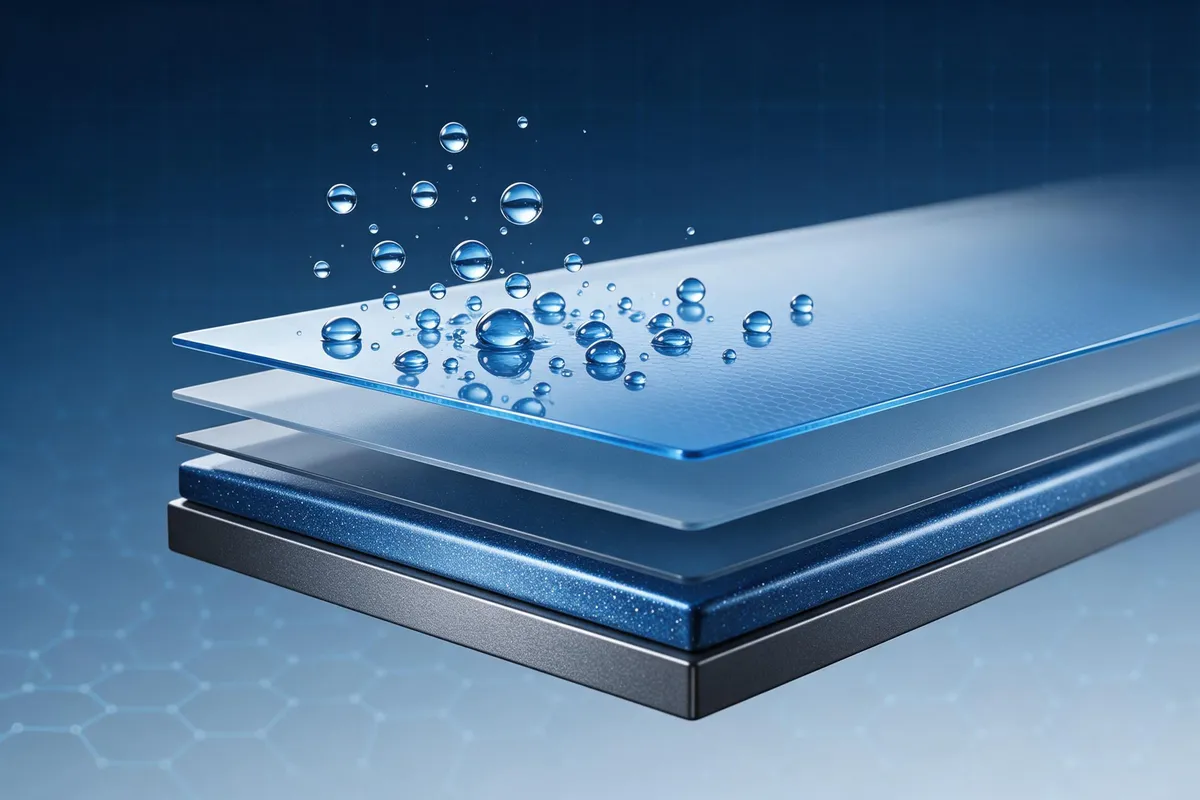
Seven contamination categories
| Contaminant | Possible interaction |
|---|---|
| Bird droppings | Chemical exposure and light-related effects require testing |
| Insect remains | Chemical exposure and physical adhesion |
| Tree sap | Adhesion and possible chemical interaction |
| Tar and bitumen | Adhesion and formulation-dependent solvent interaction |
| Acid rain | Repeated acidic exposure; evaluate the exact film |
| Hard water | Deposits and drying, not a universal chemical-damage diagnosis |
| Fuel and solvents | Possible swelling or extraction, depending on the material and exposure |
The removal product can matter as much as the deposit. Do not leave an unapproved remover on film, and do not assume a fuel spill has a universal harmless interval. Follow product and chemical safety instructions promptly; any dilution or rinse method must suit the actual spill and film.
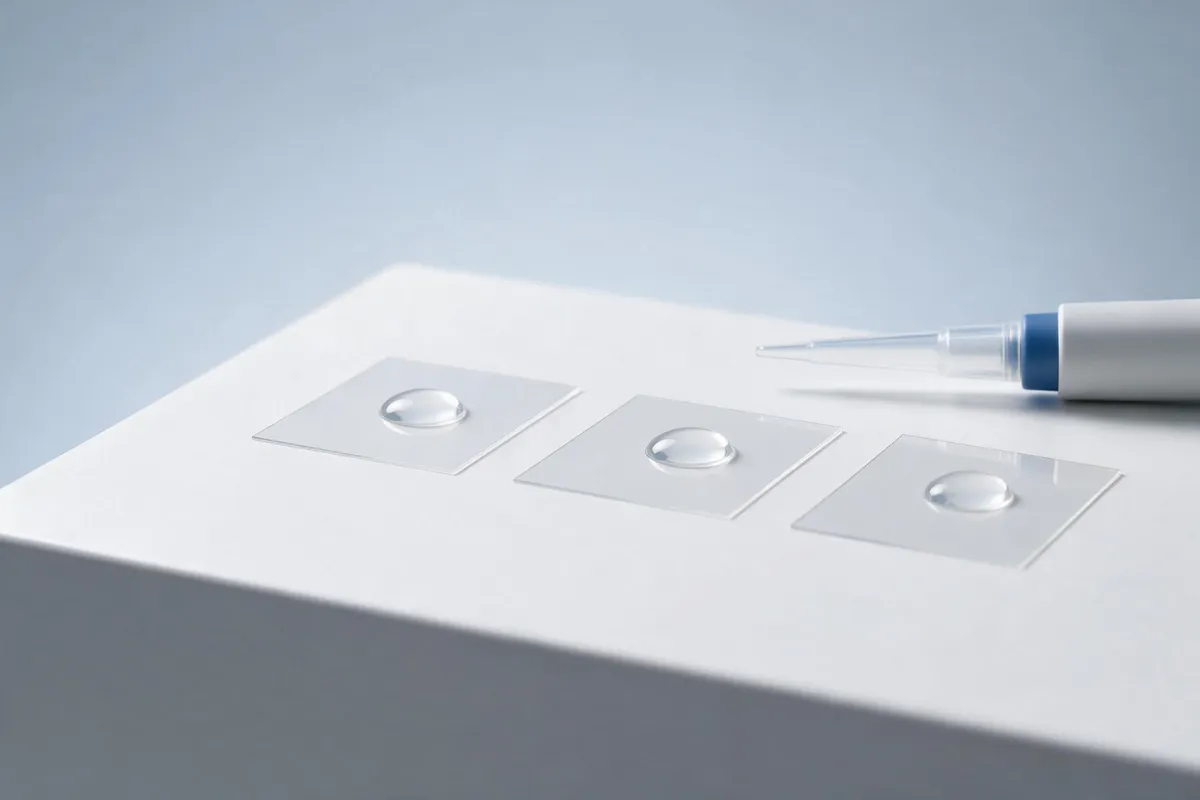
Define the stain-resistance claim
Specify the contaminant, concentration, contact time and measurement, together with temperature and cleaning conditions. A general adjective does not supply a reproducible purchase specification.
A statement to request as an example: For example: after 24 hours at 40 °C with a named test contaminant, report measured ΔE and gloss change after a specified wash. This is a sample reporting format, not a CHISI result or an approved universal test protocol. The measurable statement can be checked against a report; “excellent” alone cannot.
Three useful measurements
- Color difference (ΔE). Measure the treated and control areas with a stated color-measurement method, instrument and conditions. Agree the ΔE formula and acceptance criterion; a low single-digit number is not meaningful without that context.
- Gloss change (GU at 60°). Use the stated angle and compare before and after exposure. Colour, texture and finish affect how a mark is seen; a gloss change does not by itself identify the damage mechanism.
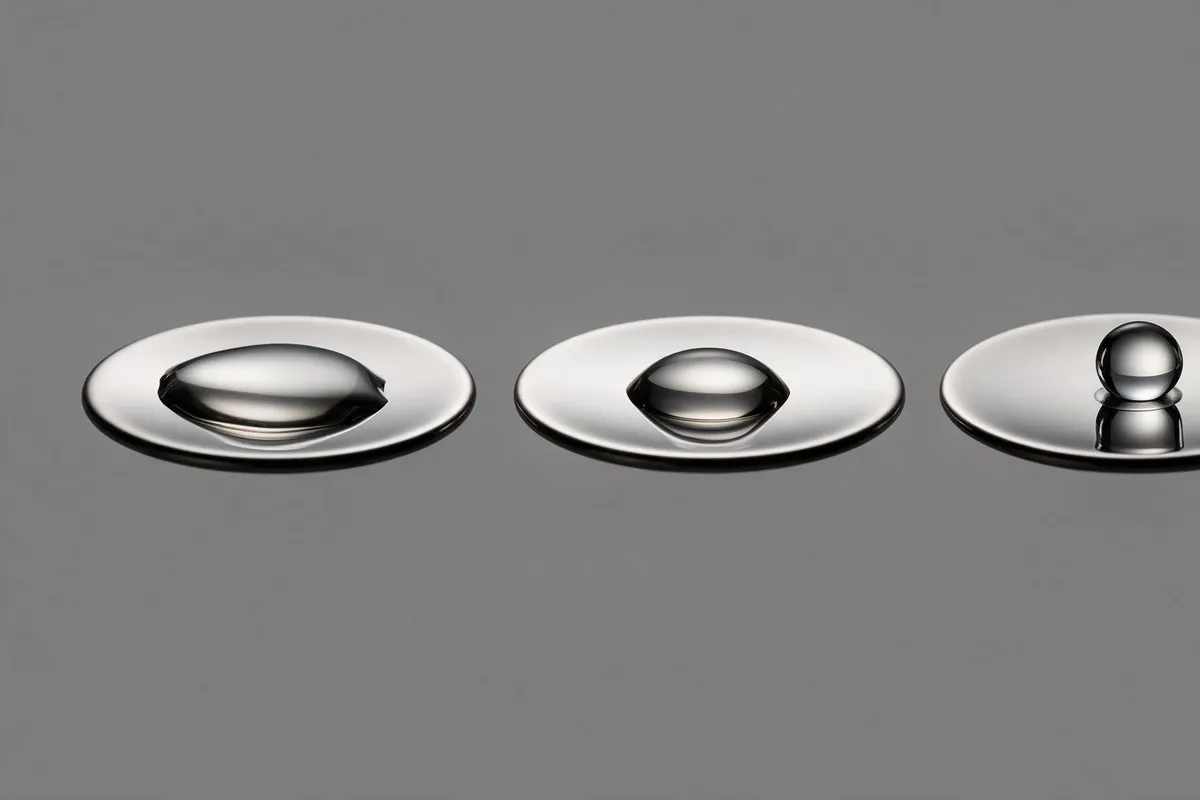
- Contact angle. A contact-angle measurement describes wetting under its test conditions. Specify the liquid and procedure; water beading alone does not prove resistance to oils, proteins or chemical staining.
Comparing coating approaches
| Generic coating category | Proposed role to verify | Potential benefit to test | Limit or verification need |
|---|---|---|---|
| Nano-silica | Surface and wetting modification | Measure water behavior, gloss and stain removal on the finished film | Formulation, application and wear matter; no automatic thickness or durability ranking |
| Graphene-containing coatings | A possible barrier-design approach | Verify any chemical-barrier benefit on the actual formulation, not the ingredient name | Dispersion, color, loading and cost depend on the specific system |
| Ceramic-type / SiOx examples in general literature | Surface and mechanical design | Test abrasion, wetting and cleaning performance for the exact coating | Do not infer brittleness or CHISI’s confidential nano-ceramic composition from this category |
| Fluoropolymer examples | Surface-release design | Verify oil and organic-residue removal with a defined test | Hardness and recovery behavior require formulation-specific data |
These are broad design categories, not a ranking of CHISI products or disclosure of their recipes. Test each finished-film candidate against the contaminants that matter. Keep the confirmed graphene systems and nano-silica systems distinct, and do not transfer one series’ parameters or warranty to another.
Testing the supplier’s claim
Use a controlled, documented protocol appropriate to the chemicals and equipment.
- Prepare samples of each candidate, matching color, finish and conditioning. Use only a compatible cleaning/preparation method; isopropyl alcohol is not automatically suitable for every film.
- Apply a controlled volume Treat this as an example; confirm dosing, evaporation control and chemical safety for the actual test.
- Control temperature and duration Source examples are 24 hours at 23 °C and 24–72 hours at 40 °C. They are comparative screening conditions, not CHISI results or a conversion into outdoor service life.
- Clean using the defined method Use the approved shampoo and soft cloth, dry, then measure ΔE and 60° gloss against an untreated control using the agreed instrument settings.
- Repeat on three coupons Three coupons alone do not prove batch consistency; define the sampling and repeatability plan.
Use the same protocol for reference and competitor samples. Record both absolute results and differences; comparison alone does not create a market ranking or replace an agreed acceptance limit.
Damage limits
State limits precisely rather than promising universal resistance:
- Concentrated or incompatible solvents. Brake fluid, carburetor cleaner, thinner or adhesive remover may damage a film. Identify the exact product and use its safety guidance; this list does not define a universal safe concentration.
- Strong acids and alkalis. Do not use wheel acids, cement remover or drain cleaner on film without explicit product-specific approval and appropriate safety controls.
- Prolonged contamination. No ingredient label proves that a dropping can be left in the sun for a month. Remove it promptly and assess any remaining mark; do not invent an absolute failure time for all films.
- Physical damage. A cut through the surface may expose other layers. Assess damaged areas separately from intact coupons and agree the repair or replacement procedure.
Inspect the actual damage rather than assigning a performance result from the impact count alone.
Appearance on dark colors
Color, gloss, texture, lighting and panel temperature can change how a mark is seen and develops. A gray patch may stand out more on a dark sample, while another finish needs raking light. Do not infer identical damage or faster chemistry for every dark film; keep the exposure and inspection conditions controlled.
For customer guidance and demonstrations, use representative colors and finishes, a control sample and consistent lighting. A dark coupon can reveal some marks clearly, but one light or dark sample does not establish performance across the range or the pattern of customer complaints.
Procurement specifications
Record the following in the agreed purchase specification, with the tested model and source version, instead of relying on a broad brochure claim:
| Specification item | Purpose |
|---|---|
| Declared coating category and product tier | Identify the intended application without demanding disclosure of confidential formulation |
| Stain-test method and exposure conditions | Compare results only under equivalent, documented conditions |
| ΔE and gloss-retention results | Record the method, result and agreed acceptance criterion separately |
| Contact-angle method and result | Support wetting assessment without substituting for stain-removal testing |
| Batch-to-batch tolerance | Specify sampling and consistency, not only a best coupon |
| Film-specific care instructions | Align care with the product’s instructions and actual warranty terms |
Align customer instructions with the tested claim without turning the test into a universal safe period. For the care procedure, see PPF care and maintenance.
Frequently asked questions
Can PPF stain?
It can. Resistance must be stated for the actual film, contaminant and exposure. Do not infer stain-proof performance or a universal time limit from coating names; clean promptly with an approved method and assess any persistent mark.
How long can bird droppings remain on PPF?
Remove them as soon as practical using the film’s instructions. Persistent dullness needs inspection.
Can a stain be polished out of PPF?
Do not apply paint-correction methods unless the film maker explicitly permits them. Abrasion can change the topcoat and finish. Have the mark assessed before stronger cleaning, heating or a decision to replace the panel.
Does graphene prove better stain resistance?
No ingredient name proves the finished-film result. A proposed barrier mechanism must be supported for the actual formulation with contaminant, temperature, dwell time and measured ΔE or gloss results. Do not transfer RCX data to GCX or generic coating research to a product guarantee.
Does matte PPF need different cleaning?
Follow the matte-film instructions and use products approved for that texture. Residue or gloss change can be conspicuous, but difficulty is not identical for every matte film. Test the cleaner discreetly and avoid aggressive rubbing.
What can remove tar from PPF?
Use only a remover approved for the film, at its stated dilution and dwell time, then rinse as instructed. “Dedicated tar remover” alone is not proof of compatibility. Avoid scraping and unapproved solvent soaking.
Does a ceramic coating over PPF help?
It may change wetting and ease of cleaning when compatible, but the result needs product-specific evidence. It is not a second warranty or permission to leave contamination in the sun. Follow both film and coating instructions.
Specify for the intended environment
Define the actual contamination and exposure in the destination market rather than treating a region as one climate. Northern Europe and Gulf markets are source examples, not measured rankings. Test the relevant contaminants on the finished film and make the care instructions consistent with the results.
Our manufacturing and R&D capabilities describe our coating and weathering work. The OEM and ODM catalog presents product programs for private label, with confirmed graphene and nano-silica systems kept distinct and no disclosure of confidential nano-ceramic ingredients. For a market-specific specification, contact our team with the climate, frequent contaminants and proposed commercial scope. Warranty terms must follow the actual selected model, not a target period from a planning exercise.