
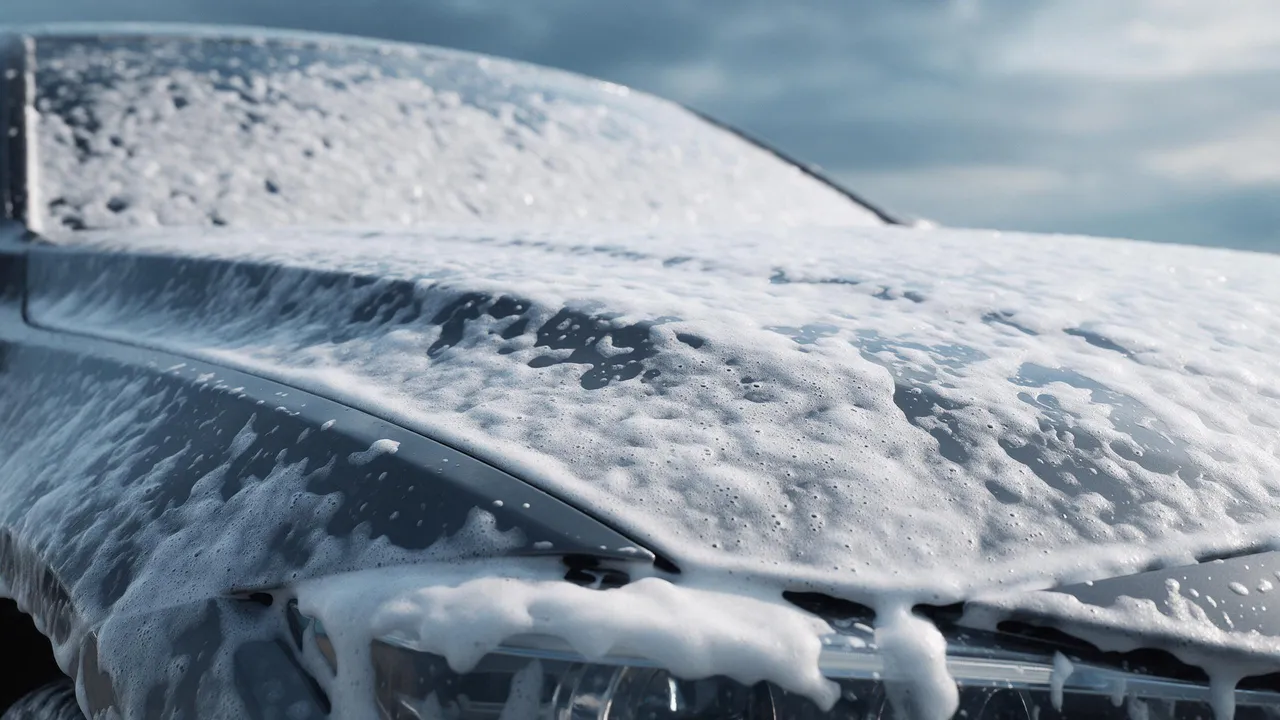
Quick guide: Use the selected film’s care instructions. A typical routine uses pH-neutral shampoo, two buckets, a soft microfiber mitt and plenty of water. Avoid scrubbing, abrasive polish and unapproved solvents; keep a pressure jet away from edges. Remove droppings and insects promptly rather than leaving them for weeks.
A maintenance complaint is not automatically a film defect. Possible causes include gritty wash brushes, an incompatible tar remover, contamination left in heat, or pressure washing that lifts an edge. Inspect and document the actual cause before deciding a claim.
This guide helps installers hand over a care plan and helps distributors respond to maintenance questions. It covers the first week, gentle washing, stain removal and inspection records.
On this page
First-week care
Protect the new film from prolonged rain and keep wash water away during the first week after installation.
- Do not wash the vehicle during the first week after installation.
- After the first week, keep pressure jets away from film edges, mirrors and bumper returns.
- Check initial haze. Residual moisture can produce a temporary milky appearance. Monitor whether it clears as the film dries; persistent or worsening haze needs inspection rather than an automatic assurance that it is normal.
- Photograph large, growing or persistent bubbles and ask the installer to inspect the affected panel.
- Avoid parking under trees where practical, to reduce sap and droppings on newly installed film and its edges.
Give the customer the confirmed instructions in writing at handover. A short card makes the waiting periods, inspection signs and contact route clear.
A gentle washing routine
Do not assume that every topcoat behaves like paint or that every film self-heals. Where light-mark recovery is specified, it still does not justify scrubbing. The example below aims to remove dirt with compatible products and water while limiting abrasive contact.
| Step | Method | Purpose |
|---|---|---|
| 1. Pre-rinse | Rinse at low pressure, from top to bottom | Remove loose grit before contact |
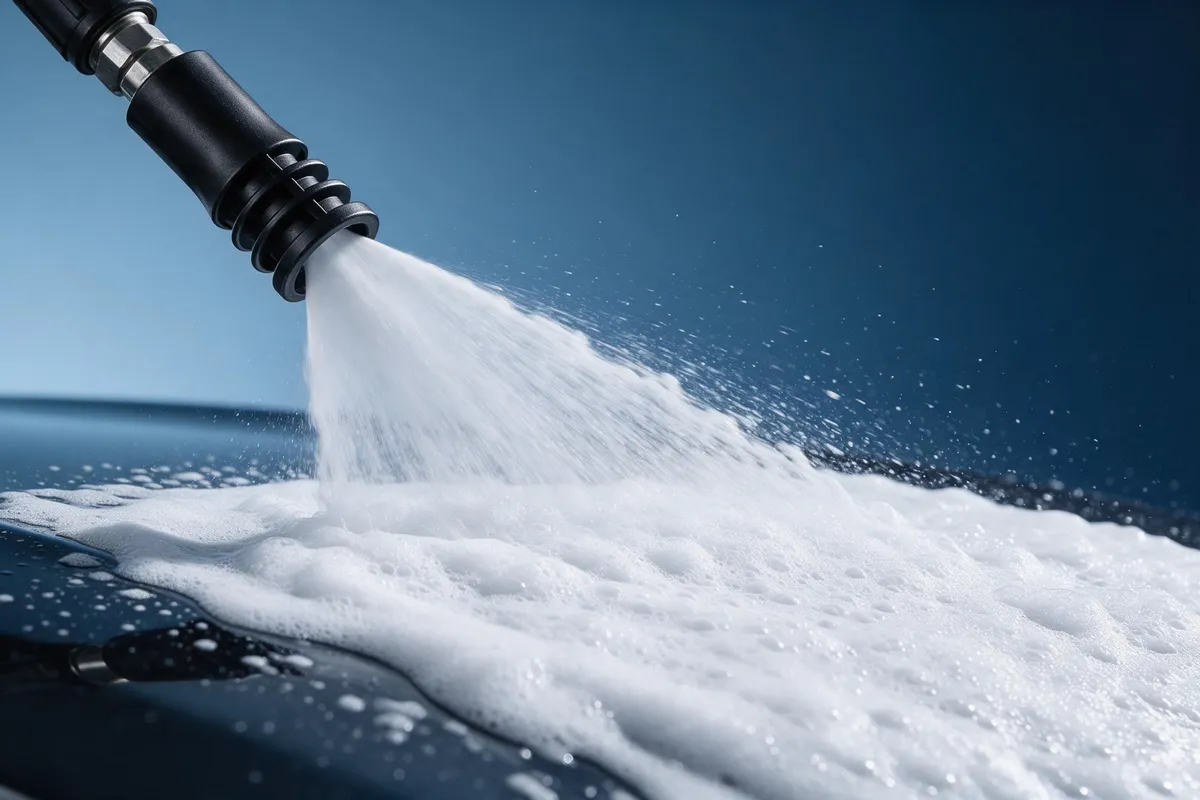
| 2. Pre-wash foam | Choose cleaners and application methods approved for the film. Follow the specified contact time and rinse or remove the cleaner as directed. | Loosen dirt without rubbing; do not let the foam dry |
| 3. Contact wash | Two buckets, a soft microfiber mitt and straight passes | Keep grit out of the mitt and avoid repeated rubbing |
| 4. Rinse | Free-flowing water, from top to bottom | Remove remaining cleaner and reduce drying marks |
| 5. Dry | A plush microfiber towel or filtered-air blower; blot rather than drag | Dragging a dry towel over grit can leave marks |
| 6. Edges | Blow or blot dry; avoid rubbing along the edge | Repeated rubbing can lift an edge and trap grit |
Use a wide spray pattern after the first week and keep the jet away from edges and seams. Follow the film and washer instructions for distance and pressure.
Chemical compatibility
Compatibility depends on the complete film and cleaner formulation, concentration, temperature and contact time. Use the table as a screening guide, then check the exact product instructions and test an inconspicuous area before wider use.
| Product | Guidance | Notes |
|---|---|---|
| pH-neutral car shampoo | Check approval | Use a film-compatible product at its stated dilution |
| Pre-wash foam | Check approval | Do not let it dry on the surface |
| Isopropyl alcohol wipe | Only at an approved dilution and frequency | Confirm any spot-cleaning or pre-coating use; do not assume routine use is compatible |
| Bug and tar remover | Check the exact formulation | A citrus label alone does not establish compatibility; confirm ingredients, dilution and dwell time |
| Acid wheel cleaner / strong alkaline cleaner | Keep off film unless expressly approved | Check overspray and runoff, not just the surface being cleaned |
| Solvents: xylene, toluene, acetone, thinner | Do not use without product-specific approval | Potential risks include swelling, haze and topcoat damage; follow the cleaner’s safety information |
| Abrasive polish or compound | Avoid unless the film maker specifies it | Abrasive correction can alter or remove the topcoat; do not assume paint-polishing methods apply |
| Automatic brush car wash | Avoid abrasive contact | Trapped grit and brush contact can mark the film or catch edges |
Wax, sealant or ceramic coating?
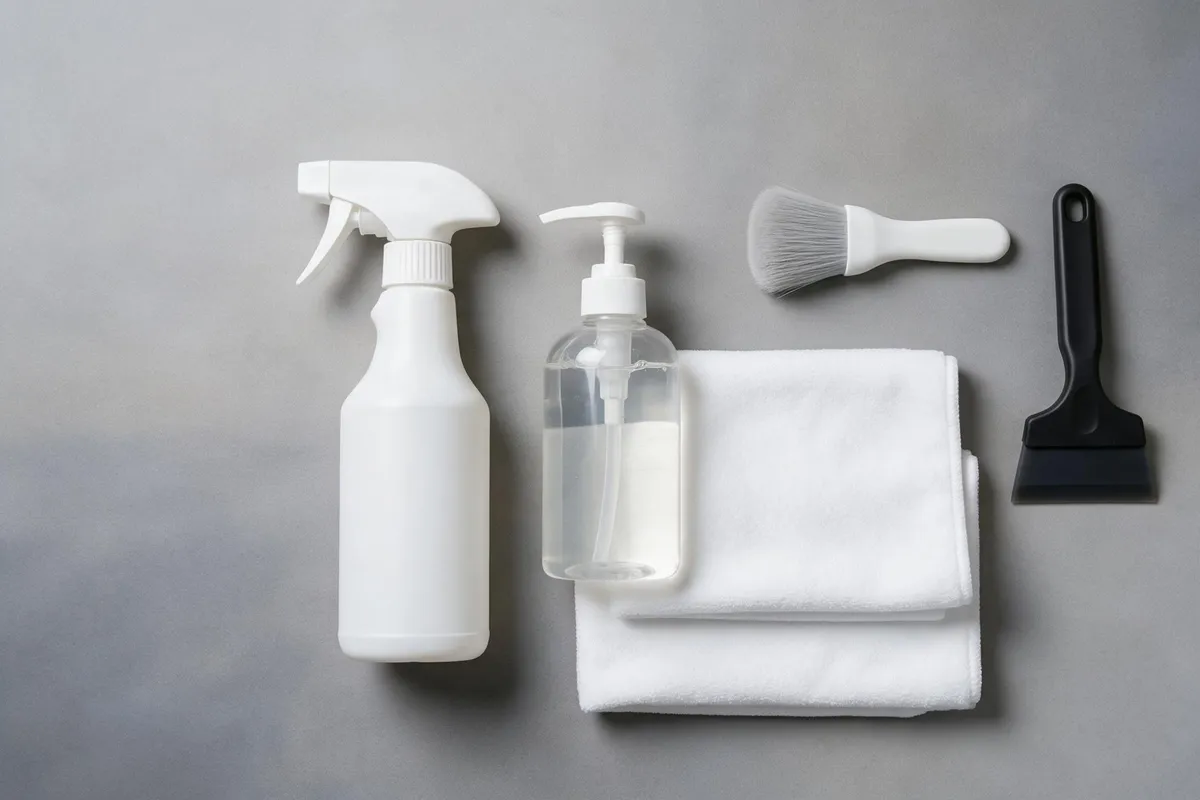
Check compatibility for the exact film finish and coating product; no option is automatically suitable for every PPF.
Wax may change gloss and water behavior, but its cleaners, solvents or residues can be unsuitable. On matte film, use only a product specifically approved for that texture and check for residue or gloss change.
Sealant can be considered where approved, with attention to application, removal at edges and compatibility. Do not infer pH or safety from the product category alone.
A ceramic coating specified for film is another option, not a universal best choice. Confirm the intended gloss or matte finish, application conditions and cleaning benefits with the supplier. Follow its cure time before washing; a paint coating is not automatically suitable for PPF.
Do not treat the film as paint to be machine-corrected. Have visible marks assessed: recovery depends on the film and damage, and deep damage may require replacement. Do not improvise polishing or heating procedures.
Removing stains and contamination
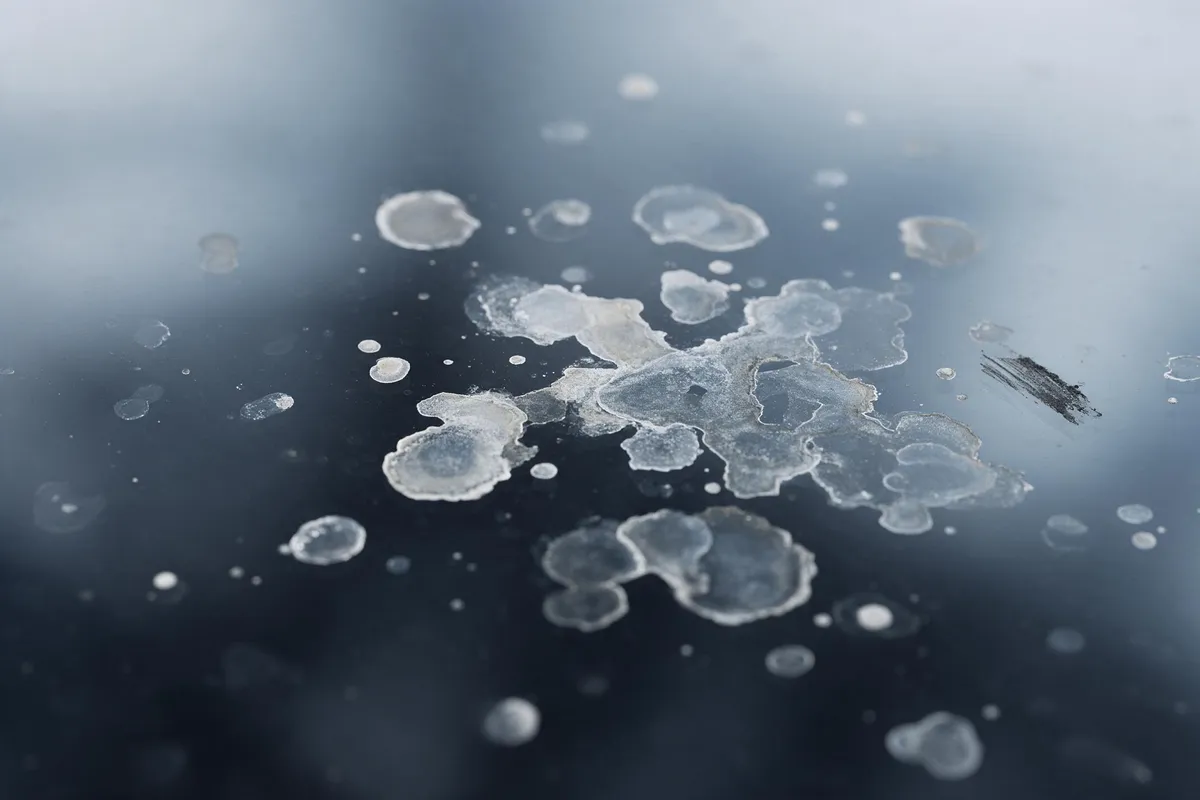
Damage depends on the contaminant, film construction, temperature and contact time; do not assume a fixed topcoat-to-adhesive sequence. Prompt removal using a compatible procedure is preferable to aggressive correction later.
| Contaminant | Example response | Avoid |
|---|---|---|
| Bird droppings | Soften with compatible soapy water for several minutes, gently lift and rinse | Scraping, fingernails or prolonged exposure on a hot surface |
| Tree sap | Soften first; use only a film-approved sap remover, then rinse | Unapproved solvent soaking or hard scrapers |
| Tar | Use an approved tar remover at its stated dwell time; wipe gently and rinse | Leaving incompatible petroleum-based cleaners on the film |
| Bug splatter | Soften with compatible foam and use a soft mitt; repeat instead of scrubbing | Abrasive sponges or unapproved bug blocks |
| Water spots | Use a film-approved water-spot remover; rinse and dry fully | Unapproved acids or repeated vinegar soaking |
| Fuel spill | Blot promptly, then follow the approved rinse and shampoo procedure | Leaving the spill to evaporate on the film |
Winter, sun and parking
De-icing. Avoid hard scraping on film. Use only an approved de-icer or gentle snow-removal method, following the film and chemical instructions; do not assume any spray or brush is suitable.
Snow and road salt. Remove road-salt and dirty-water deposits with an approved rinse routine, paying attention to lower panels, arches and bumper returns. Do not assign a universal pH to every road-salt mixture.
Sun and parking. Weather exposure and contamination both affect maintenance needs. Covered parking can reduce exposure, but does not establish a guaranteed appearance life. Inspect for sap, droppings and other deposits wherever the vehicle is parked.
Heat and recovery. Use only the film’s documented recovery procedure. A warm day or water treatment is not a universal repair method, and a heat gun should not be improvised on installed film. Confirm the temperature, exposure and damage limits for the actual product.
Check the actual warranty exclusions
Read the applicable manufacturer’s terms. The following are examples of damage or handling that may affect a claim, not a universal list of CHISI exclusions or an automatic refusal of coverage:
- Damage associated with abrasive polishing, compounding or rotary buffing.
- Topcoat damage associated with incompatible solvents or acids.
- Scratches associated with abrasive brush washing.
- Edge damage associated with a pressure jet or an unaddressed lifted edge.
- Installation over repaint that has not met the paint maker’s curing requirements.
- Alteration, removal or reinstallation outside the agreed installation procedure.
- Accident, vandalism or impact damage: assess the actual warranty and any insurance contract rather than assuming either covers it.
Separate a suspected manufacturing defect from external damage and assess it under the covered model and actual terms. Explain the process at sale and keep the evidence needed for assessment. For a distributor planning a program, see PPF warranty program design.
The handover card
Finish each installation with a concise written care card. The following six-line example must be adapted to the confirmed film, adhesive and warranty terms:
- Keep the film dry where possible. Do not wash the vehicle or expose the new film to prolonged rain during the first week.
- Use an approved pH-neutral shampoo, two buckets and a soft mitt.
- Avoid unapproved polish, compound, solvents and abrasive brush washing.
- Remove droppings, sap and insects promptly using the approved procedure.
- Ask the installer to inspect persistent haze or large and growing bubbles.
- Keep the serial number, installation record and care card; follow the applicable warranty procedure, without assuming registration alone activates coverage.
Keep installation photographs, panel close-ups and the film serial number with the card. These records help a later assessment but do not automatically prove a valid claim. For installation documentation, see PPF installation standards.
Frequently asked questions
Can I wash a car fitted with PPF?
Wait until the first week has passed, then wash with a compatible pH-neutral shampoo and a soft mitt. Avoid abrasive brushes and direct pressure jets at film edges.
Can you wax PPF?
Only use a wax, sealant or ceramic coating approved for the exact film and finish. Check the formulation and application instructions, especially for matte texture and edge residue; no product category is universally preferable.
Does PPF need special soap?
Select a shampoo approved for that film; pH-neutral car shampoo is a common starting point, not proof of compatibility by itself. Follow dilution and dwell limits and rinse fully before the cleaner dries.
Can PPF be scratched?
Abrasive contact can mark a film. Where self-healing is specified, recovery depends on the damage and the documented conditions; it is not scratch-proof protection. Deep cuts require assessment and may need panel replacement.
Can a PPF car use an automatic wash?
Check the film’s care instructions. Brushes can retain grit or catch edges, while touchless systems may use incompatible chemicals. Verify the actual equipment and products instead of assuming either type is safe.
How should bird droppings be removed?
Soften with compatible soapy water for several minutes, gently lift and rinse. Do not scrape or leave contamination on a hot surface. If a mark remains, ask the installer to assess it before stronger treatment.
How often should PPF be cleaned?
Treat this as a planning example and adjust to the film’s instructions and actual exposure; washing does not guarantee warranty coverage.
Building a maintenance service
A documented maintenance service can support customer follow-up. An annual inspection is one planning example: wash, decontaminate, check edges, photograph and renew an approved coating where appropriate. Define the scope and price without promising revenue or warranty outcomes.
For distributors, consistent supply helps document the products used, but buying chemicals, towels and tools from one supplier does not prove compatibility. Confirm the exact combinations. Our manufacturing and R&D capabilities describe our film and coating work. The OEM and ODM catalog presents care chemicals and tools available for project discussion. To discuss a dealer or distributor program, contact our team with your market and the film ranges you carry.