
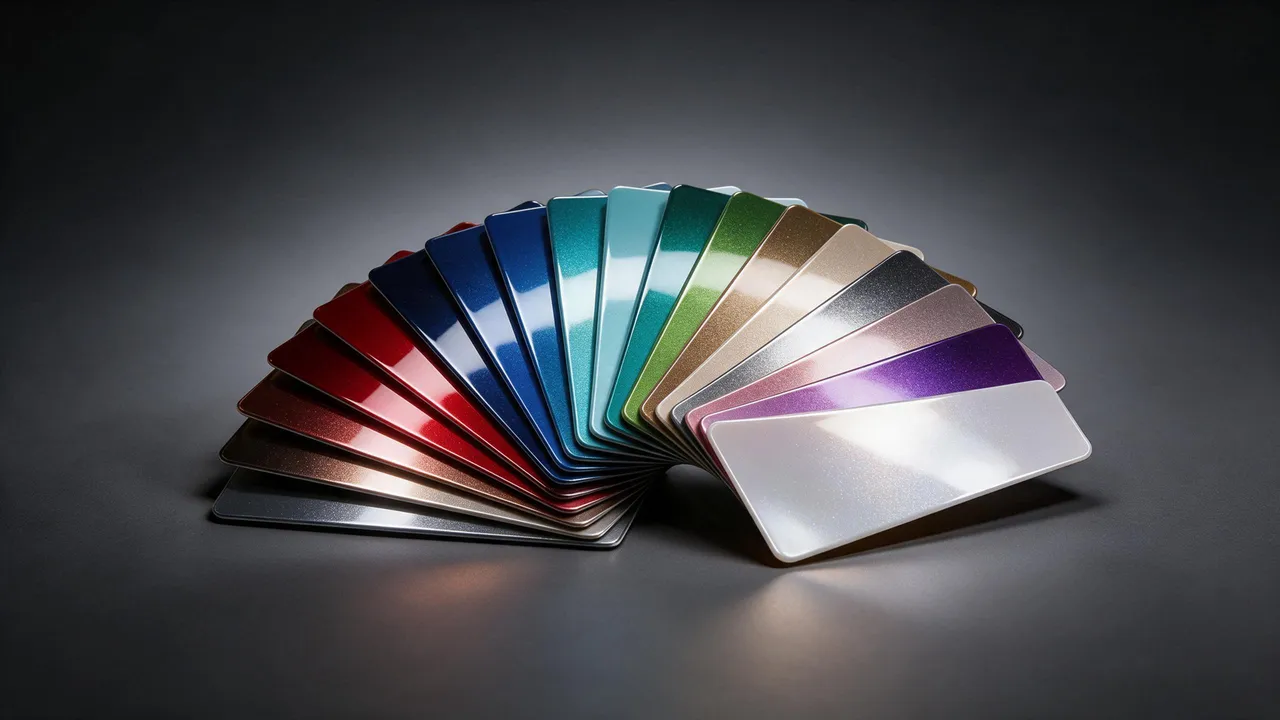
Launching a color PPF range involves a product system: colors, material routes, warranty terms, packaging and installer support. Treat these as coordinated decisions rather than simply adding colored rolls. A structured launch can help manage stock and installation issues, but does not guarantee fast sell-through, repeat orders or high margins.
This guide follows six planning steps: define the colors, choose material routes by series, check optical and aging evidence, prepare warranty and packaging, organize installer support, and pilot a focused range before expanding. It is intended for distributors, brands and installation networks. CHISI’s documented series and material routes inform the discussion; historical example values below are not universal specifications or independently verified results for every color.
Distinguish color PPF from vinyl wrap
Color TPU PPF combines an appearance change with paint protection. PVC vinyl wrap has a different construction and product position; do not assume that every vinyl offers no protection. Compare the actual specifications, installation method, intended service conditions and warranty for both products.
TPU, color layers, topcoat and adhesive work together in color PPF. Elastic recovery, impact response, self-healing and color depth depend on the selected construction and conditions, not TPU or a process name alone. Do not infer the location of color in every film or promise a scratch-proof, paint-identical surface without product evidence.
Compare finish, protection, supported durability and total installation labor, not price per square meter alone. Any labor saving versus wrap plus coating needs to be established for the actual workflow.

Step 1: Define the color portfolio before pricing
Use series, sample appearance, buyer needs and sales evidence to select colors, rather than taste alone. A small number of clearly differentiated series is one planning option, not a guaranteed launch formula.
The table retains a historical catalog example. Counts are mature-range references, not first-order requirements or current stock for every model. Appearance labels are commercial descriptions, not ingredient claims. USD pairs are old quotation references, subject to the original MOQ and current sales confirmation.
| Commercial series name | Referenced appearance | Historical color-count reference | Historical price pair (USD/roll) |
|---|---|---|---|
| Crystal | Gloss appearance; solid or metallic-look colors | 100+ | 450 / 400 |
| Metallic | Metallic-look highlights; assess the actual sample | 100+ | 480 / 430 |
| Dream | Color-shift or multi-angle appearance as shown by the sample | 50+ | 510 / 480 |
| Liquid Metal | Flowing, chrome-like appearance; not a metal-content specification | 40+ | 480 / 430 |
| Matte | Low-gloss appearance | 60+ | 480 / 430 |
| Pearl | Soft pearlescent appearance | 30+ | 480 / 430 |
| Laser | Holographic or laser-like appearance; confirm on the sample | 8+ | 580 / 550 |
| Carbon Fiber | Textured carbon-fiber look, not proof of carbon-fiber composition | 6+ | 680 / 650 |
The two prices relate to order tiers; the original reference uses MOQ >1 and >10, not simply a one-roll or ten-roll promise. Confirm currency, threshold, specification, validity and trade terms in the current quotation. Manage version changes transparently rather than promising a fixed recurring price.
Step 2: Choose material routes by series
A range may use different documented constructions. Define the role of each tier in terms the dealer can explain, then assess cost, finish and demand. Do not assume that every series needs two tiers or that one resin brand always outranks another.
| Range position | TPU substrate | Topcoat | Adhesive | Product warranty, subject to terms | Example role |
|---|---|---|---|---|---|
| RCX reference tier | Lubrizol TPU | Nano-graphene | Ashland pressure-sensitive adhesive | 5 years | Flagship colors, gloss or special finishes, as specified by model |
| GCX reference tier | Covestro TPU | Nano-silica | Henkel pressure-sensitive adhesive | Up to 3 years | Volume-oriented colors or price-sensitive projects, subject to selection |
One planning option is to trial four or five flagship colors in one tier and others in another; it is not a universal stock or margin rule. Use observed demand and trial results to decide expansion. For more on substrates, see the TPU, TPH, PET and PVC guide.
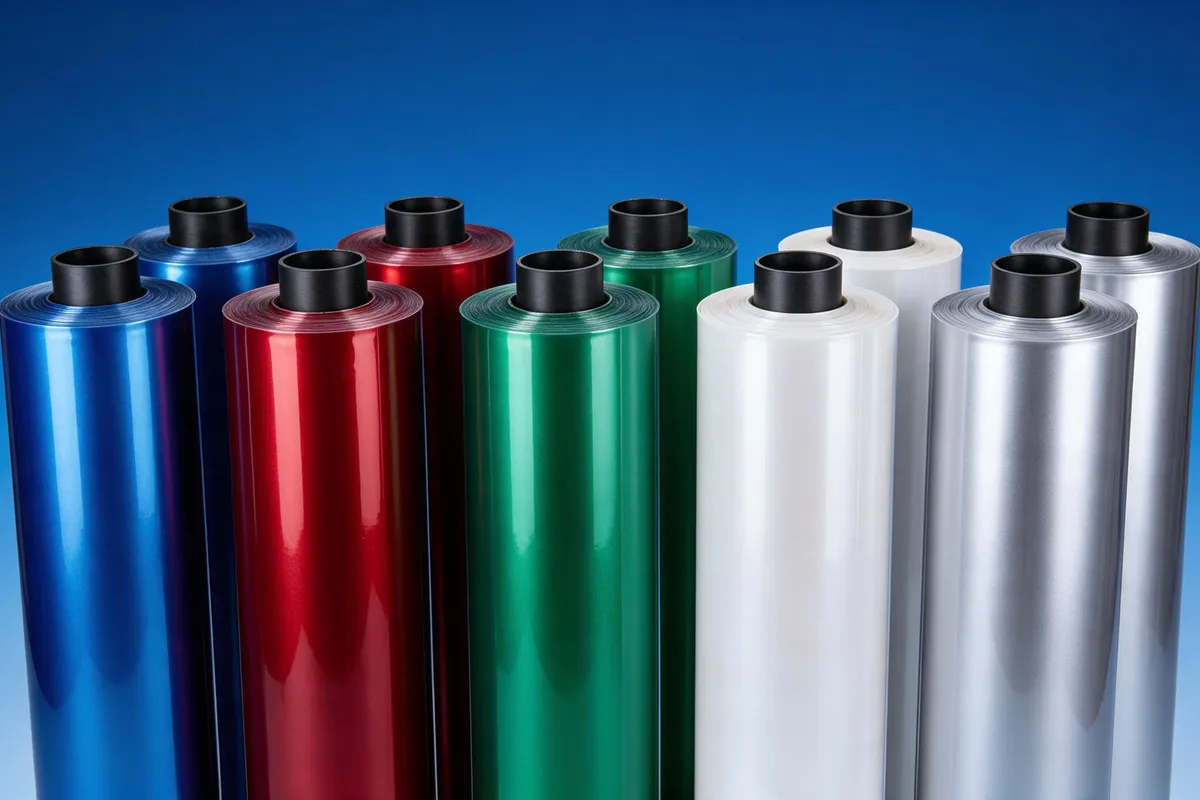
Step 3: Check color and optical evidence
Compare each finish using the same test conditions. Record the measured values and agreed acceptance criteria for the products you plan to sell.
| Property | What to record | What to assess |
|---|---|---|
| Gloss at 60° | Gloss in GU for the selected finish | Appearance of the specified gloss finish; not proof of a paint-identical surface |
| Xenon aging | Color change and exposure hours | Change under the stated xenon exposure, not outdoor years |
| QUV aging | Color change, cycle and exposure hours | Change under the actual QUV cycle; request full conditions |
| UV aging | Color change and test method | Coordinate change under the stated UV procedure; not a lifetime conversion |
| Peel force | Peel force, unit, substrate, angle and dwell time | Adhesion under stated conditions; force alone does not prove clean or paint-safe removal |
| Stain resistance | Contaminant, contact time and measured staining | Staining in the specified trial; request contaminant, contact time and cleaning procedure |
In CIELAB, Δb* is a signed yellow–blue coordinate difference, not total ΔE; a numerically lower signed value does not always mean less overall color change. Request the reference, measurement conditions and acceptance rule. For specification reading, see how to read TPU PPF specifications.
Step 4: Prepare warranty and packaging
Before launch, prepare a usable printed or digital warranty process, packaging suited to the series, and color samples assessed under the intended showroom lighting. Confirm activation, checking and coverage terms rather than promising that packaging alone creates a premium position.
Use current film swatches to assess the actual film appearance; printed paper is not a substitute for that check. Update decks when the series changes, confirm batches and viewing conditions, and keep sample-approval records. This can reduce misunderstandings, not guarantee zero returns.
Step 5: Prepare installer support before shipment
Define product-specific installation instructions and technician training before supplying the range. Clear support can help resolve questions, but is not a guarantee of repeat business.
Do not assume all color PPF permits both wet and dry installation. Confirm the approved method for the film and adhesive, train the first installers and agree rework criteria. Set a realistic support-response process; no universal response in hours is promised.
Step 6: Pilot a focused color range
Start with a small assortment across finishes and work with installers to track sales, fit, questions and returns before expanding.
Also test sample accuracy, shipping-pack performance and the warranty workflow. A focused pilot limits the initial scope and can reveal operational gaps; actual cost and information quality depend on its design.
Common planning mistakes
- Treating it as identical to vinyl. A square-meter price comparison alone misses construction, protection and actual installation labor.
- Expanding colors before measuring demand. A broad launch can tie up stock and complicate sample maintenance; verify demand rather than assume every color sells.
- Using one material tier without assessing its fit. It may mismatch cost or buyer needs; compare actual products and do not assume two tiers are always necessary.
- Relying only on printed color cards. Assess film-based samples for actual finish and batch comparison.
- No product-specific installation method. Wet/dry confusion can create avoidable rework; follow the selected product’s instructions.
Buyer launch checklist
| No. | Item | Evidence to confirm |
|---|---|---|
| 1 | Series and color count | Series list, finish and applicable catalog version |
| 2 | Material route by series | TPU source, topcoat, adhesive and model-specific warranty |
| 3 | Optical and aging data | Gloss and Δb definition, method, specimen and exposure hours |
| 4 | Warranty process | Activation, coverage and claim terms |
| 5 | Packaging and color samples | Current film swatches, box and labels |
| 6 | Installation instructions | Product-approved wet/dry method and training scope |
| 7 | Pilot plan | Selected colors, installer group and review date |
Frequently asked questions
How many colors should the first order contain?
One source planning example is 12–20 colors across three or four series, tested by a small installer group. It is not a compulsory order size. Expand after reviewing sales, questions and returns.
How do RCX and GCX differ?
CHISI’s confirmed RCX route is Lubrizol TPU, nano-graphene and Ashland adhesive with a 5-year finished-product warranty. GCX uses Covestro TPU, nano-silica and Henkel adhesive with up to 3 years. Confirm the exact model and terms; neither route alone establishes price, demand or every performance result.
Can color PPF use wet or dry installation?
The permitted method depends on the actual film, adhesive and manufacturer’s instructions. Do not assume both are allowed for every series. Publish the model-specific method and train installers accordingly.
How should I compare color PPF and vinyl?
Compare the actual finish, protection, documented durability and total labor as well as price per area. Color TPU PPF combines appearance change with paint protection, but do not assume universal savings or zero protection from every vinyl product.
What evidence helps assess color stability?
Request specimen, color reference, coordinate definition, measurement settings, aging method, cycle and exposure hours. Δb alone does not establish total color stability or outdoor lifetime. Confirm the acceptance rule and the relevant full color-difference assessment for the model.
A practical launch rule
Plan a coordinated range: series, justified material choices, optical evidence, accurate warranty and samples, installer guidance and a manageable pilot. Use feedback to refine it. Clear explanation and a controlled process support the project, without guaranteeing an installation free of surprises or a successful business outcome.
Suggested next step
For portfolio planning, review Type RC Crystal and Type GC Crystal as product references. Request current film swatches and discuss OEM scope through the OEM/ODM catalog. For supplier selection, see the PPF manufacturer evaluation framework.
References
- CHISI internal color-film documentation: historical series, material routes and optical/aging references; confirm current model and report scope.
- CMPE PPF category: industry discussion, not independent comparative proof for every TPU or PVC film.