
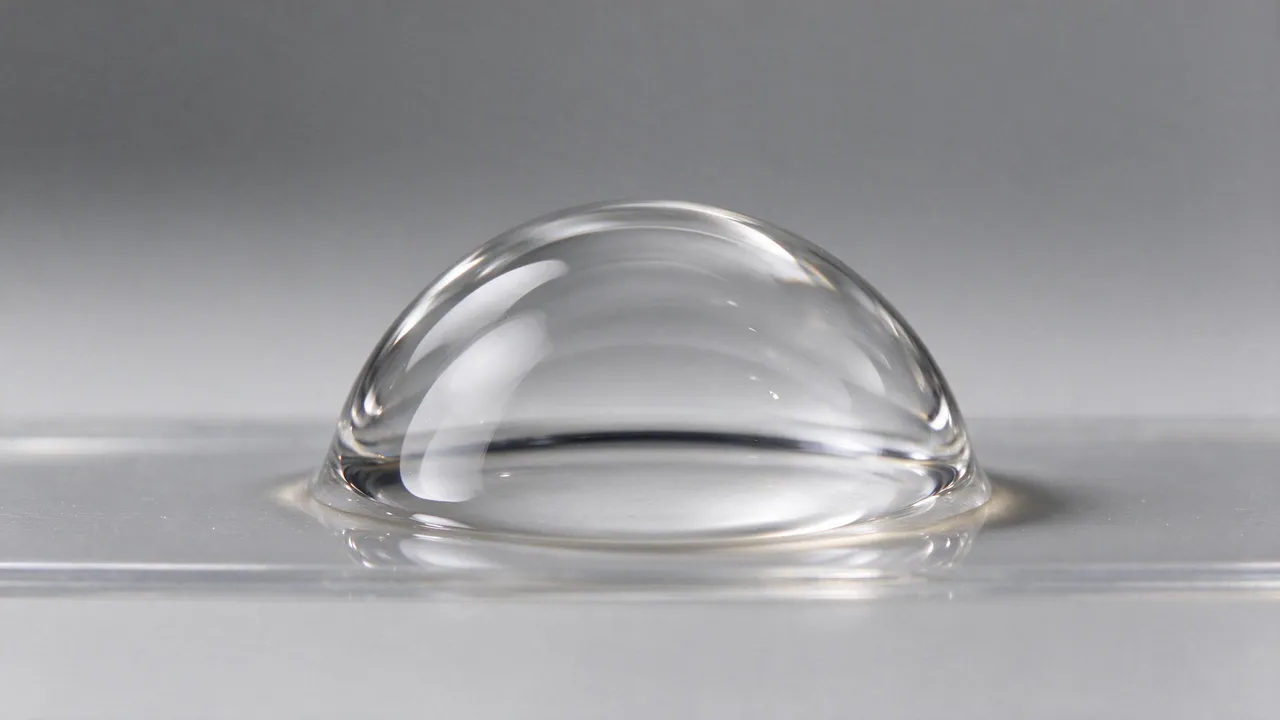
Quick guide: Evaluate wetting, droplet movement and practical cleaning separately. A high water contact angle does not by itself prove low roll-off, oil repellency, adhesion or long-term stain resistance. The coating examples in this guide do not disclose CHISI formulations or classify every product. Compare defined methods and the selected film’s evidence, rather than one headline angle.
The exposed film surface interacts with water, oils, deposits and any later coating or adhesive. Surface chemistry and texture both matter, as do the liquid and measurement conditions. Neither surface energy nor a water-beading demonstration alone predicts cleaning, bonding, repairability or service life for the complete film.
This guide reviews wetting concepts, illustrative coating approaches, water versus oil behavior and measurement questions for procurement. Source angle bands are examples, not CHISI specifications or a ranking of coating cost and durability. Confirm the selected model, test object and exposure before comparing results.
On this page
- 1. Surface energy and contact angle
- 2. Wetting and bonding requirements
- 3. Illustrative coating approaches
- 4. Water and oil behavior
- 5. Source angle examples and limits
- 6. Measurement methods
- 7. Exposure and contamination assessment
- 8. OEM and ODM specification review
- 9. FAQ
- 10. Discuss the application
Surface energy and contact angle
Surface free energy describes a surface’s energetic state and is commonly reported as energy per area. Wetting depends on the interaction of the solid and the chosen liquid, not the solid value alone. A measured contact angle also depends on surface condition and the procedure; it is not a direct universal readout of surface energy.
For the same liquid and method, a larger apparent angle indicates different wetting, but it does not guarantee that a drop rolls away. Droplet movement, pinning and the drying residue require separate assessment. A small angle does not automatically mean staining, and beading alone does not establish self-cleaning.
Use the selected CHISI series’ confirmed coating description and its applicable measurements. Do not infer that all PPF uses one nano double-layer formulation or that a wetting value proves self-healing. The related stain-resistance discussion covers another performance question; compare the actual contaminant, contact and removal method rather than equating every test with a water drop.
Wetting and bonding requirements
Water shedding and practical dirt removal are related questions, not the same result. Surface condition, particle attachment, contaminant chemistry and washing can matter. A low-energy label or rolling-drop illustration does not establish that all dirt remains loose or that rinsing removes every deposit.
For a later adhesive, printed layer or coating, assess wetting and the actual bond separately. Low surface energy can make some bonding processes more difficult, but it does not alone determine adhesion. Distinguish bonding to the top surface from the film’s original adhesive-to-paint interface; they are not interchangeable.
Specify the intended interfaces and performance rather than minimizing a single surface-energy value. Any lamination, printing, repair coating or added protection needs its own compatibility review. The gloss, haze and DOI discussion addresses appearance, whose measurements are distinct from wetting or bond tests. One topcoat property does not supply every other result.
Illustrative coating approaches
Actual composition and surface design determine behavior. A family name does not establish the lowest surface energy, oil resistance, cost ranking or durability, and this guide makes no CHISI ingredient disclosure.
Surface texture can affect the apparent contact angle and droplet movement. Some designs use roughness and trapped air, but this does not establish a durable state under all loads, contamination or wear. Do not infer a particular nano-structure or a laboratory self-cleaning result from a bio-inspired label.
Keep nano-ceramic ingredient confidentiality and the separately confirmed graphene or nano-silica series descriptions intact. Choose by product-specific wetting, contamination and durability evidence, not by assuming one disclosed two-layer mechanism.
Water and oil behavior
A water contact angle does not establish behavior with an oil, solvent or mixed contaminant. The liquid’s properties and its interaction with the surface matter. Test the relevant material instead of treating tar, sap, insect residue and every oil as the same liquid or stain mechanism.
If oil contact matters, specify the oil or representative contaminant and the conditions, then evaluate wetting and removal separately. No fluorocarbon or other family label guarantees broad oil repellency. The appropriate evidence is a defined test on the selected product, not a prescribed universal ingredient choice.
Define what “self-cleaning” means in the intended assessment. Moving water may remove some loose particles under particular conditions; it does not establish removal of bonded deposits, oily films or dried minerals. A demonstration is not a substitute for a stated contaminant, procedure and acceptance criterion.
Source angle examples and limits
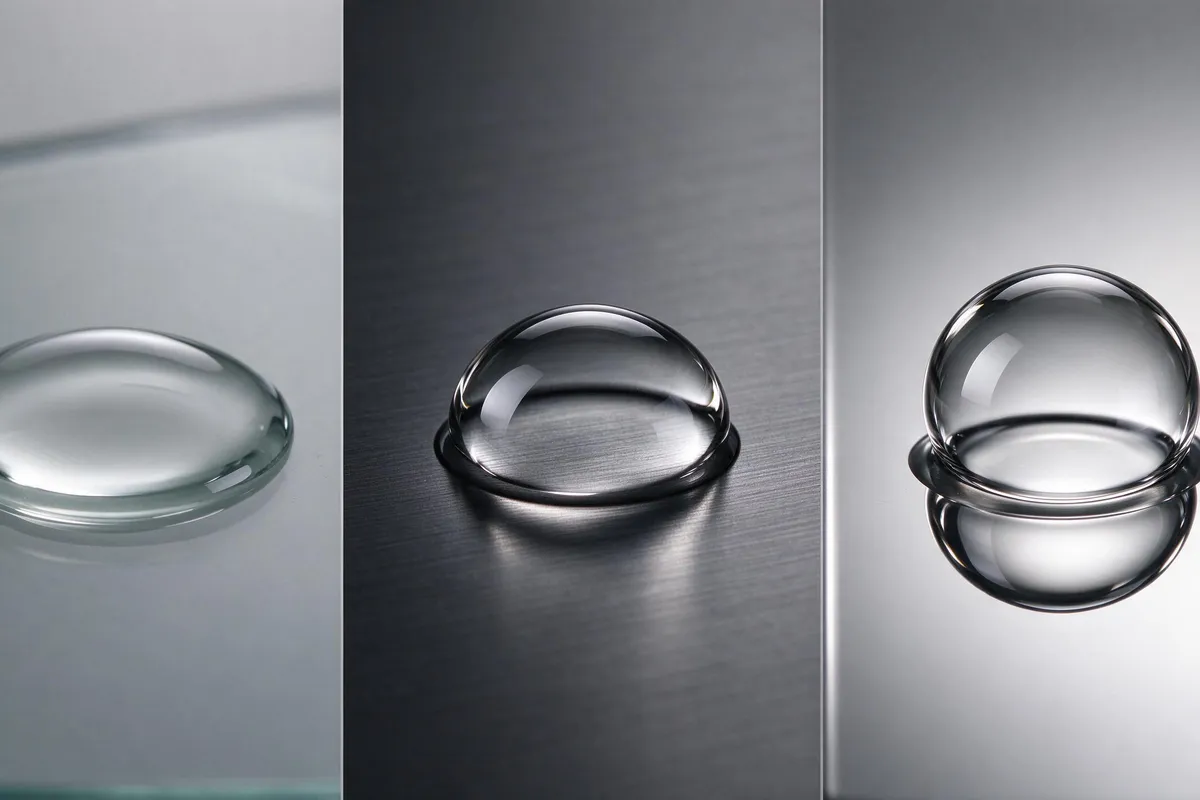
State the liquid, sample condition and method when comparing a result. Initial angle alone does not rank weathering, abrasion, price or long-term cleaning performance.
| Illustrative approach | Evidence to request |
|---|---|
| Siloxane-based approach | Do not infer a common cost or durability level |
| Fluorocarbon-based approach | A family name does not guarantee oil repellency or a price ranking |
| Roughened or bio-inspired surface concept | Assess the state after relevant wear and contamination |
Measurement methods
Record whether the angle is static, advancing or receding and how the drop is formed and observed. Roll-off or sliding behavior is a separate measurement involving inclination and drop motion. A large static angle does not automatically imply a low roll-off angle or effective removal of real dirt.
A surface-energy estimate uses suitable contact-angle data, characterized liquids and a named model with stated assumptions. Do not treat one water angle or a marker wipe as that calculation. A marker test assesses a particular ink, contact and cleaning procedure; it is not a universal oil-repellency, solvent-resistance or surface-energy test.
For comparison, document the sample surface, liquid, drop volume, observation time, temperature, method and data treatment as applicable. State the tested layer and any prior wear, aging or cleaning. Results from different procedures are not automatically equivalent or a pass/fail specification.
| Method | Information obtained | Reporting conditions |
|---|---|---|
| Static contact angle | Drop shape and wetting for the specified liquid | Angle in degrees with liquid, volume, timing and sample condition |
| Roll-off or sliding assessment | Motion onset under defined inclination conditions | Report tilt method, drop volume and motion criterion |
| Surface-energy calculation | Model-based estimate from suitable liquid data | Report mJ/m², model, liquids and assumptions |
| Marker-pen test | Specified ink contact and removal response | Define ink, dwell, cleaner, procedure and grading |
Exposure and contamination assessment
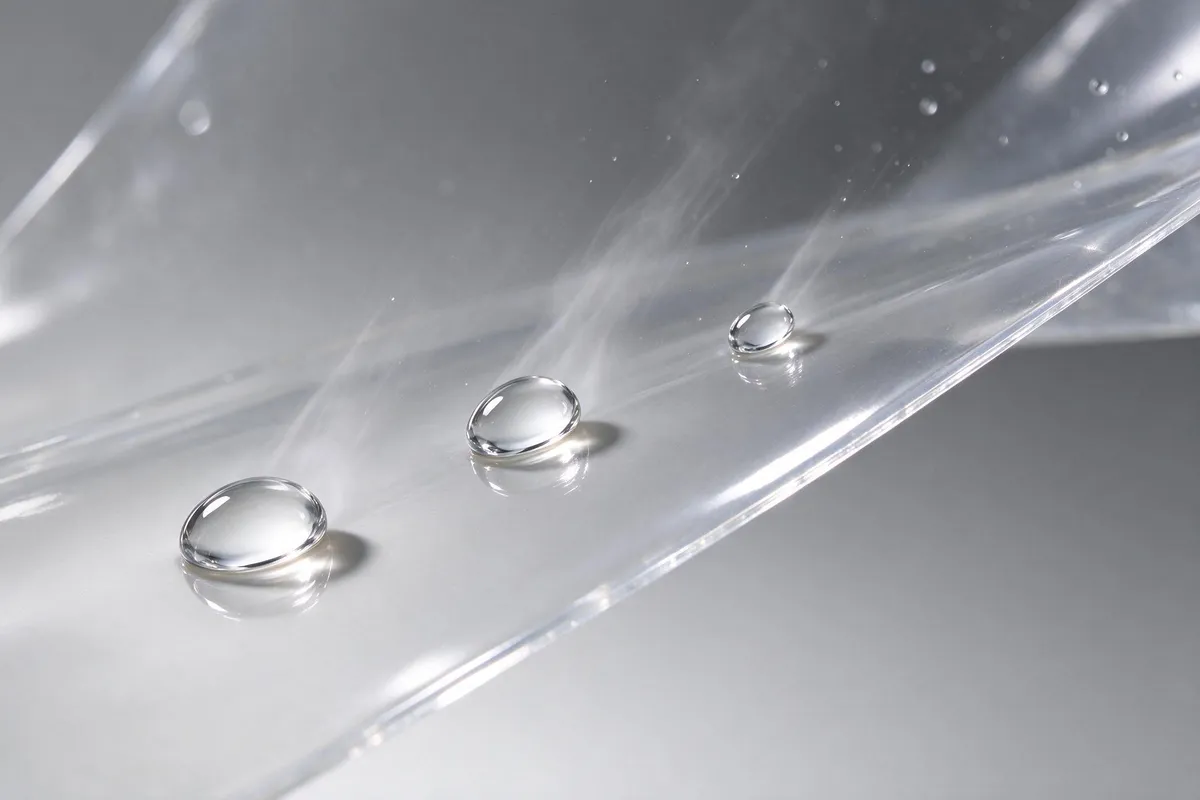
For a wet, dusty or coastal application, identify water quality, deposits, cleaning, wear and the actual substrate. A strong beading result alone does not prove resistance to salt exposure or a cost-effective coating choice. Compare relevant performance before selecting a chemistry.
For sunlight and heat exposure, assess the chosen product before and after a defined relevant aging sequence. Initial angle and retained wetting are different results, and neither alone proves color stability, service life or all-climate suitability. Do not convert an accelerated exposure into years without a supported correlation.
For oily or mixed contamination, define the relevant substances and removal conditions. Tar, insect residue and industrial fallout are not one uniform test liquid. Do not select a fluorocarbon formula automatically or assume one oil-contact test proves all stain resistance; verify the selected product and care method.
| Application scenario | Factors to identify | Evidence to compare |
|---|---|---|
| Wet, dusty or coastal | Water, deposits, contact and cleaning | Evaluate the actual film after relevant exposure |
| Hot or strongly sun-exposed | Aging conditions and the required property retention | Compare defined initial and aged results |
| Oily or industrial contamination | Identify the actual contaminant and removal process | Use substance-specific contact and care evidence |
OEM and ODM specification review
Discuss the intended film, surfaces, contaminants, added layers and exposure before setting wetting or durability targets. A general OEM/ODM offer does not promise any requested formula, angle or performance. Keep the confirmed series composition separate, and agree feasibility, measurement and acceptance conditions for the proposed development.
The hardness and modulus discussion addresses mechanical measurements, not a direct calculation of surface energy or cleanability. Set relevant targets and sampling rules with the supplier rather than treating one property as complete installation or cleaning performance. Our R&D and factory overview provides capability background; ask which reports, conditions or development work are available for the selected film. Do not assume that every model already has contact-angle, roll-off and marker-test data or that these tests use one common method.
Frequently asked questions
What does surface free energy describe?
It describes an energetic property of the surface, commonly expressed per unit area. Wetting depends on both the surface and the liquid. Contact-angle data can support a model-based estimate, but one water-drop shape does not directly determine the value, adhesion or cleaning performance.
Does water repellency determine bond strength?
No. Wetting is relevant to bonding but does not replace a bond test. Identify the exact surface and adhesive or coating, conditioning and loading. Do not confuse later bonding to the topcoat with the film’s original adhesive-to-paint interface, or infer either bond from water beading alone.
Do the three coating examples define all film topcoats?
No. They are illustrative approaches and may overlap in actual designs. Their names do not disclose CHISI formulations or fix angle, oil resistance, cost or durability. Keep confirmed graphene, nano-silica and confidential nano-ceramic descriptions within their respective series; do not use this generic table as an ingredient list.
Does water beading establish oil repellency?
No. Test the relevant oil or contaminant and the contact and removal conditions. A water result, a fluorocarbon label or one marker wipe does not establish resistance to all oils, tar, sap or chemical exposure. Wetting, staining and cleaning are different endpoints.
Can surface energy be read from a water drop or marker alone?
Not as a universal measurement. Use a defined contact-angle procedure and a suitable calculation model with the required characterized liquids. A marker test evaluates its stated ink and cleaning conditions, not surface free energy. Report method, sample condition and uncertainty or limitations as applicable.
What should be checked for a hot, sunny application?
Compare the selected product’s relevant initial and aged results, with a defined exposure and acceptance criteria. A high initial water angle alone does not prove retained repellency, color stability or service life. Do not infer an approved climate range or warranty from a generic coating family.
Discuss the application
Build the specification around the actual surface, liquids, contamination and added layers. Agree wetting, droplet-motion, cleaning and durability criteria separately, with methods that support comparison. No single angle or generic coating name proves every performance or discloses the product’s proprietary construction.
Standard A4 film samples are free, with shipping charged separately; other sample sizes are quoted on request. To discuss test methods and reports for your film, contact our team with the relevant liquids, contaminants and intended use.