
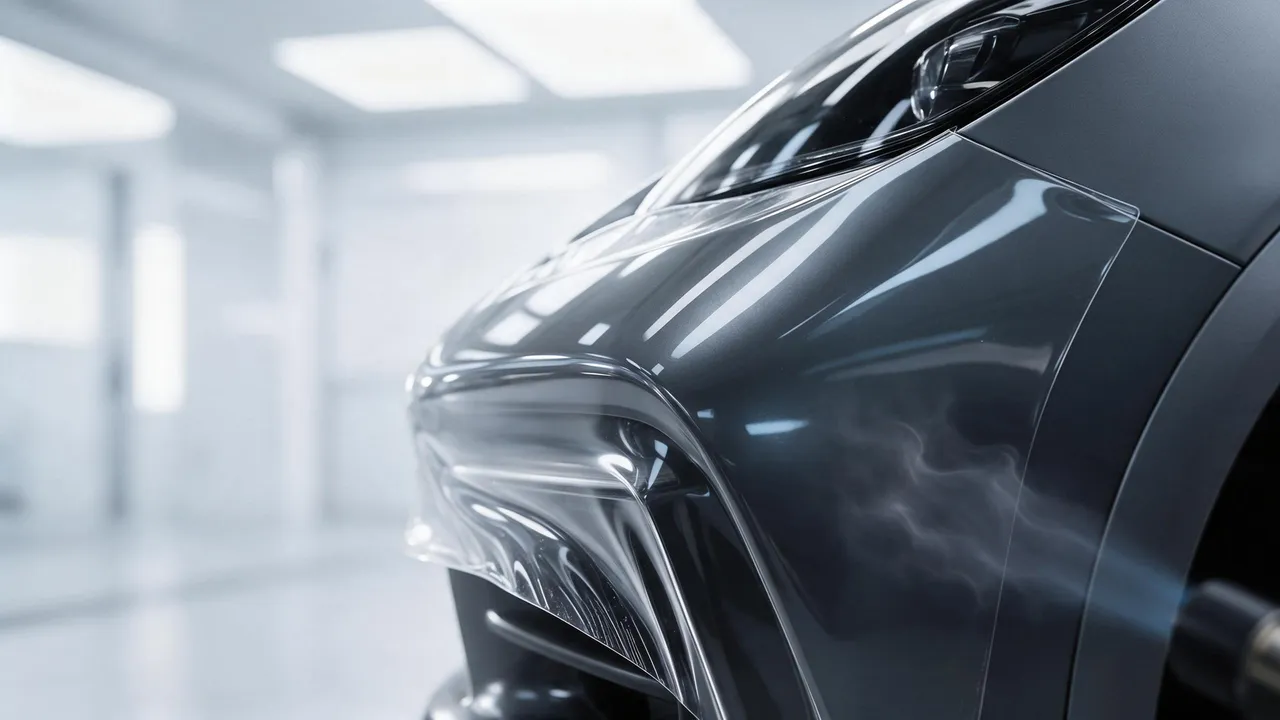
Short answer: Temperature changes the stiffness and relaxation of TPU, so controlled warming can help some films follow compound curves. The permitted method depends on the complete film, adhesive and coating. Measure temperature and local stretch, follow the product instructions, and do not assume that cooling removes all residual stress or that one heat-gun setting suits every PPF.
Temperature and stretch are two useful variables to investigate when defects appear on a complex curve. They are not the only causes: preparation, adhesive behavior, trapped liquid, geometry and product condition also matter. Record measurements rather than assigning the cause by feel alone.
Plan heat forming around panel geometry, surface temperature and the film’s permitted stretch. Use the product-specific installation settings and check the finish as you work.
On this page
How temperature affects the film
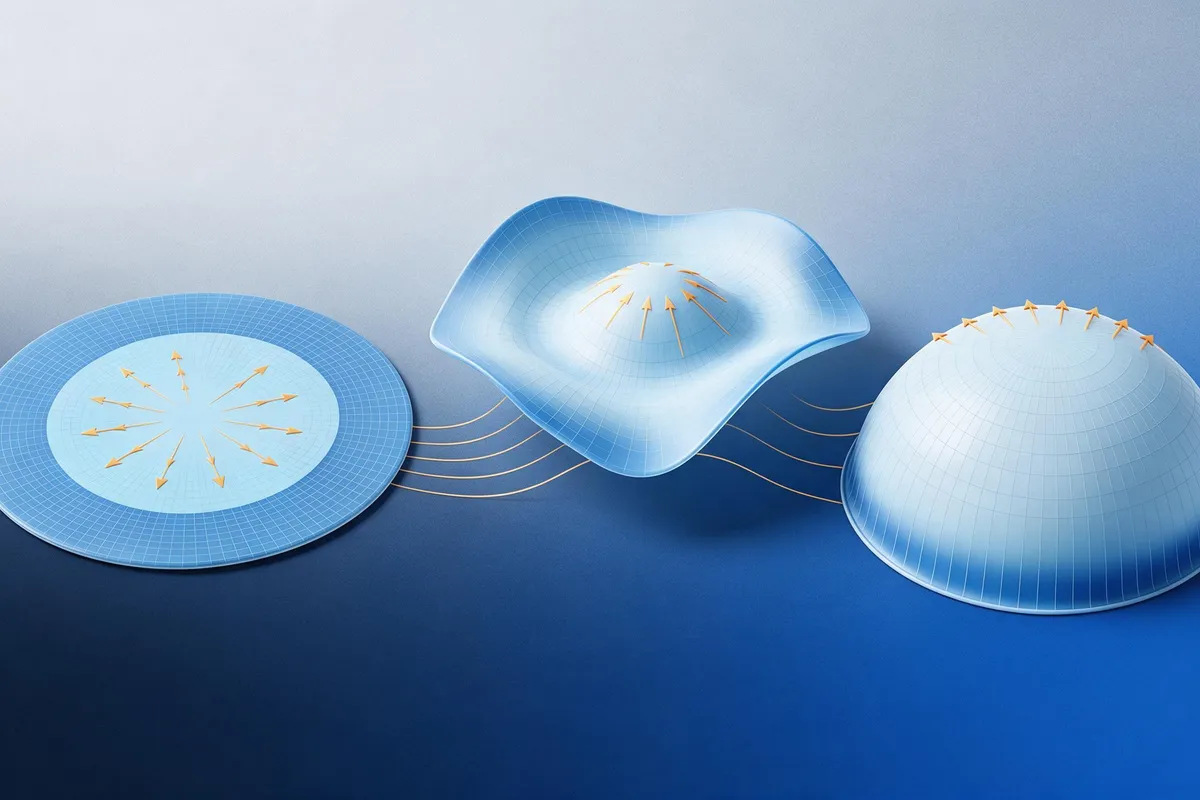
TPU is a segmented thermoplastic elastomer with hard and soft domains. Temperature affects its viscoelastic response, but ordinary installation warming is not the same as melt processing. The finished laminate, coating and adhesive constrain how it deforms and relaxes. Cooling alone does not guarantee a permanently stress-free new shape.
Two additional responses need attention:
- Adhesive behavior changes. Temperature can alter wetting, initial tack and repositioning time. The direction and size of the change depend on the adhesive and dwell conditions; warming is not a general guarantee of easier positioning. Confirm the allowed application conditions before using heat at an edge.
- The coating responds separately. Some self-healing coatings recover light surface marks under specified heating conditions. That does not imply that deep cuts, damaged texture or every coating can recover. Excessive or prolonged heating can affect appearance; use the conditions documented for the exact film.
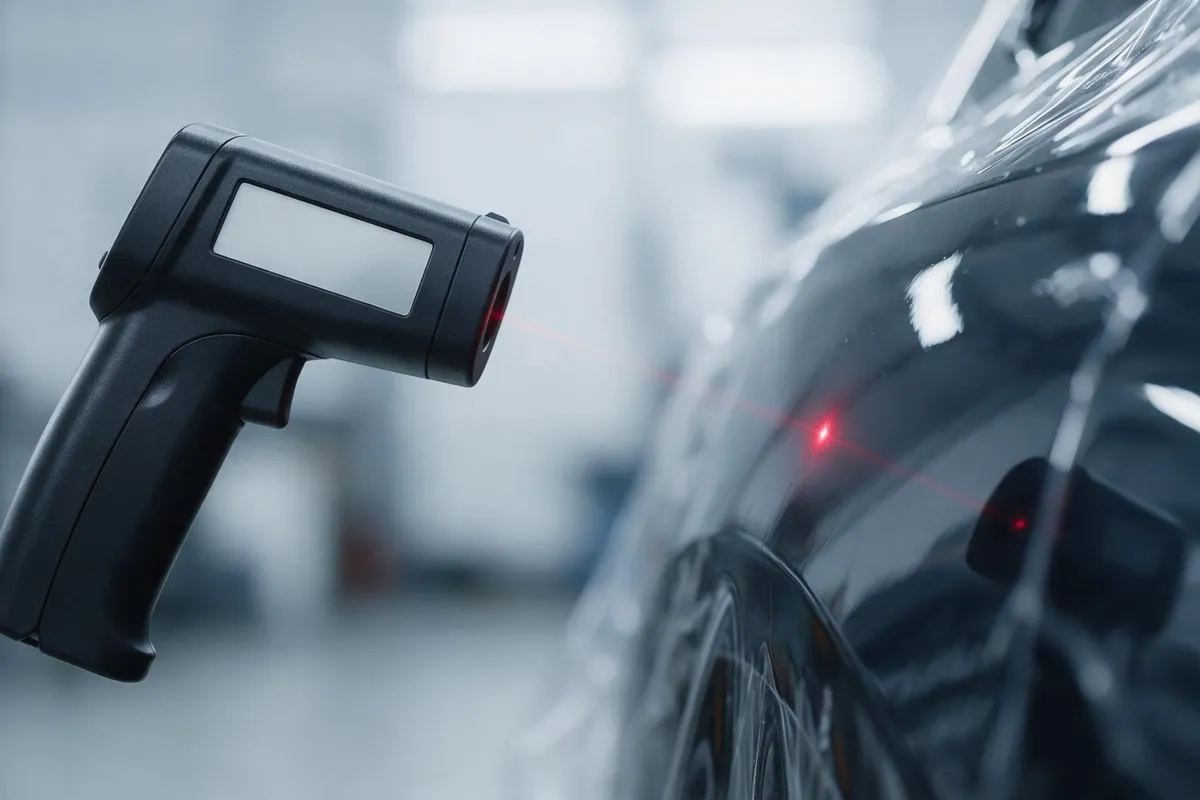
Monitoring surface temperature
Measure the panel surface temperature during forming and use the settings and limits for the film and tool. For CHISI film preparation and installation, keep the work area at 15–25°C and 45–50% relative humidity.
A localized hot spot can exceed the intended surface condition while adjacent film remains cooler. Nozzle setting, distance, airflow, dwell and surface emissivity all influence the reading. Confirm a suitable measuring method and heating procedure on a representative sample.
Stretch and local thinning
Stretch can change local thickness, appearance and mechanical response. The result depends on direction, strain rate, temperature and the complete film. The table’s percentage bands are teaching examples, not demonstrated impact ratings or permitted installation limits.
Check the film’s flexibility, recovery and edge contact at the actual workshop and panel temperatures. Use the working range specified for the film and adhesive.
Whitening in a stretched area is a reason to stop and investigate. It can involve the film, coating, adhesive or trapped liquid; appearance alone does not prove irreversible polymer damage. Let the product’s assessment procedure determine whether adjustment or replacement is appropriate.
Planning heating, forming and cooling
- Plan the anchor area. Choose a stable low-curvature starting area within the approved layout. Confirm that positioning and adhesive contact are suitable before deforming the adjacent film.
- Keep the heat source moving and monitor the panel surface temperature. Use the distance and settings specified for the film and tool.
- Distribute deformation evenly. Follow the approved layout and film orientation. Control local stretch instead of using extra force to overcome an unsuitable shape; use assistance where the procedure requires it.
- Control relaxation and cooling. Follow the product’s sequence for supporting, seating and cooling the film.
- Plan the edge finish. Coordinate the face and edge sequence so the final shape does not impose excessive tension. Confirm the film’s allowed overlap, edge treatment and adhesive-contact procedure.
Tight mirror caps, bumper returns or sensor recesses may require a different layout rather than more stretch. Any relief cut must follow an approved method that protects the underlying surface and respects sensor zones.
Measurement and application tools
- Surface thermometer. Measure the relevant surface using an appropriate method. Infrared readings depend on emissivity, spot size, reflections and viewing geometry; verify suitability for the film rather than treating every displayed reading as exact.
- Approved heating equipment. Use a controllable heat source only where the product instructions allow it. A heat-gun dial is not a film-surface temperature measurement and is not permission to use the tool on every PPF.
- Suitable nozzle or heat distribution. Where hot-air use is allowed, select the nozzle and airflow through the approved trial procedure. A wider nozzle alone does not eliminate hot spots.
- Product-approved soft-edged squeegee. Confirm the tool, cover, lubrication and pressure for the finish. A soft edge can still mark a warm or contaminated surface.
- Conditioning a cold work area. Condition the room, film and vehicle to the documented application conditions and avoid substituting intense local heating for proper conditioning.
Color and matte finishes
Clear, colored, matte and satin films can respond differently, but finish alone does not establish a heat-tolerance ranking. Compare the exact laminate and approved application method.
Colored film may show a change in color or effect when local thickness or the orientation of effect pigments changes. A metallic appearance does not prove a metal layer or a particular pigment composition. Evaluate the exact color under consistent lighting, limit deformation as specified, and agree on any relief layout.
Matte film may show gloss changes if its texture is affected by heating or tool contact. This does not mean every patch is irreversible or every matte product needs the same lower temperature. Use the permitted tools and thermal conditions, and evaluate a sample before working on the vehicle.
| Film category | Heat response to verify | Planning consideration |
|---|---|---|
| Clear gloss | Product-specific; not automatically the most tolerant | Check the approved forming and stretch limits for the exact film. |
| Color gloss / metallic look | Check the exact color and construction | Control stretch and orientation; assess any relief cut |
| Matte / satin | Check local texture and gloss response | Use approved tools and distributed heating only where permitted |
| Thicker impact-film reference | Do not infer a higher allowable temperature from thickness | Validate warming time and surface conditions for the exact laminate |
Before starting a color or matte panel, plan the deformation, any approved relief and the most visible viewing zones.
Investigating visible defects
| Observed symptom | Possible cause to investigate | Assessment before corrective action |
|---|---|---|
| Milky haze along a curve | Possible excessive strain, adhesive effect or trapped liquid | Identify the layer and cause; follow the approved rework or replacement procedure |
| Localized gloss change | Possible localized heat or texture disturbance | Assess recoverability under the product instructions; do not assume reheating will repair it |
| Check the film’s flexibility, recovery and edge contact at the actual workshop and panel temperatures. Use the working range specified for the film and adhesive. | Check preparation, liquid evacuation, residual tension and product condition | Use only the approved edge-assessment and rework method |
| Marks visible beneath the film | Possible early tack, handling, contamination or liquid distribution issue | Check whether lifting or reapplication is permitted; do not prescribe one solution for every adhesive |
| Wavy reflection on a flat panel | Investigate deformation, adhesive distribution and substrate appearance | Assess the cause before choosing approved rework or replacement |
Frequently asked questions
What temperature should PPF be heated to?
Use the exact film’s documented application and heating conditions. Confirm whether hot air, steam or another method is permitted, and distinguish tool settings from measured surface temperature.
How much can PPF stretch before it fails?
There is no universal failure or installation percentage. Laboratory elongation at break is not a recommended working strain; evaluate local thinning, appearance and residual stress for the specific film and layout.
Can a hairdryer replace a heat gun?
Select the heat source permitted for the exact film and task. A hairdryer and a heat gun have different airflow and temperature control; neither is automatically appropriate. Do not compensate for poor forming by uncontrolled heating or excessive stretch.
Why does stretched film turn white?
Whitening can involve deformation of the film or coating, adhesive disturbance or trapped liquid. The appearance is a warning to investigate, not a conclusive diagnosis of permanent damage. Follow the product’s evaluation method before applying more heat or deciding on replacement.
Should I heat the panel or the film?
Condition the vehicle, film and workspace as the product requires. Surface and adhesive temperatures interact, so there is no universal rule to heat only one part. Follow the specified sequence and monitor the relevant surfaces.
Does heating affect a self-healing coating?
Some coatings recover light surface marks with controlled warmth, while excessive exposure may change their appearance. Recovery conditions, damage depth and repeatability are product-specific. Do not substitute a heat-forming procedure for the film’s documented scratch-recovery test.
How should a cold workshop be prepared?
Bring the film, vehicle and room to the documented application conditions. Confirm adhesive behavior before proceeding.
Can deformation from forming be reversed?
TPU deformation can contain recoverable and permanent components, depending on temperature, strain and time. It is inaccurate to call all stretch irreversible. Assess residual set, thinning and coating or adhesive damage using the approved procedure; more heat is not a guaranteed remedy.
Why does an edge lift after forming?
Investigate residual tension, preparation, liquid evacuation, temperature history and the product condition. Edge lift does not identify a single cause or rule out a material problem. Use the manufacturer’s assessment and approved rework method instead of automatically reheating the edge.
Treating forming as a controlled process
Write a product-specific procedure with approved temperature, deformation and inspection criteria. Record actual conditions and review repeatability; no single pair of numbers can qualify every film, coating and vehicle geometry.
A suitable thermometer and controllable, permitted heat source can help document a repeatable process.
For workshop procedure planning, see PPF installation guidance and for film-processing context, see cast versus calendered TPU. Application tools are listed in the OEM and ODM catalog. To discuss a specific film, climate or vehicle mix, contact our team.