
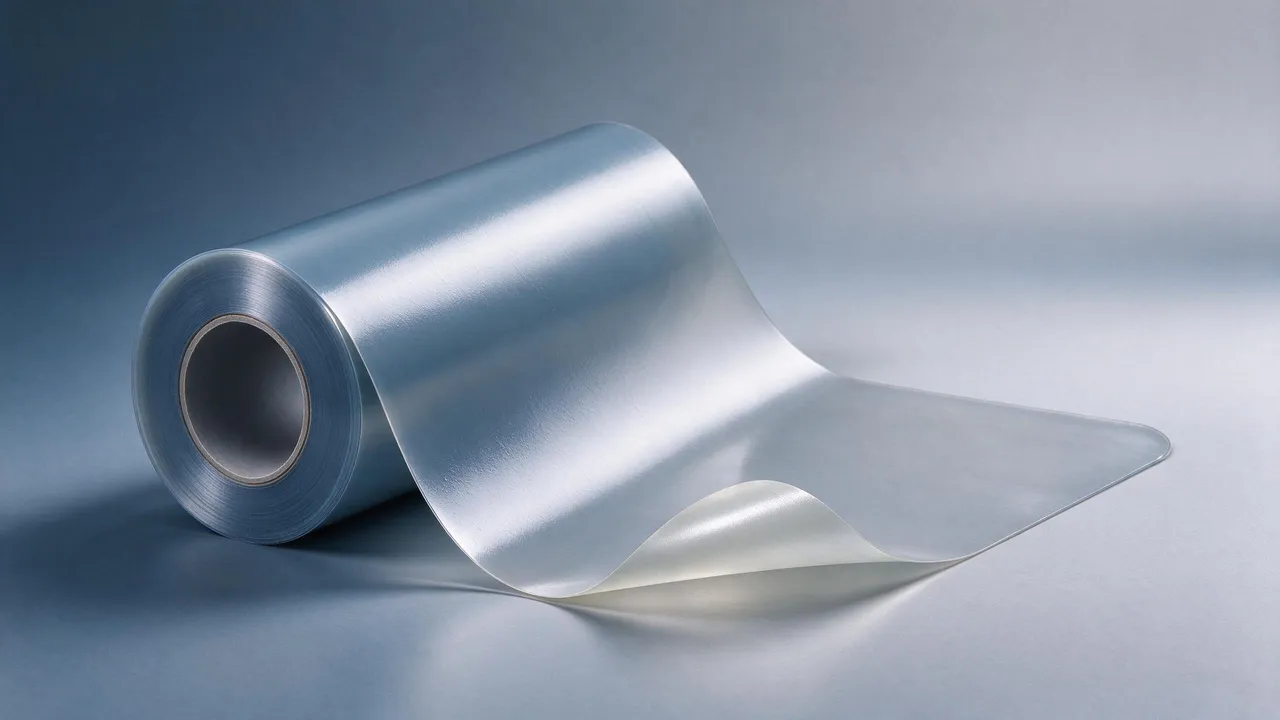
Quick guide: A release liner protects the adhesive face and contributes to separation and handling. Release force depends on the complete liner, release coating, adhesive, processing, aging and test conditions; silicone coat weight alone does not set a universal direction. Compare actual constructions and define release, subsequent adhesion and dimensional checks without diagnosing silicone residue from one reading or ranking all PET and paper grades alike.
Liner behavior may affect storage, cutting and installation, but early release, difficult stripping or a hazy appearance does not identify one unique cause. Examine both separated surfaces, the adhesive construction and processing or storage history. Do not assume that every appearance complaint is liner residue or that changing the liner alone resolves it.
This guide reviews liner functions, release-system variables, substrate choices and inspection evidence. The tables are examples for investigation and specification, not fixed cause-and-effect rules, universal material rankings or CHISI batch results. Agree methods and acceptance conditions for the actual laminate; release force and adhesion to paint are distinct measurements.
On this page
Liner functions
A release liner covers and supports the adhesive face during the specified storage and converting process. Its protective role does not establish that every pressure-sensitive adhesive continues to cure in the roll. Evaluate the actual adhesive and laminate; liner appearance alone does not prove that the bond face is clean or undamaged.
The force needed to separate liner and adhesive affects handling, but neither a lighter nor a tighter release is universally preferable. Define an appropriate range and consistency for the process, including the test method, peel direction, speed and conditioning. A release result is not the same as final adhesion to the vehicle substrate.
Liner thickness, stiffness, surface and dimensional behavior interact with the film and cutting system. A stiff liner does not automatically cut accurately or lie flat, and a flexible liner is not inherently defective. Specify the actual pairing and converting requirements rather than treating substrate name as a complete performance specification.
Release coating and separation
Release depends on coating chemistry and coverage, cure or anchorage, the adhesive and test conditions. Coat weight can matter, but there is no universal rule that more silicone always means tighter release or less always means easier release. Compare the selected release system under defined conditions rather than inferring force from coating quantity alone.
Early lifting, uneven stripping or transfer can have several causes within the complete release-and-adhesive system. Do not assign “too little” or “too much” silicone from the symptom alone. Review coating coverage, cure, anchorage, adhesive behavior and history, and seek relevant evidence before changing the construction or process.
Agree coating and release requirements for the actual system; peel testing alone does not quantify coat weight or identify a contaminant. The adhesion-promoter discussion addresses a separate treatment question. Suspected residue does not justify automatically applying a promoter or solvent; confirm the actual surface, contamination evidence and an authorized process for the film and substrate.
PET and paper constructions
PET-based liners vary by grade, thickness, treatment and release system. Assess dimensional behavior, flatness, cutting and separation with the actual film and equipment. The substrate name alone does not guarantee clean die-cutting, uniform peel, higher cost or better precision than every paper construction.
Paper-based liners also differ by base paper, barrier layers, treatment and release coating. Moisture response, curl, surface transfer, tear behavior and cost need grade-specific comparison. Do not classify all paper as unsuitable for precise kits or all PET as automatically preferable; confirm converting, storage and application requirements.
Film and liner thickness or stiffness interact, but their pairing does not follow one universal thin-versus-thick rule. Validate the intended laminate and cutting process. The OEM and ODM overview provides program context. Confirm the available liner constructions and development options rather than assuming that every substrate, thickness or release target is already offered or achievable.
Transfer, residue and evidence
Adhesive remaining on the liner after separation can indicate transfer or a split within the adhesive system. Inspect both faces and relevant processing, storage and test conditions. The observation does not uniquely prove an under-cured release coating, a particular coat weight or a single party’s responsibility.
Material transfer from a release surface may affect subsequent adhesion, but a low adhesion result does not by itself identify silicone or quantify its transfer. A residual-adhesion comparison measures performance under its stated method; identifying a substance or transfer amount may require separate appropriate analysis. Do not diagnose residue solely from a milky appearance or later bond complaint.
Liner, release coating, adhesive, converting and storage are possible parts of an investigation, not a predetermined cause. The adhesive-science discussion provides interface context. Final bonding depends on the actual adhesive, substrate, preparation and conditions; a generic “high-energy” label does not establish adequate adhesion or a complete contamination diagnosis.
Comparing liner options
These examples identify questions to test, not an exhaustive catalog or suitability ranking. Compare the actual grade, release coating, adhesive and process. A substrate description alone does not establish dimensional stability, release consistency or fitness for a particular cutting system.
| Liner example | Properties to assess | Application question |
|---|---|---|
| Smooth PET-based construction | Verify flatness, dimensional behavior and cutting | Validate the actual kit and converting process |
| Treated PET-based construction | Define treatment, release system and measured separation | Agree consistency for the intended process |
| Polymer-coated paper construction | Assess barrier, dimensional and handling properties by grade | Check the actual roll and plotter requirements |
| Paper-based construction | Confirm surface, curl, tear behavior and cost | Validate storage and use rather than assuming non-critical suitability |
Storage climate can affect some liner systems, but substrate name alone does not establish the response. Compare the selected grade and complete laminate under relevant conditions. Do not prescribe PET for every cross-season shipment or infer a permitted humidity range from a general paper-versus-film description.
Investigating unusual release
The table lists observations and evidence to examine, not one-to-one diagnoses. Separate the actual release behavior from adhesive transfer, optical appearance and final bond performance. Preserve the sample history and test conditions before assigning a material fault, changing a liner or deciding responsibility.
| Observation | Evidence to investigate |
|---|---|
| Liner lifting within the roll | Check the complete release system, converting and storage history |
| Difficult liner removal | Compare defined release conditions; do not infer excess coat weight alone |
| Adhesive remains on the liner | Examine both faces, adhesive system and processing or storage conditions |
| Hazy appearance after liner removal | Assess the optical specimen and potential surface or internal contributions |
A hazy appearance after removal can have several contributors, including texture, contamination or the specimen’s optical structure. It does not identify silicone residue or exclude a coating or material issue. Use controlled comparisons and appropriate analysis before selecting a corrective action; changing a liner is not an automatic remedy.
Receiving checks
Select checks for the actual liner-and-adhesive construction and decision required. Agree sampling, conditioning, methods and acceptance criteria. The examples below do not establish that simple tests catch most defects, that every supplier must use one procedure or that appearance proves a chemically clean surface.
| Check | Purpose and limitation |
|---|---|
| Release force | Defined separation under agreed conditions; not final paint adhesion |
| Subsequent or residual adhesion | Method-specific adhesion comparison; not direct proof of zero silicone transfer |
| Flatness, curl and dimensions | Assess the actual converting and handling requirements |
| Surface and release coating | Record observations; uniform appearance does not prove uniform chemistry or cure |
Assess supplier reports for their actual sample and method, and agree any receiving measurements. Define sample locations across the relevant width and length rather than assuming one spot represents the roll. A changing release result does not uniquely identify coat-weight variation. The shelf-life and storage discussion provides storage context. Validate relevant heat, humidity, pressure and aging conditions for the actual laminate; do not infer a fixed failure mechanism, shelf life or warranty from generic storage history.
Frequently asked questions
What does the liner contribute?
It protects and supports the adhesive face and contributes to separation, converting and handling. The actual result depends on the liner, release coating, adhesive and conditions. Define those functions separately; a good-looking liner does not alone prove a clean bond face, precise cutting or suitable release for every process.
Does more silicone always mean tighter release?
No universal direction follows from coat weight alone. Chemistry, coverage, cure, anchorage, adhesive, aging and test speed or geometry can affect the result. Define the actual system and method. A release-force reading does not by itself measure silicone quantity, identify residue or prescribe a coating adjustment.
Is PET always preferable to paper?
Compare actual grades, surface treatments, release systems, film pairings and process needs. Substrate name alone does not establish cost, stability, hand-tear behavior or cutting precision. Assess relevant storage and handling conditions; do not rank every paper construction below every PET liner or infer suitability from one property.
Does haze prove liner residue?
No. Texture, contamination, the laminate and measurement conditions may contribute. Haze does not identify silicone or prove that the liner is the sole cause. Compare controlled specimens and inspect both faces with appropriate methods before assigning a cause; changing the liner or applying a treatment is not an automatic solution.
What does adhesive transfer mean?
Adhesive may remain on the liner rather than fully with the film after separation. Examine the transfer pattern, both surfaces, adhesive and release system, processing and storage history. The observation alone does not identify under-cure, a particular coat weight or responsibility; distinguish it from identifying a silicone contaminant or measuring final paint adhesion.
Which receiving checks are relevant?
Agree the actual construction, sampling and methods for release force, subsequent adhesion, flatness and surface observations. A residual-adhesion result does not directly demonstrate zero silicone transfer or identify a substance. Use appropriate additional analysis where required, and do not treat one sample or certificate as proof of every point or future batch.
Can storage affect release behavior?
It can, depending on the liner, adhesive, construction and exposure. Evaluate relevant temperature, humidity, pressure and time with defined specimens. A storage history alone does not prove a unique failure mechanism, justify a universal storage limit or determine a warranty decision; use the actual product guidance and evidence.
Discuss the liner requirement
Start with the actual film, adhesive, liner and converting or installation problem. Record the release behavior separately from transfer, optical appearance and final adhesion. Discuss sampling and applicable measurements before changing the construction; neither a substrate label nor a coat-weight figure alone establishes the remedy or future batch consistency.
Our R&D and factory overview provides capability background. Confirm the methods, reports, available liner options and development feasibility for the actual project; complete in-house testing or any chosen release target is not promised for every model. Default A4 samples are free worldwide, and the free offer excludes logistics charges; other sizes are quoted on request. To review a liner project, contact our team with the film, cutting requirements, observed behavior and documented storage conditions.