
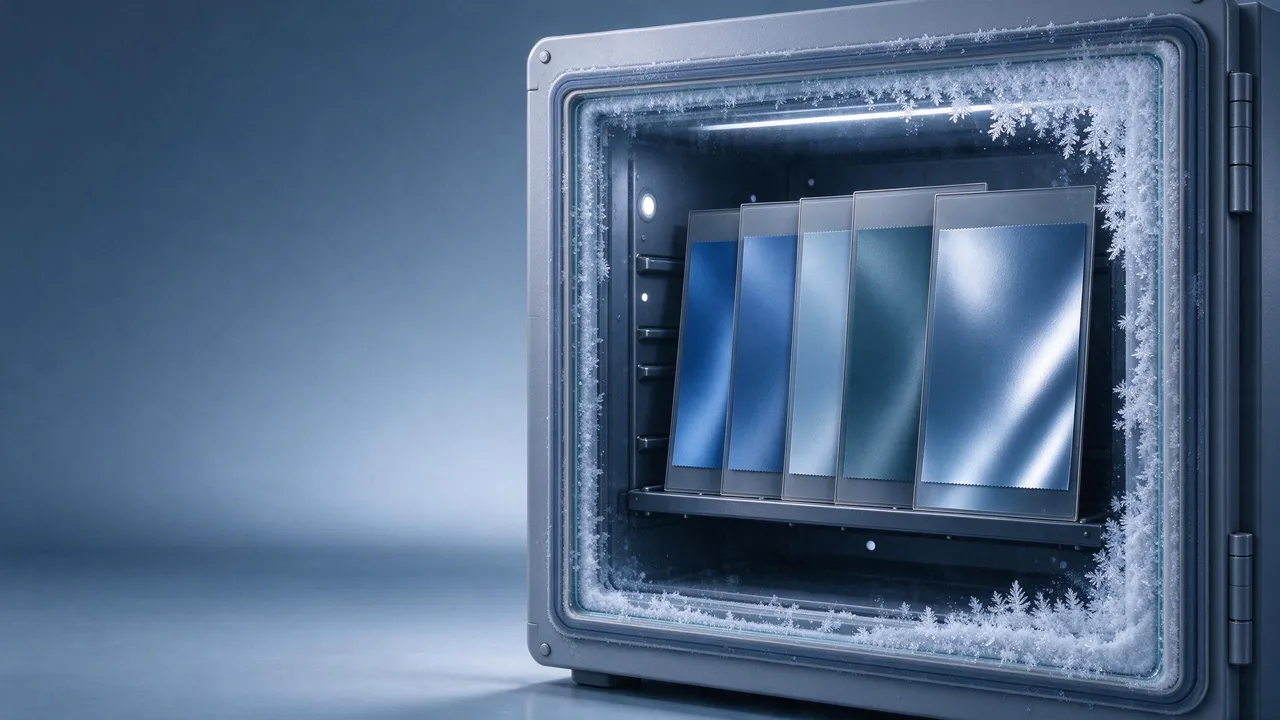
Short answer: Glass transition describes a temperature range and a method-dependent value, not one universal installation threshold. TPU and its coating and adhesive can have different temperature responses. Define the actual layer, thermal history and method, then assess the complete film at relevant temperatures.
Tg can help interpret low-temperature material behavior, but it does not alone determine survival in a climate. Mechanical loading, time, conditioning, adhesive, paint and installation also matter. Glass transition is distinct from chemical curing, melting and irreversible chemical degradation; stiffness or a field symptom alone does not identify it.
This guide reviews transition measurements, formulation variables, cold exposure and procurement questions. Table temperatures and tests are source examples, not CHISI data or common installation instructions. Agree the model, specimen, conditioning, method and acceptance criteria; keep material transition, installed-system performance and warranty separate.
On this page
What Tg describes
TPU contains hard and soft segments whose morphology contributes to its behavior. Glass transition concerns the mobility of amorphous regions across a temperature range. Report the layer, method and criterion: a DSC value and a dynamic-mechanical peak need not coincide. No single Tg guarantees that the complete film is flexible, impact-resistant or suitable for installation above that value. The hardness and modulus guide distinguishes related measurements; Shore hardness and modulus are not interchangeable or universal predictors of cold performance.
Formulation and cold behavior
Polyol chemistry, molecular structure, hard segments, additives and morphology can influence cold behavior. Some polyether TPU grades combine cold flexibility and hydrolysis resistance, but family names do not set a universal temperature limit or property ranking. Compare the actual grade and complete construction under relevant methods.
Investigating winter symptoms
Winter cracking, edge lift or tunneling may involve film stiffness, adhesive response, paint, geometry, residual stress, installation or thermal mismatch. Investigate the full system and actual exposure. The stone-chip testing guidefor related impact questions; a cold bend, peel or dropped-weight result is not automatically road-stone protection.
Plasticization and crystallization
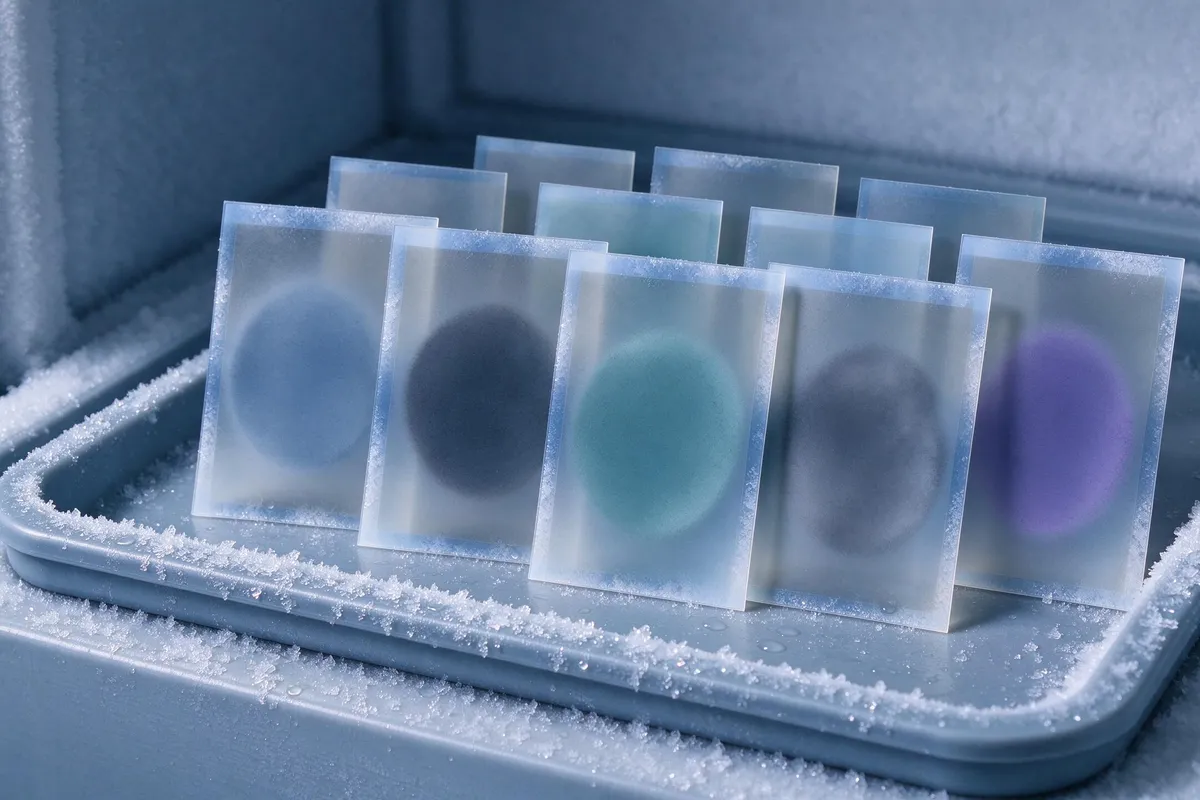
Plasticization and crystallization can influence low-temperature response, but neither provides a universal ranking of formulations. An additive may affect transition behavior and can require migration or aging evaluation; the TPU name does not prove its presence. Crystallization is distinct from glass transition and depends on chemistry and thermal history. Define the measurement and conditioning; a single DSC scan does not establish every mechanical response or long-term stability.
Cold-weather installation requirements
Film, adhesive, panel, liquids and room conditions all affect installation. Their transitions are not necessarily the same. Follow the selected product and vehicle instructions rather than keeping everything merely “above TPU Tg.” Local heating is not proof of a uniformly suitable panel, and this guide supplies no universal heat-gun, workspace or application-temperature procedure. installation guide provides related context; actual model-specific conditions remain the basis, without introducing a new universal mandatory temperature here.
Source temperature examples
Actual material transitions, adhesive response and system requirements can differ. Use them only to identify questions for product-specific testing; do not select a film or authorize heating from this table.
Check the film’s flexibility, recovery and edge contact at the actual workshop and panel temperatures. Use the working range specified for the film and adhesive.
Specify measurable low-temperature behavior for the actual application. Tg and low-temperature modulus may support that evaluation but do not replace adhesive, paint, installation or impact requirements. Agree method and criteria instead of treating a climate’s lowest temperature as a sufficient material-selection rule.
Cold-test evidence
Cold bend, impact and peel address different questions and are not an exhaustive qualification set. Define complete specimens, support, preparation, temperature, dwell, loading and evaluation. A falling-weight test does not automatically reproduce road stones or prove energy transmitted to paint; peel depends on the actual adhesive and substrate.
| Test example | Evaluation question | Criterion to agree |
|---|---|---|
| Cold bend | Cracking under the specified deformation | Agreed specimen, radius and observation; no universal pass criterion |
| Falling-weight impact | Defined film and substrate damage endpoints | Agree energy, geometry and criteria; not road-stone equivalence |
| Low-temperature peel | Adhesive-system response under those test conditions | Agreed band and units such as N/cm under the specified method |

Cold-climate procurement
Define relevant storage, installation and service conditions separately. The following market descriptions are planning examples, not mandatory test regimes or a guarantee of suitability. Agree actual model-specific evidence and operating instructions rather than ordering solely by the lowest Tg.
| Illustrative climate context | Product evidence to request | Application and supply question |
|---|---|---|
| Regular sub-zero conditions | Relevant cold tests and method-specific transition data | Confirm actual storage and installation requirements |
| Occasional cold conditions | Source −10 °C example is not a common qualification limit | Use selected-product instructions; no generic dwell supplied |
| Hot and cold seasons | Assess relevant combined exposures without transferring series results | Define model-specific application conditions and records |
| High-altitude or alpine example | Actual specimen and aging evidence, not automatically the lowest Tg | Agree relevant receiving checks; no universal mandatory regimen |
Discuss feasible OEM/ODM options for the actual construction and application. General development capability does not promise every segment chemistry, molecular-weight target or plasticizer strategy. Specify measurable requirements within the supplier’s disclosure scope, without inventing a CHISI formula or guaranteed climate performance.
Frequently asked questions
What does Tg mean for PPF?
It characterizes a glass-transition region using a stated method and criterion. Identify the layer, conditioning and thermal history. It is not one whole-film freezing point, chemical-curing threshold or automatic installation or service limit; assess the complete system at relevant temperatures.
Can Shore A alone predict cold performance?
No. Hardness is measured under stated conditions, not inherently one room-temperature value for every report. Similar hardness does not establish identical transition, modulus, adhesive behavior or cold performance. Request appropriate model-specific measurements.
Does one soft-segment family guarantee the lowest Tg?
No universal ranking follows from the family name. Compare actual grade, formulation, morphology, thermal history and measurement method. Useful cold flexibility in a raw material does not automatically establish complete-film or installed-panel performance.
Can plasticization affect cold behavior?
It can, depending on the additive and formulation. Presence, migration and aging behavior require evidence; the TPU label alone does not establish them. No universal ranking between additive-based and intrinsic flexibility is supplied, and a Tg value alone does not prove long-term stability.
Does winter lift prove the film crossed Tg?
No. Film, adhesive, paint, geometry, stress, installation and exposure may contribute. Check the actual construction and evidence before assigning a cause or responsibility. A symptom or cold temperature alone does not identify Tg or exclude a material or adhesive issue.
What temperature is appropriate for installation?
Use the selected film, adhesive, paint and vehicle instructions and verify actual panel and workspace conditions. Merely exceeding TPU Tg is not sufficient. This guide supplies no universal heating setting, temperature limit or dwell period.
Should receiving include cold checks?
Agree checks relevant to the model and application, with sampling, conditioning, methods and criteria. One cold-bend or peel sample does not prove every roll matches a qualified lot. Use traceable records and investigate discrepancies without inventing a universal incoming-test requirement.
Can an OEM project target cold behavior?
Discuss feasible options and product-specific evidence, then agree measurable requirements. General OEM capability does not promise every Tg target, formulation change or climate performance. Keep transition data, application limits and warranty terms within their actual documented scope.
Discuss low-temperature requirements
Describe the product, actual cold exposure, panel and application requirements. Discuss available transition, mechanical and adhesive evidence together. This guide does not promise a custom cold-temperature range, guaranteed winter durability or an existing complete report for every SKU.
See the R&D and factory overview for company context, not proof of all listed cold tests on every model. To discuss evidence or an OEM project, contact our team with the intended market, film and temperature-related questions.
Material and method reference: BASF: Elastollan material properties. General material background is not a test report or a common installation limit for CHISI products.