
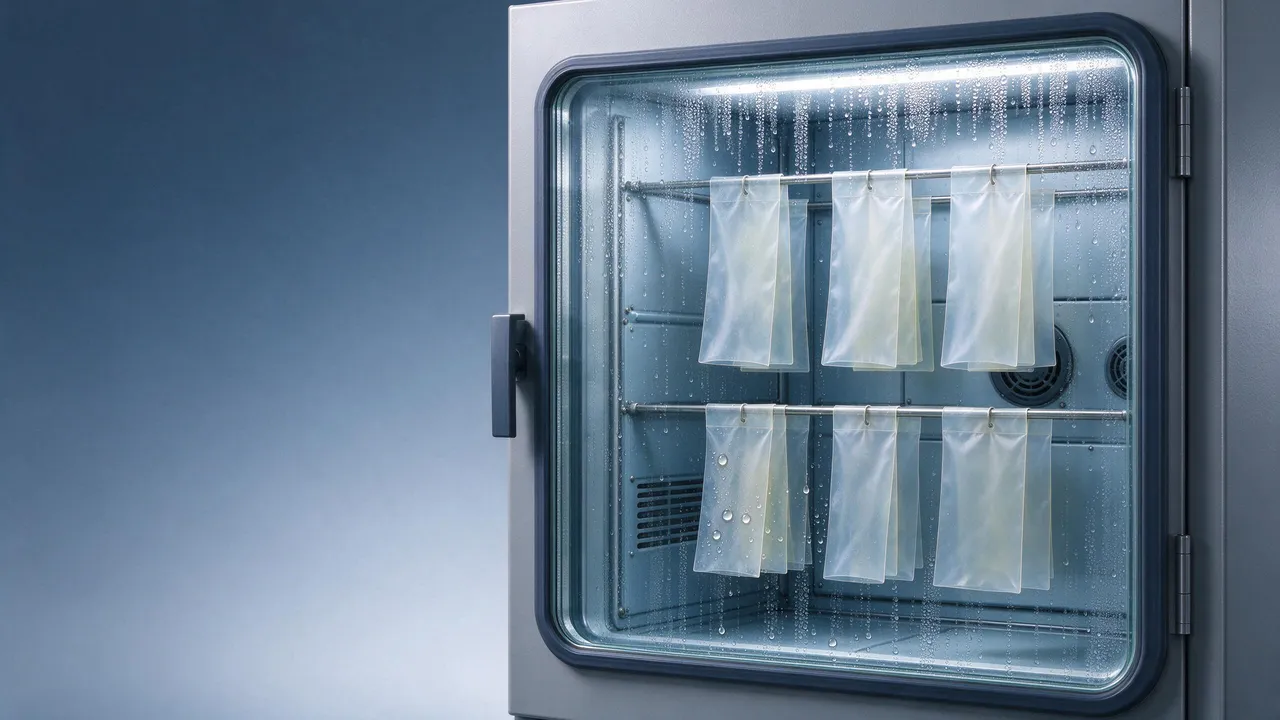
Short answer: Water-vapor transmission and hydrolysis resistance are different properties. WVTR measures vapor passage under defined conditions; it does not establish liquid-water sealing, interface condensation or chemical durability. Hydrolysis depends on the actual chemistry and exposure, not diffusion alone. Specify the full film, test method, temperature, humidity, duration and property measured; do not convert a screening result into service years.
“Waterproof” needs a defined construction and test. Vapor passage, liquid ingress at edges, absorption, adhesive behavior and chemical degradation are separate questions. A complete PPF system includes coating, TPU, adhesive, paint and interfaces; no single permeability value qualifies the whole system.
This guide separates transport from chemical breakdown and reviews material descriptions and test examples. Specify actual grade and complete-film evidence; accelerated exposure alone does not predict field life.
On this page
What WVTR measures
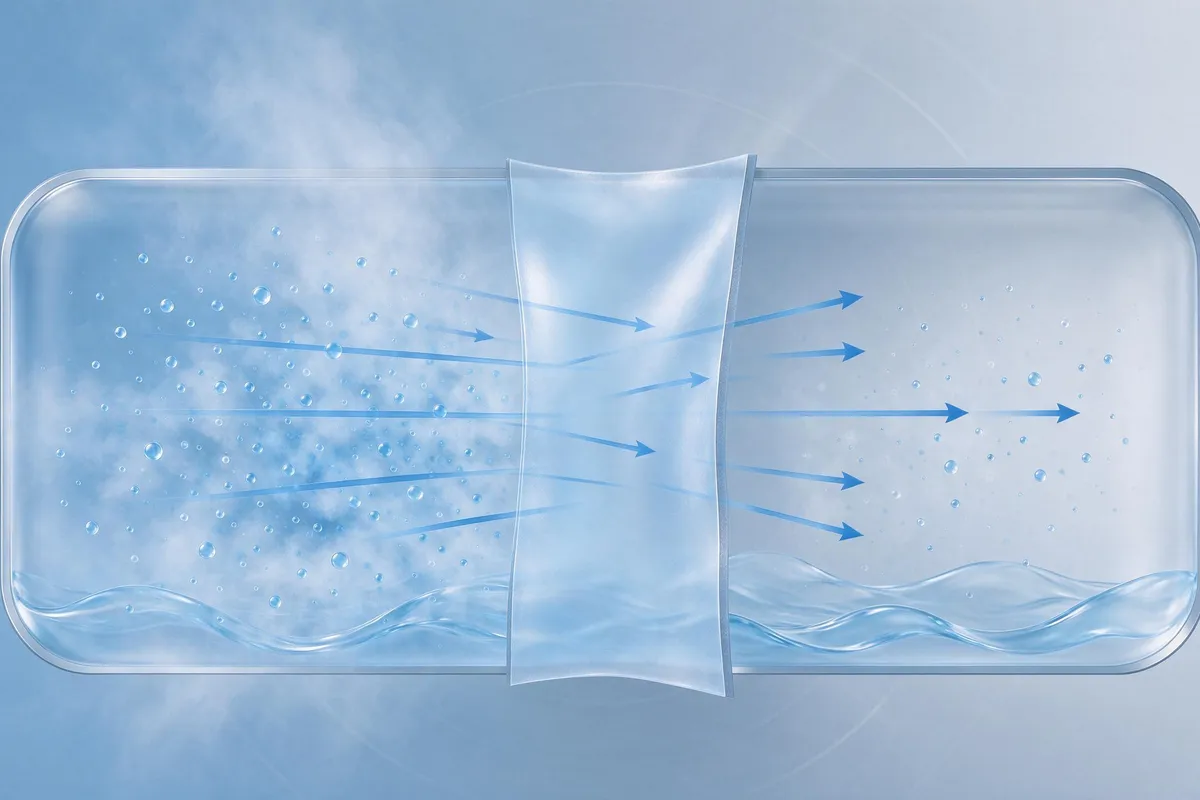
WVTR reports water-vapor mass transmitted per area and time under stated temperature, humidity difference and method. It is not the diffusion coefficient or a universal material constant independent of thickness and test setup. Report units, specimen construction and conditions; a lower value does not quantify time until water reaches paint.
Transmission and hydrolysis must be evaluated separately. Similar WVTR values do not establish similar chemical durability. Hydrolysis evidence also needs the measured property, exposure and comparison basis; permeability alone is not proof of protection against water-related damage.
Vapor transport through TPU
Water can enter a polymer, move through it and leave the other side. Solubility, diffusion, morphology, thickness and exposure conditions all matter. Temperature may change several of these factors; avoid a universal rate law or a ranking based only on the polyol name.
Through-film vapor transport is not the only route for moisture to reach an installed interface. Edges, damage and the full coating–adhesive–paint system also require assessment. Do not infer condensation or paint safety from a vapor number. The care guide provides related care context; use the instructions for the actual film and paint, not a universal washing schedule.
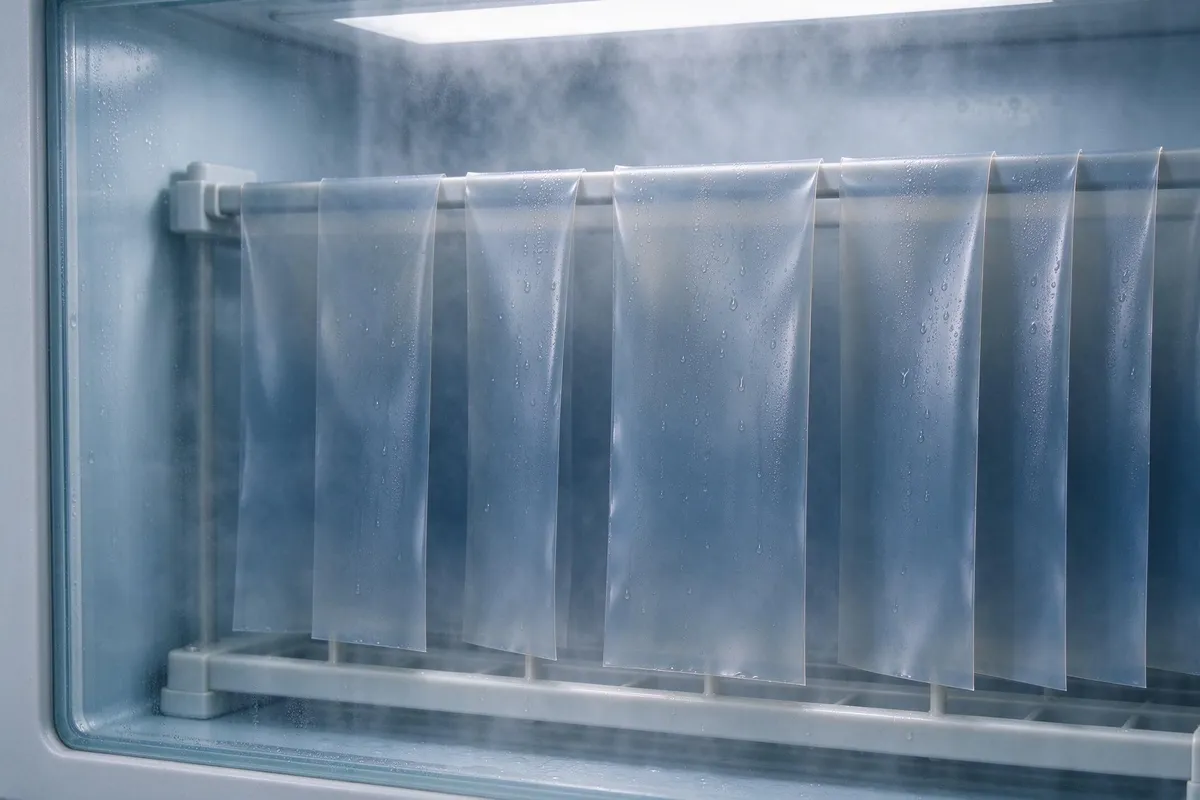
Chemistry and complete-film behavior
Polyol chemistry is one influence, alongside hard segments, additives, morphology, coating and specimen thickness. Do not assign universal WVTR or hydrolysis rankings to them; request grade- and construction-specific evidence.
| What to record | Vapor-transmission check | Hydrolysis-resistance check | Evidence to request |
|---|---|---|---|
| Polyester-based TPU | Measure the actual grade and stack | Ester chemistry requires relevant exposure evaluation | Defined WVTR and property retention, with conditions |
| Polyether-based TPU | Do not infer transmission from the family alone | Evaluate the selected grade; no absolute immunity claimed | Measured complete-film behavior for the application |
| Polycaprolactone-based TPU | Formulation- and construction-specific | Do not generalize a confirmed model’s claim | Separate WVTR and hydrolysis evidence for the SKU |
CHISI’s confirmed Type B hydrolysis statement applies to its specified model scope, not all PCL, TPU or product families. Material names alone do not establish WVTR or multi-year finished-film durability. The polycaprolactone and hydrolysis guide adds chemical context. Specify transport and chemical-resistance requirements separately for the actual use.
Humidity, immersion and cycle examples
These are example exposure descriptions, not complete standard methods. Define time, liquid composition, condensation regime, specimen and measured endpoints. They can cause several changes, so a property loss does not alone prove hydrolysis.
Compare methods against the question being investigated. A hot bath is not automatically a worst case or a model of washing, and a humidity chamber is not a direct climate-to-years simulation. Use a justified protocol and relevant field evidence; passing one exposure does not establish every water-related performance.
| Exposure example | What to record | Question to investigate | Interpretation limit |
|---|---|---|---|
| 85/85 humid heat | 85 °C, 85% RH; duration must be defined | Response to the specified hot, humid exposure | Not a direct lifespan model; condensation needs definition |
| 70 °C water bath | Liquid water at 70 °C; time and composition defined | Response to a specified immersion | Not automatically equivalent to washing or combined UV |
| Humidity–temperature cycling | Defined steps, transitions and repetition count | Response to that specific changing exposure | Different cycles are not directly interchangeable |
Reading retention values
It is not a CHISI result or a criterion. Name strength or elongation separately, with method, conditioning and uncertainty; do not call all retained properties “hydrolysis resistance” without relevant evidence.
Two endpoints do not establish an accelerating degradation law or a linear service-life forecast. Request enough comparable time points, baselines and uncertainty to assess the actual trend.
Specification and acceptance
Specify each relevant quantity and exposure, then agree a technically justified acceptance rule. The table is a format example, not a supplied test standard or commercial approval of a limit. Match evidence to the actual SKU and use; vague “water resistance” does not replace a defined measurement.
| Specification item | Record | Acceptance definition |
|---|---|---|
| WVTR | Unit, method, temperature, humidity difference and stack | Product-specific range under the stated conditions |
| Property retention after exposure | Property, baseline, exposure, duration and measurement method | Agreed criterion for each endpoint |
| Method reference | Exact applicable method, version and deviations | Comparable preparation, conditions and evaluation |
Thickness and included layers belong in the transmission record. A raw WVTR comparison between different constructions is not automatically a material ranking, and thickness normalization needs a valid model. Review sampling and batch evidence. The OEM and ODM catalog provides project context, not a promise that every polyol, coating or permeability target can be selected.
OEM and ODM requirements
Discuss the actual construction, application and available options before agreeing measured limits. A contract should define method, conditions, specimens and acceptance. This article does not disclose CHISI’s coating recipe or guarantee a custom permeability or hydrolysis target.
A low WVTR alone cannot qualify chemical durability. The R&D and factory overview describes company context, not proof that each SKU has these tests or a batch-specific report available.
Storage and handling
Follow the actual product’s storage and handling instructions. Moisture, condensation and storage history may matter, but do not invent a common temperature, humidity or equilibration period. Keep packaging and lot records and investigate damage without assuming storage or the material is the sole cause.
After installation, follow model-specific care and inspection instructions for the film and paint. Washing or early detection does not prove prevention of hydrolysis or guarantee service life. Haze and edge lift require investigation of the whole system rather than an automatic water-damage diagnosis.
Frequently asked questions
Does low WVTR mean waterproof?
No. It reports vapor transmission under a specified method, not liquid-water sealing, edge ingress, interface condensation or hydrolysis resistance. Define which water-related requirement matters and test the actual construction accordingly.
Does low transmission prove hydrolysis resistance?
No. Transport and chemical reaction are different. Evaluate the exact grade, additives, coating and exposure; do not infer one result from the other or generalize Type B’s confirmed scope to all TPU or PCL.
How do 85/85 and a 70 °C bath differ?
Define time, condensation, liquid and specimens. They are not equivalent, neither automatically models washing or service years, and property loss alone does not prove hydrolysis.
What can humidity cycling show?
It shows response to a defined changing exposure. Temperature steps, transitions, condensation and repetitions must be specified. Results cannot be transferred between different cycles or directly converted to seasons, climate suitability or guaranteed life.
How should an “80% retained” claim be read?
Identify the property, initial baseline, method, construction, exposure and duration. Separate strength from elongation; multiple time points and uncertainty are needed before judging a trend, not just one endpoint or an assumed straight line.
Should the WVTR record include thickness?
Yes, define thickness and included layers together with temperature, humidity difference, units and method. Do not rank different stacks or normalize thickness without a valid basis. Film-only and installed film-plus-glass or paint results must not be mixed.
Can an OEM program target water-related properties?
Discuss available options and application evidence first. Agree measurable criteria for the actual construction and method. A general capability description does not promise every chemistry, a confidential recipe, a particular WVTR or hydrolysis result, or a warranty extension.
Can storage affect a later evaluation?
Storage and handling history can matter. Follow the actual product’s instructions and record packaging, moisture or condensation observations. No universal storage limit, drying recipe or equilibration period is supplied here, and a storage concern does not automatically exclude a material defect.
Discuss water-related requirements
Describe the climate, application, product and relevant exposure. Discuss which transmission, liquid-contact or chemical-durability evidence is available and appropriate. This guide does not promise an existing test suite, a customized retention band or suitability for every climate.
See the R&D and factory overview for company context, not proof of all three tests on every SKU. To discuss evidence or an OEM project, contact our team with the intended market and the properties and methods you need evaluated.