
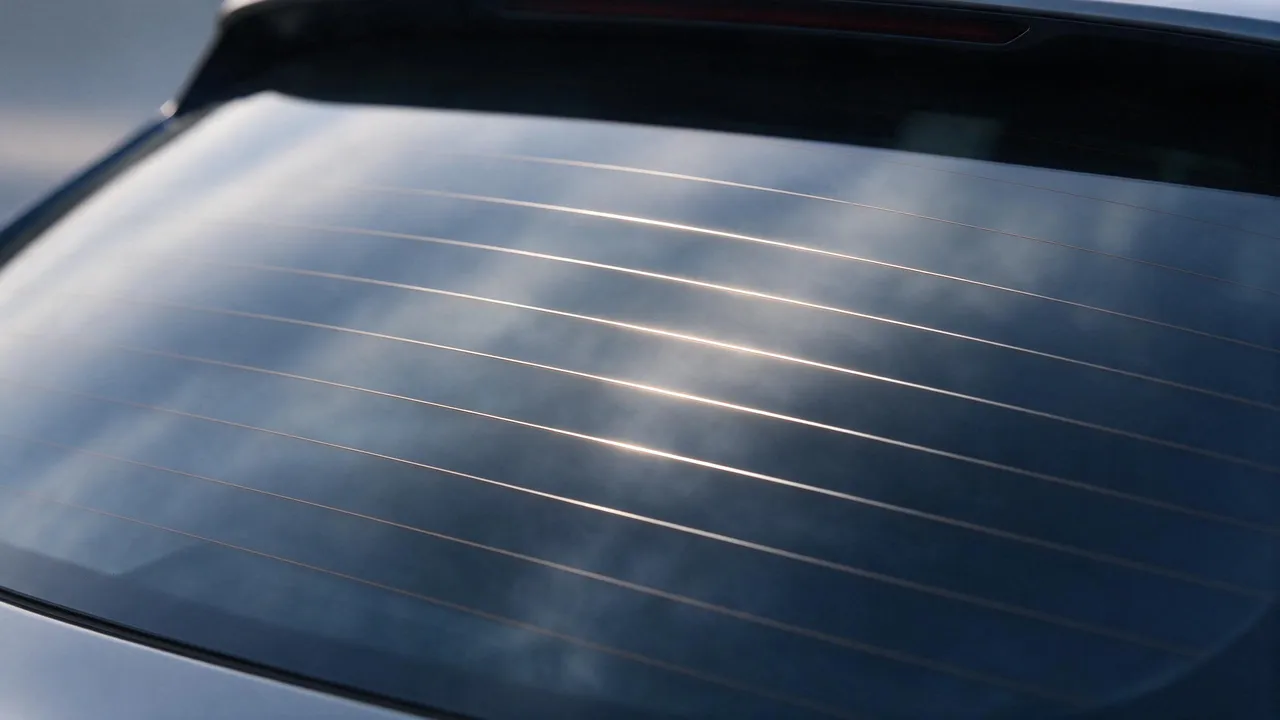
Quick guide: Defroster, antenna and communication compatibility must be assessed for the actual film, glazing and vehicle. Neither “ceramic” nor “low-metal” guarantees zero interference or damage-free installation. Confirm the construction, permitted handling and relevant vehicle-system checks rather than relying on a category label or one squeegee direction.
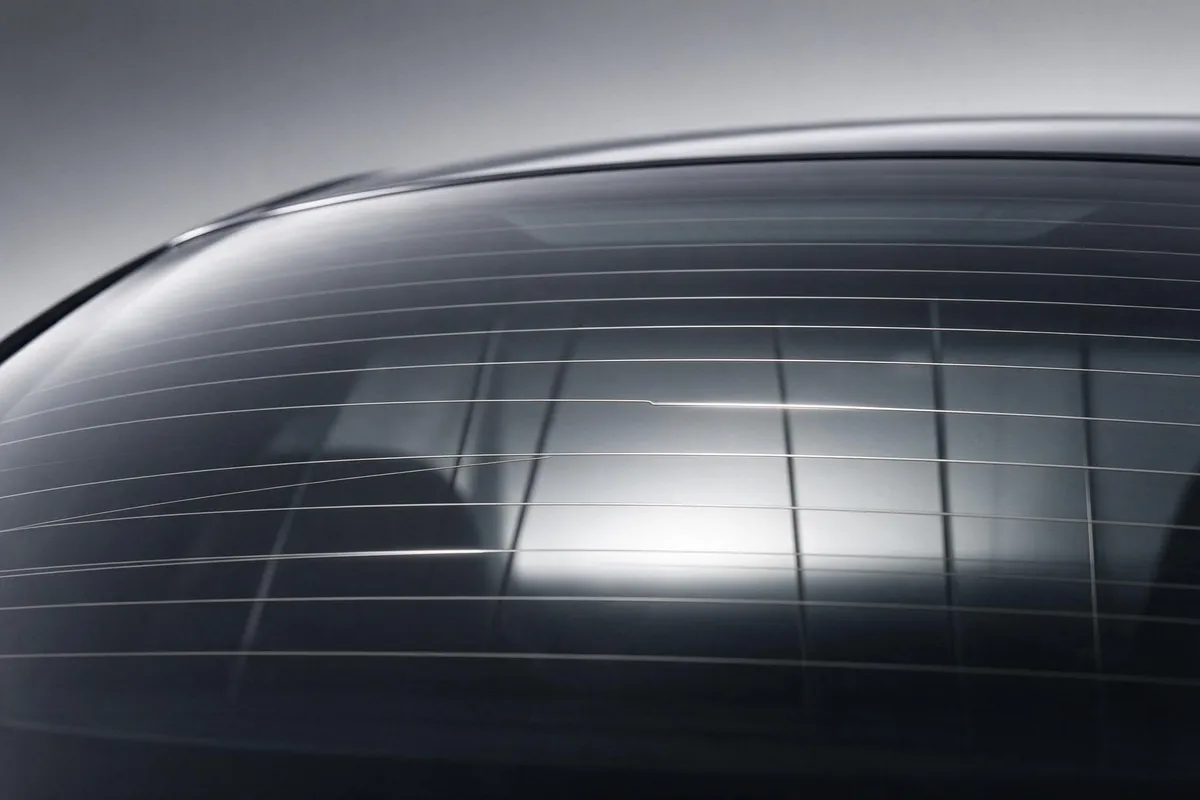
Vehicle glazing may carry exposed heater tracks, printed or embedded antennas, sensor zones or transponder areas. Their location and construction vary; do not assume every vehicle has a rear-glass antenna or a windshield 5G/satellite patch. Identify the actual features and condition before selecting film, installation or removal procedures.
Start with product and vehicle suitability, then agree installation limits and appropriate verification. A pre-installation record can help investigate later concerns but does not guarantee acceptance of a claim or absence of interference. Construction background is in the window-film technology guide; questions to verify against current VLT requirements are in window-film VLT review guide.
On this page
Film and vehicle-system interactions
Identify whether heater conductors are exposed on the glass or built into the glazing. Printed features may be vulnerable to contact, chemicals or removal, depending on their condition and construction. A visible ridge or trapped fluid does not by itself establish a failed heater or a particular adhesive cause; inspect using the vehicle procedure.
An antenna’s response can depend on nearby conductive materials and the complete vehicle arrangement. Film construction, antenna location and frequency matter. A satisfactory result on one vehicle or band does not establish compatibility with another; do not assume all antennas are printed in the same glass.
Conductive layers can change radio transmission through reflection or absorption, but the effect depends on the complete construction, frequency and installation. “Sputtered,” “metallic” or “ceramic” alone is not a measured signal specification. Request applicable product evidence and vehicle-specific restrictions rather than inferring a guaranteed outcome.
For heated glazing, confirm that the film and adhesive are suitable for the vehicle’s operating conditions and permitted use. A service-temperature rating alone does not validate local heat exposure, the full installation or the electrical system. Do not create a universal defroster cycle from a generic film data sheet.
Construction and signal assessment
Metal-containing films may require particular signal review, but deposition method or a “low-metal” label does not establish loading, conductivity or compatibility. Compare the actual product data and vehicle requirements rather than ranking all sputtered films against all other metallized films.
A ceramic category name does not disclose its formula or prove zero interference. CHISI Type IR’s confirmed double-layer nano-ceramic, metal-free construction is specific to that product; it is not a claim about every ceramic film or a universal vehicle-system test. Verify the selected product and system together.
Hybrid and low-metal descriptions also need product-specific evidence. A satisfactory phone check does not establish AM/FM, GPS or toll-transponder performance. No single road test proves compatibility in every environment; agree appropriate controlled checks and vehicle guidance before selection.
Selection and verification
Identify the exact glass, antenna or transponder locations and any vehicle restrictions. Choose a film supported for that use; neither ceramic nor low-metal construction is an automatic approval. Where evidence is incomplete, resolve suitability before installation rather than promising a signal-safe result.
Where permitted, record relevant systems before and after installation under comparable, controlled conditions. Follow the vehicle and equipment procedures for toll devices, positioning, radio and cellular checks. This article prescribes no public toll-lane access, handheld-phone use while driving or universal road-test route; a single successful check is not a full compatibility certification.
Document the selected film, installed glass, relevant checks and any limitations in the work record. These records support later investigation; they do not automatically determine responsibility, warranty coverage or continued signal performance.
Questions by glazing type
Use the table as a review checklist, not a universal product recommendation. Verify the actual vehicle model and year, glazing construction and equipment. Missing an electronic feature from the list does not establish that the pane is suitable for any film.
| Glazing example | Potential issue to assess | Selection check |
|---|---|---|
| Rear glass with heater tracks | Contact over raised features, fluid and adhesive behavior | Confirm film/vehicle handling and operating conditions |
| Rear glass with antenna elements | Possible antenna-response or reception changes | Review product evidence and relevant radio checks |
| Windshield with transponder area | Compatibility of the specified device and location | Follow the vehicle/device-approved placement and glazing rules |
| Side glazing near a communication antenna | Product- and location-dependent reception effects | Use relevant vehicle checks; phone bars alone are not certification |
| Sunroof, after identifying its actual features | Thermal/glazing compatibility and any integrated equipment | Confirm the film and vehicle application limits, not only a temperature rating |
Handling heater tracks
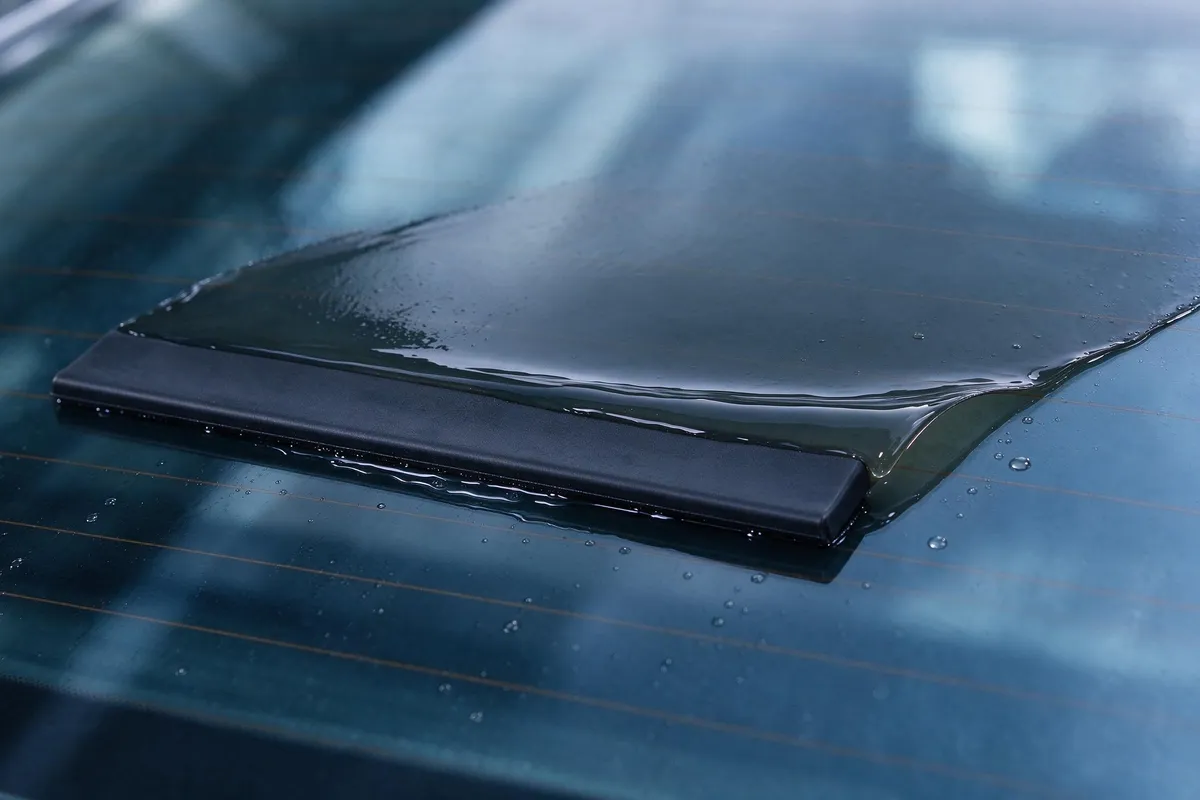
Use the vehicle- and film-approved applicator, direction and contact technique for the actual tracks. Do not infer that a soft or felt edge alone prevents damage or trapped fluid.
Confirm heat control for the film, glass and nearby equipment together. Avoid substituting a generic “lower and wider” setting for the specified method; tool display, local surface temperature and vehicle operating conditions are not interchangeable. A moving gun alone does not establish a safe heat exposure.
Confirm an approved trimming method that protects the glass and printed features. This article does not prescribe blade angles, direct cutting on vehicle glass or a repair for a damaged conductor. If damage is suspected, stop and have the vehicle system assessed; do not assign warranty responsibility from appearance alone. The related PPF installation criteriaaddress a different surface and application; they are not instructions for cutting near vehicle-glass electronics.
Conditions to confirm
Confirm handling, forming, edge clearances and the interval before heater use for the actual film and vehicle. The figures below are source examples, not CHISI operating limits or proof of safety. Initial adhesion and drying are not automatically a chemical cure, and a common waiting time cannot be inferred for all adhesives.
| Parameter | Limit of the example |
|---|---|
| Applicator direction | Follow the actual track and tool instructions, not a universal direction rule |
| Surface heat exposure | Not a universal safe band or the heat-gun display setting |
| Edge clearance | No universal trim gap or direct-blade instruction is established |
| Waiting before heater use | Confirm the film and vehicle instructions and actual conditions |
Investigating signal concerns
Compare the complaint with the pre-installation record and investigate the film, device, antenna, placement and test environment. A signal change does not prove a metal layer is responsible, while no change in one check does not exclude all film effects. Do not replace material or alter a vehicle system without an appropriate assessment.
| Symptom | Possible factors | Controlled review |
|---|---|---|
| Toll transponder not read | Film/glazing, device position or other device/system issues | Use the device/vehicle-approved check; do not prescribe a cutout or public-gate trial |
| Slow or unstable GPS positioning | Antenna, device, environment, placement or film/glazing effects | Compare documented conditions using the vehicle’s diagnostic procedure |
| Weak AM/FM reception | Antenna condition, nearby materials or other reception factors | Assess the antenna and product evidence before selecting a replacement film |
| Lower indicated cellular signal | Network, device, position and film/glazing conditions | Compare controlled conditions; bars alone do not establish cause |
| No change observed in a particular check | That result applies only to the systems and conditions checked | Document the limits; do not infer universal compatibility or a proven unrelated fault |
Frequently asked questions
Can window film affect a toll transponder?
It can be one factor, depending on film, glazing, device and placement. A metal layer is not the only possible cause, and a ceramic label does not prove compatibility. Follow the vehicle and transponder instructions; do not prescribe a cutout or a toll-gate test as a universal remedy.
Do ceramic films guarantee unchanged GPS or phone reception?
No universal guarantee follows from the category name. Review the exact construction and applicable evidence, then confirm the vehicle/device requirements. CHISI Type IR’s confirmed metal-free nano-ceramic construction must not be extended to all ceramic films or treated as a universal radio test.
Can metal-containing film be used near an antenna?
Confirm the exact product and vehicle restrictions before installation. Conductive material may change antenna behavior, but the result is not defined by a generic metal label. Use applicable evidence and an agreed assessment; neither automatic approval nor automatic replacement with ceramic is established here.
How should exposed defroster tracks be handled?
Use the film- and vehicle-approved tool, direction, heat and fluid controls. Inspect the actual condition before and after work and have suspected electrical damage assessed under the vehicle procedure.
When can the defroster be used after installation?
Follow the actual film and vehicle instructions. Confirm drying, adhesion development and heater-use conditions for the selected product.
What if GPS reception changes after installation?
Compare with the recorded baseline under comparable conditions and review film, glazing, antenna, device and environment. Do not remove film or alter a vehicle system merely from timing, and do not prescribe route testing while operating a phone. Seek an appropriate product/vehicle assessment before corrective work.
Does correct installation guarantee intact heater tracks?
Do not give a universal damage-free guarantee. Condition, construction, contact, chemicals, heat and later removal can matter. Record the actual system and investigate any suspected fault; a visible score or a malfunction does not by itself decide every cause or warranty responsibility.
Should ceramic-film installations also be checked?
Agree checks appropriate to the exact product, vehicle and installed features. A construction label is not a substitute for applicable evidence. Document what was checked and the conditions; do not extend one result to every frequency, vehicle or future operating condition.
Review the vehicle systems before selecting film
Identify glazing and equipment, confirm applicable product evidence and agree handling and checks before work. No construction label, tool direction or single signal check guarantees an undamaged system or universal compatibility.
For background on our development and manufacturing capabilities, see our R&D and factory overview. Confirm whether any available report covers your selected film, vehicle and test conditions. To discuss the intended application, contact our team.