
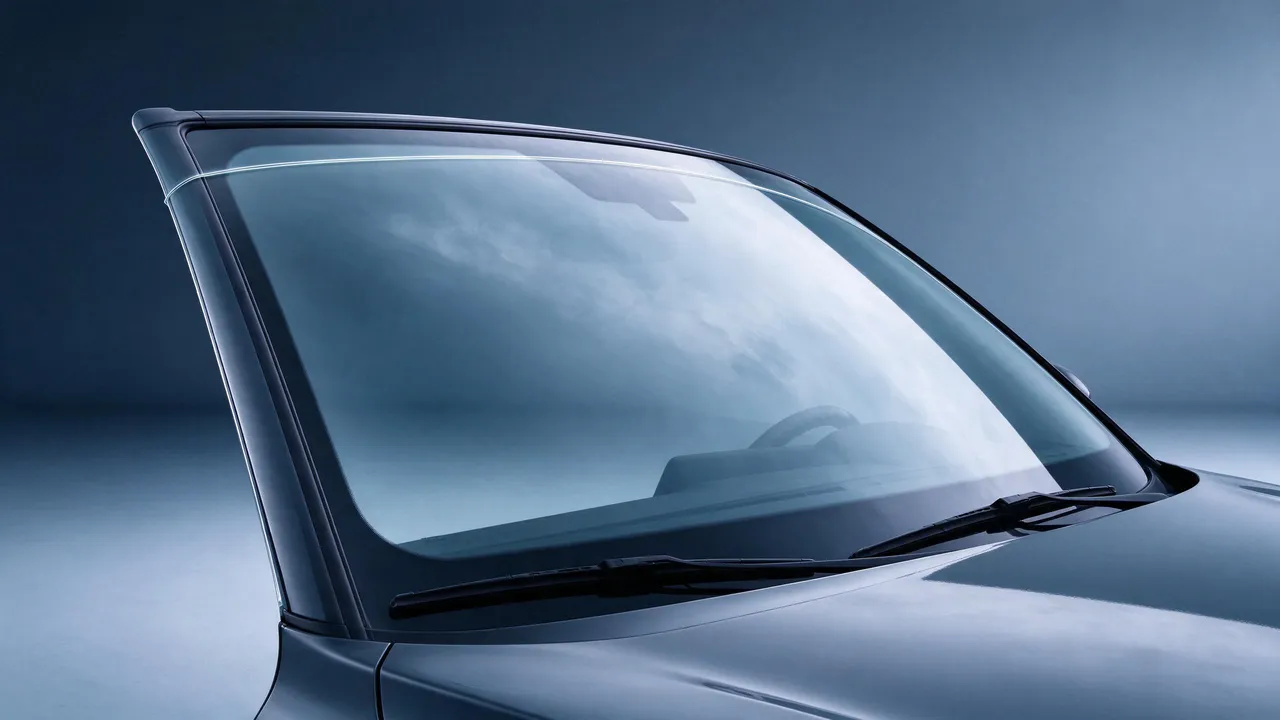
Quick guide: Select windshield protection film for the actual glazing, viewing conditions, wiper exposure and vehicle restrictions. Low haze or high VLT alone does not establish road permission, safe vision or ADAS compatibility. Do not substitute a body PPF merely because it is clear or thin; confirm intended use and the applicable evidence.
A windshield is part of the driver’s view and may contain cameras or sensors. Film selection therefore needs optical, mechanical and vehicle-specific review, not a transfer of a paint-panel specification.
Specify measurable optical requirements with the test object, method and conditions. An “optical-grade” label alone is not a defined approval. Questions to check against current transmission requirements are in window-film VLT review guide; related but distinct applications are discussed in headlight film and sunroof PPF.
On this page
Windshield-specific considerations
Assess the view through the complete intended glazing, not only film appearance on paint. Haze, distortion, reflection, lighting and viewing geometry can matter. A visual observation and a laboratory value provide different information; neither alone proves safe performance in every driving condition.
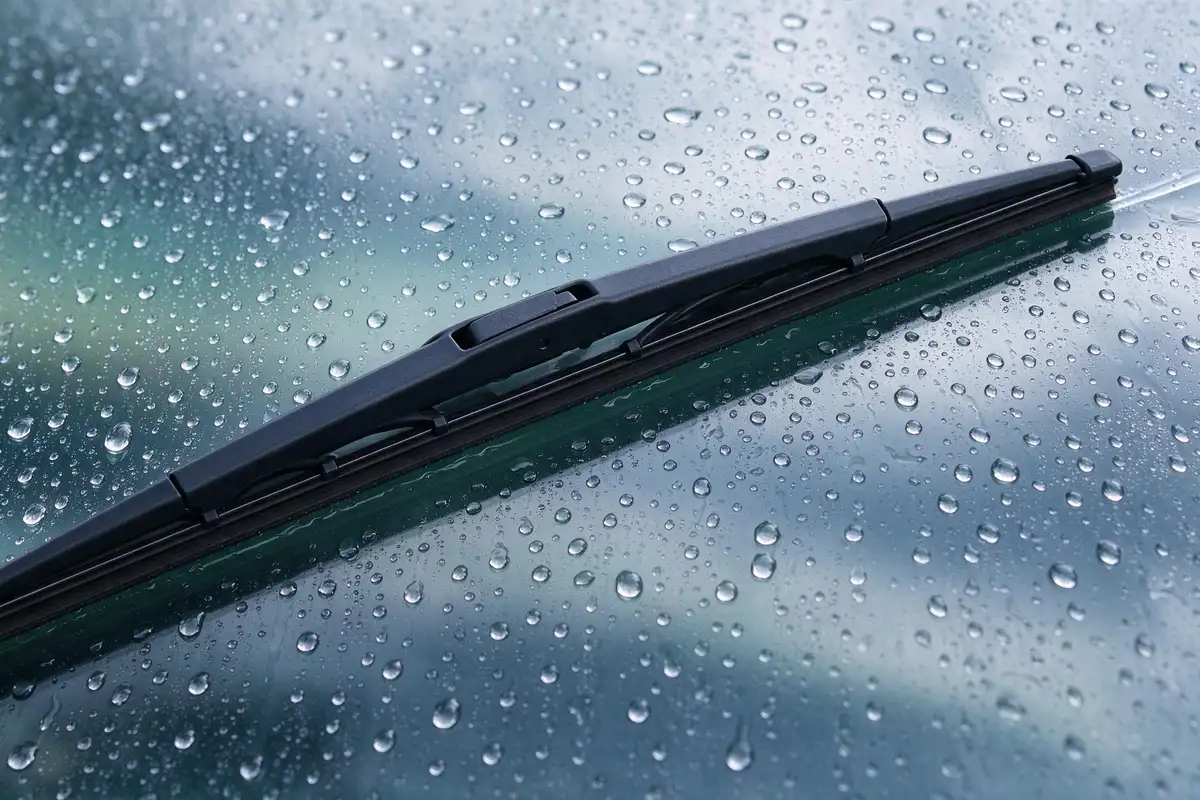
For exterior products, review the actual wiper, contact area, contamination and maintenance conditions. Repeated contact can affect surface performance, but a hardness number alone does not define wiper wear or service life. Request an applicable wear assessment and inspection criteria rather than a universal no-haze or no-chatter promise.
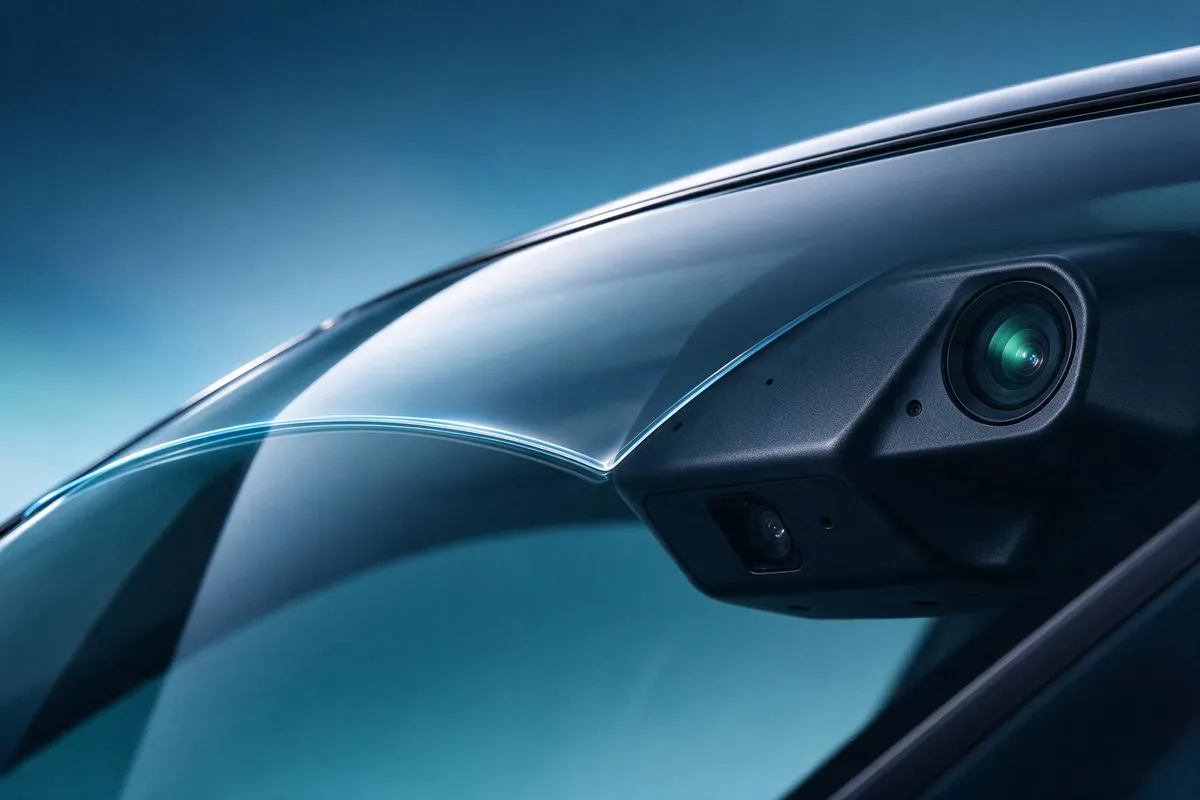
Identify the actual camera, rain-sensor or other equipment zones and follow the vehicle’s instructions. Their locations and optical requirements vary; do not assume every sensor uses the same path or that an apparently clear film leaves calibration unchanged.
Check the applicable glazing, installation position, measurement procedure and any permissions with current official requirements. A nominal film VLT is not itself legal approval.
Intended use and thickness
Thickness alone does not make a film suitable for a windshield. Supplied windshield references report BWS Clear/Blue/Purple and KWS total thickness 299 µm and functional layer 165 µm; RWS reports total 144 µm and use layer 121 µm. Keep those fields separate and do not infer material chemistry, installed stack thickness or a universal “windshield is thinner” rule.
Low haze requires a defined test object and method. Appearance on a paint panel does not establish through-view performance on glass. Distinguish material scattering from contamination, fluid, damage and glazing effects; no single visual symptom identifies the cause or supplies an acceptance threshold.
Use the relevant abrasion, impact and optical tests for the intended use. RWS pencil hardness is 7H under ASTM D3363. Assess wiper durability separately.
Review distortion in the intended glazing and viewing conditions, including installation effects. A clear label, nominal thickness or careful installation cannot establish suitability for an unapproved product. Resolve the product and vehicle requirements before application.
ADAS zones and vehicle guidance
Obtain the actual vehicle manufacturer’s restrictions and evidence for the proposed film and location. An “ADAS-rated” marketing label is not a universal certification or permission to cover a camera zone. Some vehicle instructions prohibit films near sensors; neither film clarity nor a generic supplier statement overrides them.
A change in the optical path can matter to a camera or sensor even if it is not obvious to the driver. The effect depends on the system, film, glazing and conditions; this article does not prove a detection failure, compatibility margin or calibration solution for a particular vehicle.
Follow the vehicle’s documented decision on prohibited zones, permitted materials and any required inspection or calibration. A cutout is not an automatic workaround or proof of compliance. If suitability is unresolved, do not proceed on the assumption that cutting around a sensor makes the installation acceptable. The related PPF installation criteria concern another application and do not establish ADAS approval.
Comparing application requirements
The table organizes topics to verify, not a shared material specification or a universal windshield/body-film ranking. Use the selected product’s actual reports and vehicle requirements; the supplied references do not identify every composition, test assembly or approved road application.
| Requirement | Windshield application review | Body-paint application review |
|---|---|---|
| Visible light transmission | Confirm current applicable rules; source ~70%+ is not a universal limit | Appearance and intended-use criteria, not windshield permission |
| Haze | Define the optical test and acceptance criteria | Evaluate appearance against the actual specification |
| Wiper-related wear | Request relevant test conditions and inspection limits | Do not infer windshield wear performance from body-film tests |
| Thickness | Distinguish total and functional/use layers in the actual report | Evaluate the complete film and glazing assembly. Match the glass, film model, viewing conditions and any sensors or heating elements used on the vehicle. |
| ADAS optical path | Follow actual vehicle restrictions and product evidence | Body-film suitability does not establish sensor compatibility |
Optical metrics and reference reports
Supplied reference reports list VLT/haze as follows: BWS Clear 80%/0.48%, BWS Blue 90%/0.52%, BWS Purple 90%/0.35%, KWS 92.8%/0.44%; RWS VLT 89% and haze 0.7, with the haze unit shown as “/”. These are reference-sample results, not values for every SKU or evidence of a specified film/glass assembly. They do not establish wiper life, ADAS compatibility or road approval. Review each metric and method separately.
| Metric | Meaning and scope | Method to document |
|---|---|---|
| Haze | Wide-angle light scattering under defined conditions | ASTM D1003 is named in the supplied references; record specimen, procedure and conditions. It is not an automotive safety certification. |
| Visible light transmission | Visible-light transmission defined by the chosen optical method | Supplied BWS/KWS references name GB/T 2680; RWS names QC/T 1170-2022. Do not assume an identical test assembly or regulatory method. |
| Clarity | Detail visibility under a specified image or optical assessment | Define the apparatus, geometry and criterion; a generic image check is not a universal test standard |
| Distortion | Changes in the apparent geometry of a reference through the intended glazing | Use an applicable documented method; a grid observation alone does not certify road or ADAS performance |
Transmission, haze, detail clarity and distortion describe different aspects. A result for one does not establish the others. Evaluate material and installation contributions with a defined specimen and viewing geometry. The related discussion of PPF heat formingdoes not supply a windshield forming temperature, optical tolerance or vehicle approval.
Reviewing application scenarios
Use these scenarios to identify questions, not to approve an installation. Confirm the actual product, glazing, vehicle, conditions and current requirements. Track rules and road rules are separate, and neither optical values nor a product label establishes suitability for every use.
| Scenario | Suitability review | Additional check |
|---|---|---|
| Daily road vehicle | Confirm intended use and current vehicle requirements | Assess glazing, view, wiper and applicable transmission requirements |
| Track or competition vehicle | Confirm the event, vehicle and product rules | Event permission is not road permission or proof of protection |
| Frequent wiper use | Request relevant wear evidence and care instructions | No fixed replacement interval follows from a hardness label |
| Dust, grit or off-road exposure | Assess the actual exposure and permitted use | Review contaminant removal and wiper conditions |
| A market with specific glazing rules | Use the applicable official procedure and product/vehicle evidence | Verify the required test object; do not equate a roll value with installed compliance |
Installation review points
Use the selected film’s preparation, fluid, applicator and inspection procedure on compatible glazing. Control contamination without promising that a clean installation eliminates all haze or distortion. A surface should be assessed before installation rather than assuming film corrects an existing optical defect.
Forming and sensor-zone treatment must follow the actual product and vehicle procedure. Do not prescribe a generic “low heat” setting or a cut around every camera as a safe solution. If permission or optical suitability is unresolved, resolve it before installation rather than attempting a technique workaround.
Confirm the permitted border, gasket clearance, any edge treatment and wiper interaction for the selected installation. This article supplies no universal trim dimension or sealing requirement. Inspect tool marks, fluid and edge condition against the agreed criteria.
Frequently asked questions
Can a body PPF be substituted on a windshield?
Do not assume suitability from clarity, material name or thickness. Confirm the intended application, optical and wear evidence, vehicle restrictions and current requirements. Windshield references are not universally thinner than body products; use actual total and functional/use thickness fields rather than a generic range.
Does a high-VLT film automatically satisfy glazing rules?
No. Determine the current requirements, permitted position, vehicle and required measurement object and procedure. A film’s nominal value or a reference report does not establish installed-glazing compliance, an exemption or road permission.
Can film cover an ADAS camera zone?
Follow the actual vehicle manufacturer’s restrictions and evidence for the proposed product and location. An “ADAS-rated” label or a cutout alone does not establish permission or system compatibility. Any inspection or calibration must follow the vehicle procedure; no CHISI-wide ADAS approval is claimed here.
How long will a windshield film last under wiper use?
This article establishes no common interval. Product construction, wiper condition, contaminants, exposure and maintenance matter. Request relevant endurance evidence and inspection criteria for the exact film; pencil hardness, a generic abrasion label or haze alone does not predict a service life or warranty period.
Does windshield film guarantee protection from stone damage?
No universal impact guarantee is established by the supplied optical or mechanical references. Verify application-specific evidence and limits. Puncture, tensile, tear and optical measurements do not automatically demonstrate every stone-impact condition or replace the vehicle’s glazing requirements.
Why might windshield film appear hazy at night?
Material scattering, fluid, contamination, wear, installation or the glazing may contribute. Inspect under the applicable method rather than assuming one cause or promising that a clean installation has zero haze. Laboratory haze and observed glare are related review topics, not interchangeable measurements or an automatic safety decision.
Is windshield-film installation the same as body PPF?
Do not transfer settings or technique automatically. Confirm substrate preparation, forming, fluid, trimming, optical inspection and vehicle restrictions for the exact product. Similar tools or a shared material name do not establish the same procedure or an approved result.
Can windshield and tinted-side films be planned together?
They can be discussed as a project, but assess each product, pane, vehicle restriction and current rule separately. A coordinated appearance does not establish permission, optical safety or compatibility of the complete vehicle. Do not transfer a side-window allowance to the windshield.
Specify the intended view and use
Use the actual model’s reports, distinguish sample results from approved installed use, and review optical, wiper and sensor requirements separately. The supplied reference reports do not establish all-SKU values, material chemistry, ADAS approval or universal service life. Any other series’ infrared or mechanical figures remain specific to that series.
Discuss the intended film, glazing and vehicle with our team, including development questions and which optical or wear evidence is available for the application. To review your requirements, contact our team.