
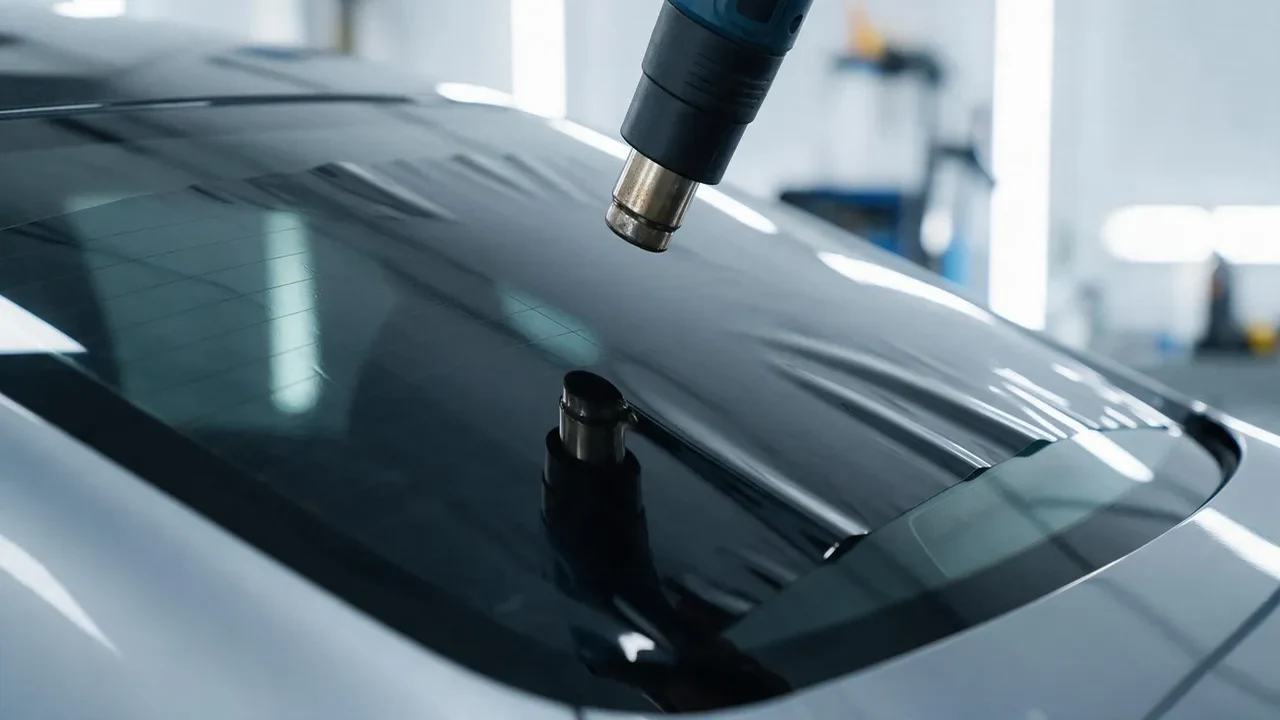
Quick guide: Dry and wet shrinking describe forming workflows, not a simple choice between heat and no heat. A wet shrinking method may still use heat; installation fluid and a squeegee do not replace the film’s thermal response. Select an approved procedure for the actual film, glass and vehicle features. Curvature or defroster lines alone do not make one method universally mandatory.
Separate preforming from final wet installation. Film may be shaped on a suitable surface before the liner is removed and the adhesive is applied to the intended glass face.
This guide explains the workflow terms, heat-control questions, glass features and inspection needs to discuss with the supplier. It provides no universal heat-gun setting, safe glass temperature or mandatory method for all CHISI films. Confirm the product-specific procedure before installation.
On this page
Dry and wet forming terms
The table identifies questions for two workflow families. Approved techniques may combine shaping, heat and fluid removal in different stages. Do not treat a wet final installation as proof that the film was wet-shrunk, or assign one technique solely by window location.
| Aspect | Dry forming workflow | Wet forming workflow |
|---|---|---|
| Applicability | Confirm for the film and actual curvature | Confirm for the film, curvature and vehicle features |
| Forming principle | Controlled heat where specified, with the approved support and technique | Fluid-assisted positioning; heat may still be required by the procedure |
| Risks to inspect | Heat damage, creasing or optical changes | Heat damage, residual fluid or contamination may still occur |
| Time and control | Depends on film, shape and approved process | No universal speed or optical-quality advantage |
| Tools to confirm | Approved heat source, applicator and surface preparation | Approved fluid, applicator and heat source if required |
| Typical locations to assess | Side or front glazing only if the product and use are suitable | Rear or complex glazing only under its approved procedure |
Neither method is a universal default or safeguard. Verify the complete workflow on the specified film and glass before production. Appearance faults need investigation; they do not prove that a different dry or wet label would have prevented them.
Heat forming and film construction
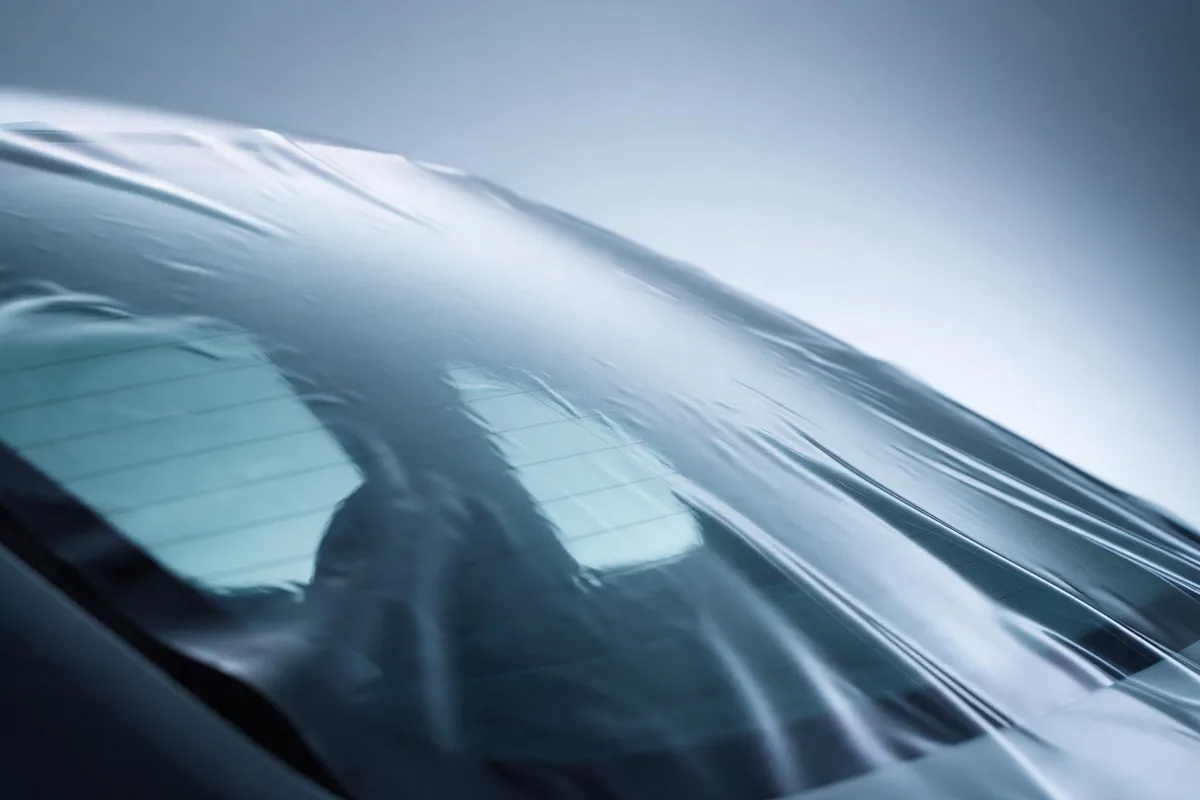
Some automotive films can be heat-shaped to fit curved glass, but construction and shrink direction matter. Thermoplastic behavior alone does not mean that any PET film shrinks predictably as it cools. Use the selected product’s forming instructions; do not transfer a mechanism or setting from a different film.
Control heat, support and contact technique together. A dry shaping stage can form part of a manufacturer-supported process for complex glazing; a later wet installation is a separate operation. Do not promise that a wet finish removes heat damage or guarantees undistorted vision.
Heat limits and optical inspection
Request the forming procedure for the exact construction, including how heat is controlled and checked. A heat-gun display, film-surface temperature, glass temperature and service-temperature rating are different quantities. This article supplies no interchangeable or universal safe setting.
Check optical appearance against the approved method before handover. Waviness may involve film damage, fluid, installation, glass or other causes; a bent reference line alone does not diagnose permanent over-shrink. Stop and assess a suspected heat-damaged area; use the supplier’s disposition procedure rather than applying more heat as a universal repair.
Choosing a supported workflow
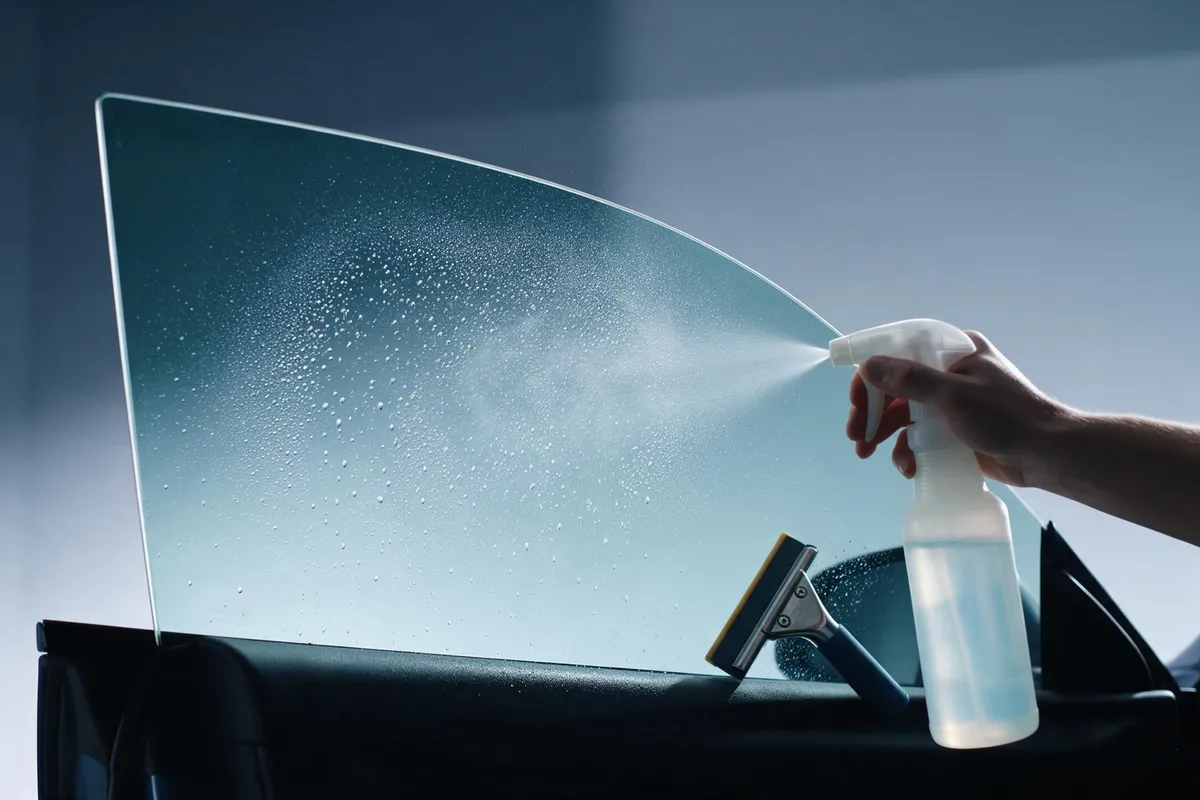
Strong curvature, exposed defroster lines, antennas or sensor areas require a suitability review. They do not establish that dry forming is always unsuitable or wet forming is always safe. Consult the film and vehicle procedures, including the permitted surface, tools, heat and fluid controls.
Use a documented workflow that separates forming, liner removal, positioning, fluid removal and inspection as applicable. A squeegee moves fluid and applies contact pressure; it is not evidence of molecular shrinkage. Review these conditions rather than treating the following as an automatic wet-shrink requirement:
- Compound-curved rear glass: verify the approved forming method and optical result.
- Defroster lines: identify their position, condition and permitted handling.
- Antenna or sensor zones: confirm vehicle-specific compatibility and restrictions.
- A failed forming test: stop, investigate and validate a suitable procedure before proceeding.
Questions by glazing type
Use this table to organize a suitability review, not to prescribe a method. Confirm the actual glass, coatings, curvature, vehicle features and approved film. Separately check current rules for the destination and installation position; this article does not establish legal permission or a VLT threshold.
| Glazing example | Procedure to confirm | Inspection focus |
|---|---|---|
| Flat or lightly curved side glass | Approved forming, if needed, and installation sequence | Inspect fit and edges; do not assume a fixed completion time |
| Moderately curved side or front glass | Confirm the product-supported forming method | Inspect the full viewing area, not only the upper curve |
| Compound-curved rear glass | Manufacturer-supported forming and final installation | Check optical quality and any heating or antenna features |
| Rear glass with defroster lines or antenna | Confirm film/vehicle compatibility and permitted workflow | Protect the features using their actual approved handling procedure |
| Curved sunroof | Confirm whether the product and glazing are suitable before selecting a method | Curvature, access, glazing construction and thermal limits matter |
| Windshield, only where the actual use is permitted | Confirm product, vehicle, optical and regulatory suitability | A film-only VLT value does not establish complete-glazing compliance |
Windshield use needs particular review of the product, vehicle, viewing zones and current local requirements. Do not infer permission from a film label or this table. The window-film VLT review guide provides planning questions, not a substitute for current official requirements. The window-film technology guide explains construction and measurement concepts; nominal film data alone do not prove legal or vehicle compatibility.
Investigating defects
A visible fault does not prove that the dry/wet choice was wrong or that the film is fault-free. Review material, preparation, forming, installation, glass and vehicle conditions. The table lists possible checks, not certain diagnoses or a mandatory repair procedure.
| Symptom | Possible factors to assess | Response to confirm |
|---|---|---|
| Uneven shaping or puckering | Heat distribution, support, orientation or material response | Stop, inspect and use the supplier’s approved disposition |
| Optical waviness | Film, fluid, installation or glass effects; heat damage is one possibility | Assess the cause before rework or replacement |
| Defroster malfunction or line damage | Check pre-existing condition, contact, heat, chemicals and electrical issues | Have the vehicle system assessed; no universal film-section repair |
| Edge lifting | Fit, contamination, moisture, adhesive or residual stress may contribute | Inspect and follow the product procedure; do not add heat automatically |
| Marks or haze after installation | Residual fluid, deposits, contamination or other causes to distinguish | Inspect against the product’s drying and quality criteria |
Do not classify every optical wave as permanent over-shrink or every defroster fault as heat damage. Document the condition and investigate before deciding replacement or repair. A wet workflow does not guarantee protection of the glass, coating, heater or antenna.
Tools and working conditions
Select the heat source, applicator, fluid and trimming method specified for the film and glazing. A wide nozzle or felt edge alone does not establish safety or optical quality. Control heat and fluid around vehicle features, and handle sharp tools only under the approved equipment and vehicle procedure.
Use a clean, suitable workspace and the film’s specified conditioning and installation requirements. An approved procedure matters more than assumptions from another roll. The related discussion of TPU in PPF heat forming covers a different material/application context and does not supply PET window-film settings.
Frequently asked questions
What is the difference between dry and wet shrinking?
The terms describe forming workflows and the role of fluid at the forming surface. Either may involve heat; final wet installation is a separate stage. A slip solution and squeegee alone do not replace thermal shaping. Use the selected film’s actual instructions rather than a universal dry-for-simple/wet-for-complex rule.
Does optical waviness prove over-shrinking?
No. Heat damage is one possible cause, alongside film, fluid, installation and glazing effects. Inspect using the approved method and seek a disposition for the actual condition. Do not automatically apply more heat or assume that every mark will disappear as it dries.
When is a wet forming workflow required?
When the actual film and vehicle procedure specifies it. Compound curvature, a heater or an antenna prompts a suitability review, not an automatic rule. Dry shaping may be part of a supported rear-glass procedure; confirm the full sequence, surfaces and limits for the selected product.
Can installation affect defroster lines?
Heat, contact, chemicals, removal or an existing electrical issue may affect a system. Check its condition and follow the vehicle and film procedures. A wet method is not a guarantee against damage, and a malfunction needs assessment rather than an automatic heat diagnosis.
How should marks after wet installation be assessed?
Distinguish residual installation fluid from deposits, contamination, optical defects and product damage. Use the film’s inspection and drying criteria; no universal clearing time is supplied here. Do not hand over a concerning condition with an assurance that all marks will disappear.
Does glass type alone decide the method?
No. Review the film construction, curvature, coatings, vehicle features and approved application sequence together. Investigate a failed test before proceeding. Neither a dry/wet label nor a symptom alone establishes the cause or excludes a film defect.
Are side windows always dry-formed?
No universal method is assigned here. Some flat panes may need no shrinking, while curved panes need a film-supported procedure. Verify the actual glass and product rather than using window position or a fixed speed ranking as the decision rule.
Where should current installation restrictions be checked?
Use current official requirements for the destination and vehicle, together with product and vehicle instructions. The window-film VLT review guide offers discussion points rather than legal approval, and the window-film technology guide provides construction and measurement context, not proof that every film/glass assembly is permitted.
Next steps
Confirm an approved forming and installation workflow for the actual product and glazing. Separate heat control, fluid removal, optical inspection and vehicle-system compatibility. Neither wet forming nor a nominal temperature label guarantees a safe or distortion-free result.
For construction and measurement context, see the window-film technology guide; for questions to verify against current official requirements, see the window-film VLT review guide. Related care discussion for a different product category is in PPF care and maintenance; do not copy its care intervals to window film. The related TPU topic is covered in PPF heat forming. To discuss a suitable window-film specification, contact our team.