

Short answer: Assess posture, reach, task duration and workstation layout alongside skill, materials and job complexity. Suitable adjustments and coordination may improve work, but raising a vehicle or adding a second installer is not automatically safer or faster. The figures below are source planning assumptions, not measured CHISI output.
Unnecessary reaching, walking or sustained awkward work can add strain and interrupt a job. Capacity also depends on vehicle mix, preparation, equipment and quality requirements. Review the actual work before choosing a lift, platform, cart or crew arrangement.
Work organization can support installation quality without guaranteeing a fatigue-free shift. For the layout context, see PPF bay design; for the application process, see PPF installation guidance.
On this page
Ergonomics and work capacity
Repetition, force and sustained awkward postures can contribute to fatigue or musculoskeletal risk. Output does not follow one universal decline curve, and the first or third car is not a reliable quality indicator. Observe tasks and involve the installers in assessment.
Assess how long people bend, kneel, reach and hold static positions, together with force and recovery opportunities. Do not treat every pause as waste: planned rest, repositioning and checks can be necessary parts of a suitable process.
Adjust the task to the worker and equipment constraints rather than relying on effort alone. Layout, training, suitable aids and work-rest organization can all matter. Evaluate changes instead of assuming that simply raising the work removes the risk.
Working height and vehicle access
Choose access and working height for the actual panel, worker and task. Raising a vehicle also raises its roof; it does not lower an overhead task to hand height. Consider suitable approved access arrangements without prescribing a universal knee, waist or chest setting.
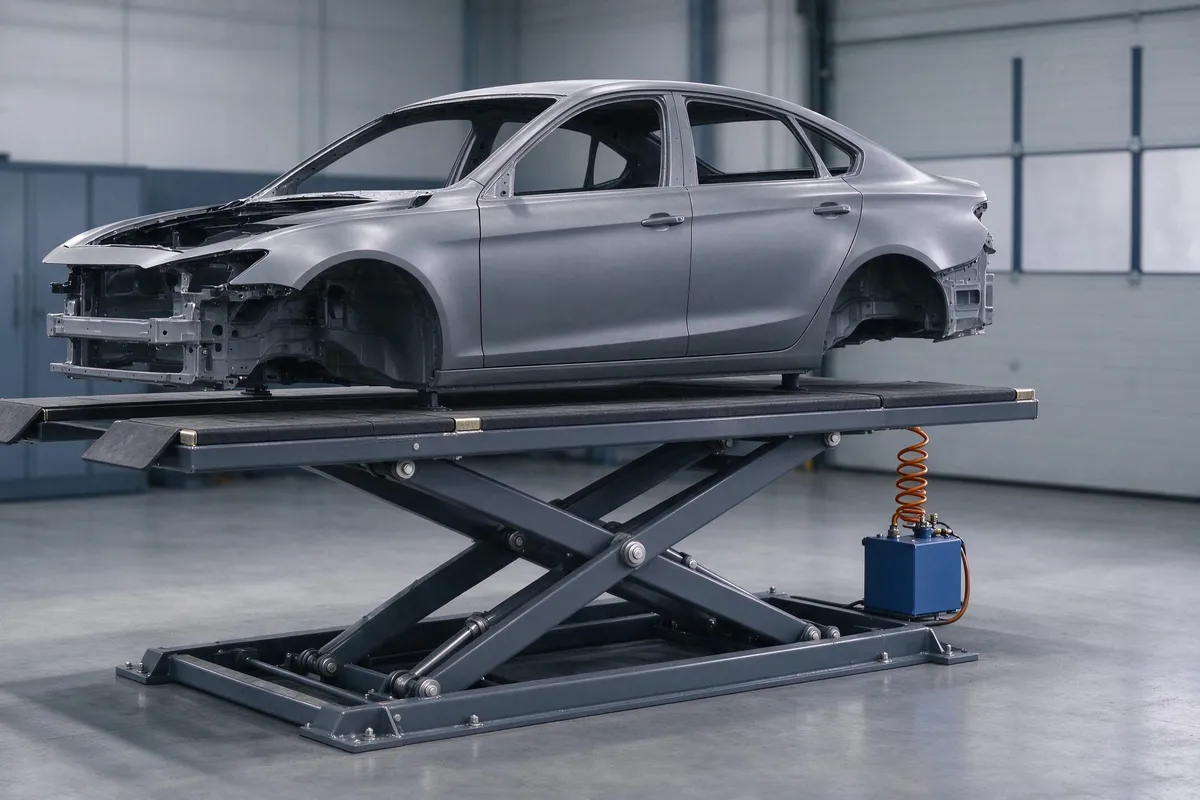
A height change must follow the equipment and vehicle requirements, including compatibility, support and operator procedures. Do not move or reposition a raised vehicle as a generic workflow shortcut. Select access for each task within the permitted equipment use.
A wheel support, lift, bench and worker platform are not interchangeable. Confirm their intended use and suitability rather than treating a cheaper support as an equivalent lift. Obtain the appropriate equipment and workplace assessment before specifying access.
Tool access and movement
Place frequently used tools within a suitable reach without obstructing access or creating heat, blade, spill or electrical hazards. Edge sealer is included only where the film process permits it.
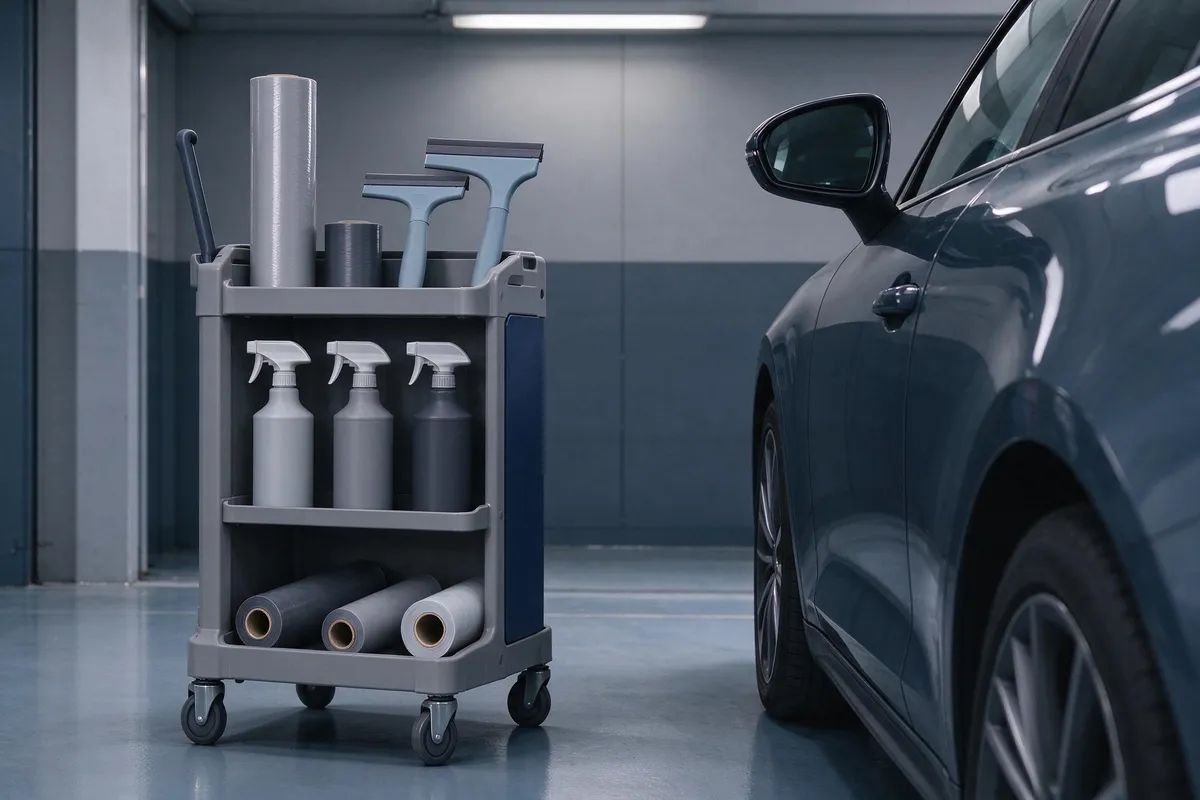
Use an agreed storage and replenishment system that keeps tools and cut pieces identifiable without obstructing people or equipment. A nearby plotter is useful only where space, noise, contamination and access remain suitable. See pattern cutting and nesting.
Choose storage positions from weight, frequency, reach and cart stability together. Heavy items should not require repeated deep bending, and rarely used items should not be placed where retrieval creates an overhead hazard.
Scheduling full-car work
Break the job into preparation, application, edge work and the product’s required inspection or waiting stages. The sequence and task rotation must fit the vehicle, material and people. A stage called “cure” does not prove that every PSA undergoes chemical curing after installation.
Record a workable sequence and reassess when fatigue, access or quality issues arise. Do not automatically reserve all detailed work for the end or assume preparation alone determines later quality. Allow suitable recovery and inspection within the plan.
Two-person coordination
Two people may share preparation, large-piece handling, zones or inspection where appropriate. Agree roles, communication and access so one person’s tools, heat or movement do not interfere with the other. A left/right split is an example, not a mandatory or always faster method.
Agree the required panel boundaries and finish before work, without assuming an overlap seam is permitted. Record handovers between operators. The final check can be shared; the reference is PPF handover inspection ; signatures document participation, not a guarantee that every defect was detected.
Task rotation may change each person’s exposure, but the team’s average posture cannot establish an individual’s safety. Assess each worker’s duration, force and recovery; two people do not automatically halve the load or remove awkward work.
Posture and task assessment
Use the table to identify tasks for assessment, not to diagnose injuries or select one remedy for every worker. Observe the actual posture, duration, force, equipment and access, then evaluate an appropriate change.
| Task or posture | Exposure to assess | Change to evaluate |
|---|---|---|
| Bending toward a rocker | Trunk posture, reach and sustained load | Suitable access and task height within equipment limits |
| Kneeling near a sill | Knee contact, duration and ability to change position | Assess alternatives and recovery; padding alone is not a complete solution |
| Overhead roof access | Shoulder and neck posture, force and duration | Assess suitable working access; lifting the car raises the roof too |
| Twisting toward a fender | Trunk rotation and reach during the task | Rearrange access safely; do not move a raised vehicle as a generic instruction |
| Prolonged standing at the hood | Static duration, reach and available recovery | Assess task variation and suitable flooring; mats can create other access issues |
Assess reach, working height, tool placement and task sharing together. Choose equipment rated for the vehicle and the work, and train installers on its correct use.
Source staffing assumptions
The following sedan-job figures are source assumptions, not observations from CHISI or a staffing guarantee. Compare elapsed time, person-hours, quality and equipment constraints separately. A shorter elapsed job can still require more total labor.
Track labor time, completed jobs and rework for your own bay and installation team. Use those records to plan capacity and handovers.
Replace assumptions with your own task-level records before staffing or quoting. Include vehicle mix, quality, rework and recovery needs; do not use the figures as production targets or promises.
Workstation review checklist
Use the list as planning topics alongside the actual workplace and equipment requirements. A morning check does not replace training, maintenance, suitable task assessment or ongoing review.
| Item | Suitability to confirm |
|---|---|
| Vehicle access equipment | Actual intended use, vehicle compatibility and permitted support arrangement |
| Tool cart | Stable loading, suitable reach and unobstructed movement |
| Consumable storage | Compatible products, labeled storage and replenishment; no universal sealer requirement |
| Flooring or mats | Suitability for load, liquid, access and trip risk |
| Task lighting | Suitable visibility and glare control for the actual inspection |
| Cutting-area connection | Identifiable cut pieces and clear transfer routes |
Verify equipment and workplace requirements before specifying the layout. This article is not a lift operating procedure, occupational risk assessment or compliance certificate. Coordinate access, electrical tools, liquids and people within the site’s appropriate controls.
Frequently asked questions
Can ergonomics affect output?
It can affect fatigue and task conditions, but no fixed gain follows from one posture change. Assess the actual work and measure quality, elapsed time and person-hours. Do not treat source planning figures as measured productivity or injury-prevention guarantees.
How should working height be chosen?
Assess the panel, worker and suitable access equipment within vehicle and equipment instructions. There is no common knee, waist or chest setting. Raising the car raises the roof too; do not use that action as a generic remedy for overhead work.
Is a two-person crew always faster?
No. Task division, vehicle, skill, space and material can change the result. Evaluate total person-hours and quality too.
Which tools should be kept nearby?
Choose from the actual tasks and permitted product process, considering safe storage, reach and movement. Do not make knives, hot tools or edge sealer mandatory for every installation.
How should two installers divide work?
Agree roles, boundaries, communication and safe access for the actual job. Zones or tasks may suit different stages. No left/right split or overlap line is universal, and simultaneous work must not create interference.
Can work organization support quality?
It can support suitable task conditions and inspection, but a fresh worker or second pair of eyes does not guarantee defect detection. Assess individual exposures and retain the product-specific quality checks.
Which change should be considered first?
Start with the actual task assessment and worker input. Prioritize the relevant exposure and a suitable control rather than automatically buying a lift or cart. Trial and evaluate a change before treating it as a capacity or payback improvement.
Planning capacity from real work
Use task observations, suitable equipment, coordination and actual time records to plan capacity. Ergonomics is one factor alongside skill, film, vehicle and quality. Source assumptions are not CHISI throughput, staffing, safety or financial guarantees.
To discuss film and workflow requirements for your operation, contact our team.