
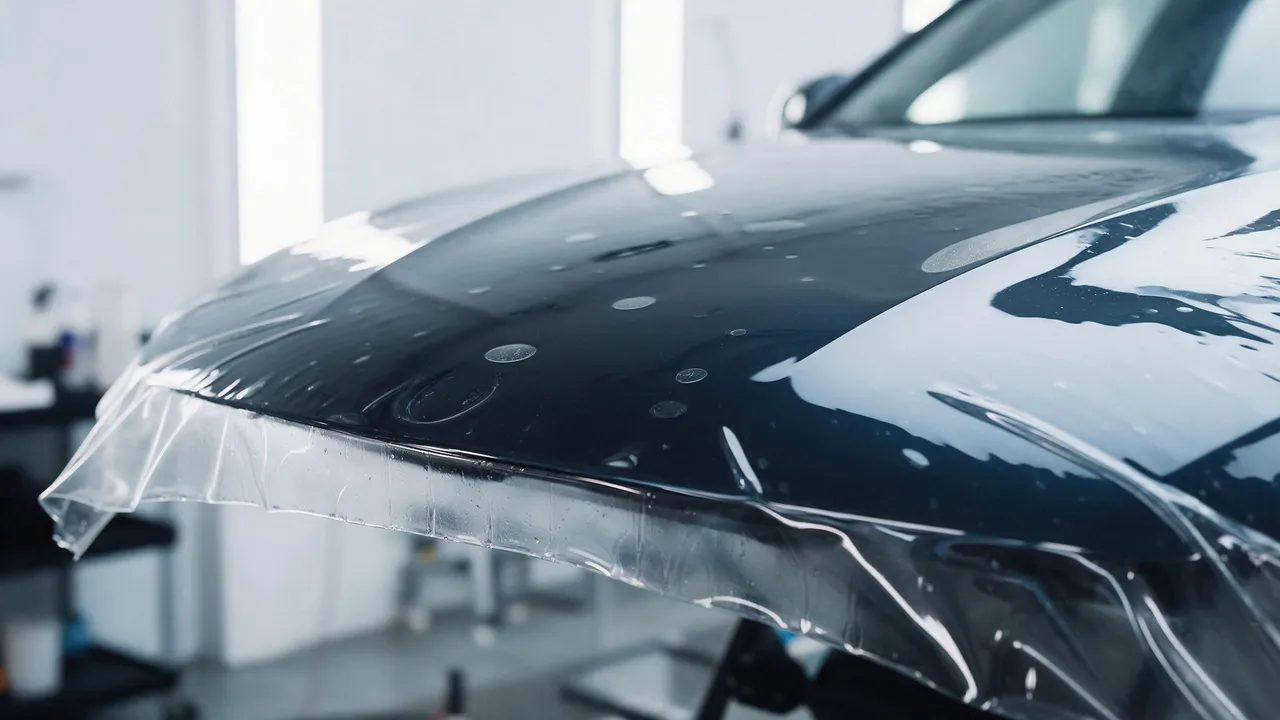
Short answer: Confirm the actual refinish system, curing process and permission to apply PPF with the paint manufacturer or repairer and film supplier. Thickness, moisture or a dry appearance alone cannot prove complete cure or suitability for film.
A repaired panel can present compatibility or curing questions, but a later bubble does not automatically exclude a film, adhesive or installation issue. Paint may retain volatile material, depending on the system and process. Investigate the complete film–paint system rather than assigning fault from the repair history alone.
This guide distinguishes source planning intervals from paint-specific approval, explains why bubbles need investigation and describes records to request. It does not define a universal cure test, a safe baking procedure or automatic warranty responsibility.
On this page
- 1. Refinish chemistry and film compatibility
- 2. Investigating possible outgassing
- 3. Source waiting-time examples
- 4. What site checks can establish
- 5. When to pause the job
- 6. Bubbles after installation
- 7. Agreeing requirements with the refinisher
- 8. Keeping the assessment record
- 9. FAQ
- 10. Next steps
Refinish chemistry and film compatibility
Paint drying and curing depend on the exact chemistry and process. Solvent or water loss and chemical reaction are not interchangeable, and not every two-component reaction releases small molecules or residual monomers. A dry-looking surface does not establish the state of every lower layer; request the paint system’s actual criteria.
Film can change transport and interfacial conditions, but no PPF should be assumed completely impermeable from a urethane label alone. Gas or liquid accumulation is one possible cause of separation. The mechanism and relevant timing require evidence from the actual coating, adhesive, film and process.
Investigating possible outgassing
Bubble size, firmness and clustering can be observations, not a conclusive diagnosis. Trapped installation liquid, air, contamination, adhesive effects and paint defects may overlap visually. Do not press or puncture a bubble simply to classify it; use the product’s approved assessment procedure.
A defect appearing days or weeks later does not prove continued paint curing or a fault-free installation. Record onset, location, growth and conditions, then compare with the paint and film records. A written wait is useful evidence but is not proof of readiness by itself.
Bubble count and size alone cannot quantify residual volatile material or show that more open-air waiting is the only remedy. Identify the affected interface and cause before choosing any removal, repair or reapplication. Film or adhesive defects must remain part of the investigation where relevant.
Source waiting-time examples
The following ranges are retained source planning examples, not validated cure schedules or CHISI-approved installation dates. A paint label alone does not determine the interval. Obtain requirements for the exact products, film build, actual curing process and environment.
Use the paint supplier’s readiness criteria for the actual coating system. Record the cure history and check surface condition before installation.
Do not lengthen or shorten these examples by a generic thickness, humidity or oven-setting rule. The paint manufacturer’s documented process and the film’s compatibility requirements control the decision. A source interval is not permission to alter a paint curing schedule.
What site checks can establish
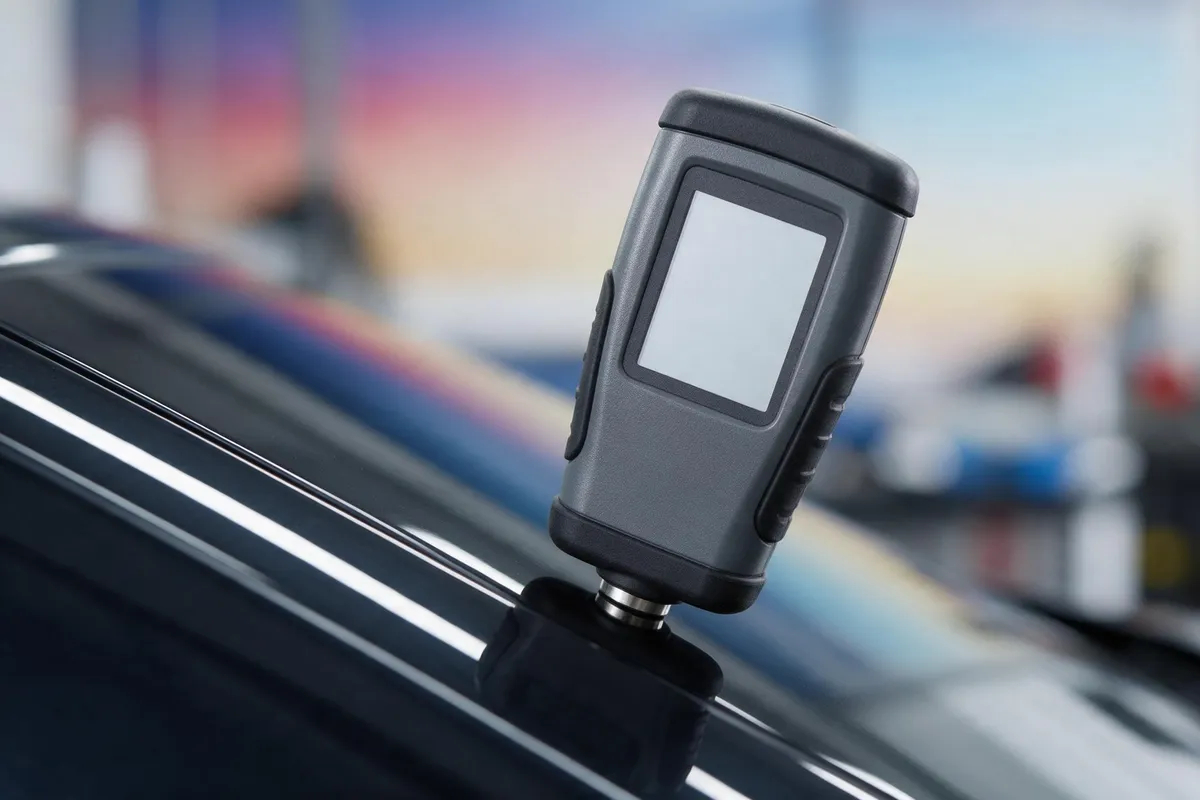
Process records, thickness and surface observations provide different information. None alone turns an uncertain panel into an approved one. Use only measurements and acceptance criteria appropriate to the actual paint system, and distinguish surface temperature or moisture from chemical cure.
| Check | Information or method to confirm | Limits of interpretation |
|---|---|---|
| Curing-process record | Request the actual paint products and recorded process | A compliant record supports assessment; it is not a universal standalone cure test |
| Dry film thickness (DFT) | Use an appropriate calibrated gauge and defined locations | Compare the specified build; matching OEM thickness does not prove cure |
| Surface temperature | Confirm a suitable thermometer and measurement method | Use the paint supplier’s readiness criteria for the actual coating system. Record the cure history and check surface condition before installation. |
| Any specified solvent or moisture assessment | Use only a paint-approved method with defined interpretation | No universal tape or moisture-meter test proves complete paint cure |
| Visual inspection | Use suitable lighting and inspect the relevant areas | Record haze, defects and changes; a clear appearance is not proof of cure |
| Refinisher’s assessment | Record the paint-specific advice and its scope | Written agreement documents the decision, not an automatic performance guarantee |
A DFT gauge measures build, not solvent content or degree of cure. An unusual value requires investigation against the actual coating specification; it does not itself predict a longer wait. Combine appropriate records and assessments without calling the set a universal proof of readiness.
When to pause the job
Pause when paint identity, curing history or compatibility is unresolved, or when visible damage needs specialist assessment. A recent respray, non-OEM identity, missing insurance or a one-day request does not alone establish a chemical cause or assign liability. Resolve the actual requirements before agreeing installation.
Document unresolved checks and discuss the next assessment with the customer and refinisher. Do not promise a fixed installation date before the requirements are established. A planned appointment can remain conditional on the paint and film criteria being met.
Bubbles after installation
Record the bubble’s position, timing and change before intervention. Repair history is relevant but does not establish the cause. Follow the film and paint assessment process and avoid piercing, lifting or heating as a routine diagnostic step.
Use the paint supplier’s readiness criteria for the actual coating system. Record the cure history and check surface condition before installation.
Photographs, dates and records support an investigation but do not automatically determine its outcome. Consider the actual failure interface, material and installation evidence. For the bond background, see PPF adhesive science.
Agreeing requirements with the refinisher
Request the paint products, approved curing schedule and relevant actual process records. Oven settings and panel temperature are different quantities.
Coordinate repair and film application early, with responsibilities and unresolved requirements documented. An agreed date may be conditional on the specified checks. A written interval alone does not prove finished cure or guarantee warranty coverage.
Keeping the assessment record
Keep the paint and cure records, suitable site measurements, film identity and installation date. They help assess readiness and later defects, but a bubble can involve more than an early application. A missing record is not itself proof of cause, fault or a rejected claim.
Record the film model, batch and applicable data-sheet revision along with the paint-specific requirements. Confirm any restrictions rather than inferring one maximum substrate condition for every product. For the installation framework, see PPF installation guidance.
Frequently asked questions
How long should I wait after a respray?
Confirm the exact paint system, actual curing process and film requirements with the responsible suppliers. Neither the system label nor elapsed time alone proves readiness.
Can heat shorten the waiting period?
Only the paint manufacturer or qualified refinisher should determine the permitted curing process. Do not improvise heating, baking under film or a shorter wait from this article. Whether a controlled cycle changes readiness depends on the exact coating and process, not a generic low-bake label.
How can possible outgassing be identified?
Record the timing, location and evolution, then investigate with the paint and film records and an approved assessment. Firmness, clustering or delayed onset alone does not distinguish gas from liquid, contamination, adhesive or coating defects. Do not classify responsibility from appearance alone.
What can a DFT gauge contribute?
A suitable calibrated gauge can document coating thickness within its substrate and measurement limits. It does not directly measure cure or residual solvent, and a value matching surrounding paint is not proof of readiness. Select any other test only under the actual paint system’s approved method.
What if the customer wants an earlier installation?
Explain the unresolved requirements and document a conditional plan or postponement. Do not promise a safe date before the relevant suppliers confirm the conditions. Commercial urgency does not replace paint and film compatibility evidence, and no defect outcome should be predicted without assessment.
Does fresh paint affect film warranty coverage?
Assess the exact model, applicable terms and evidence. Fresh paint or an early date alone does not decide coverage or assign the cause to curing. Keep the paint and installation records and distinguish product, paint and application issues. See the PPF warranty program.
Can I pierce a suspected outgassing bubble?
Do not use piercing as a generic diagnosis or repair. It alters the film and may affect the underlying surface or evidence. Have the cause assessed and use only a method expressly permitted for the exact product and paint. Stability for a few weeks does not by itself authorize piercing, removal or rewrapping.
Do factory-painted panels need assessment too?
Yes. Confirm the actual surface condition, repair or detailing history and film requirements. A factory-paint identity does not prove an untouched, uncontaminated or defect-free surface. Do not apply a refinish waiting-time example automatically to OEM paint, or assume OEM paint needs no preparation.
Next steps
Establish paint identity, documented process and film compatibility before setting an installation plan. Use measurements for what they actually show and keep unresolved items visible. These steps support a reasoned decision; they do not certify all repainted panels or guarantee the absence of post-install bubbles.
For broader installation planning, see PPF installation guidance and for the interface background, PPF adhesive science. For later film care, see PPF care and maintenance; for model-specific warranty terms, see the PPF warranty program. To discuss the paint and film requirements for your project, contact our team.