
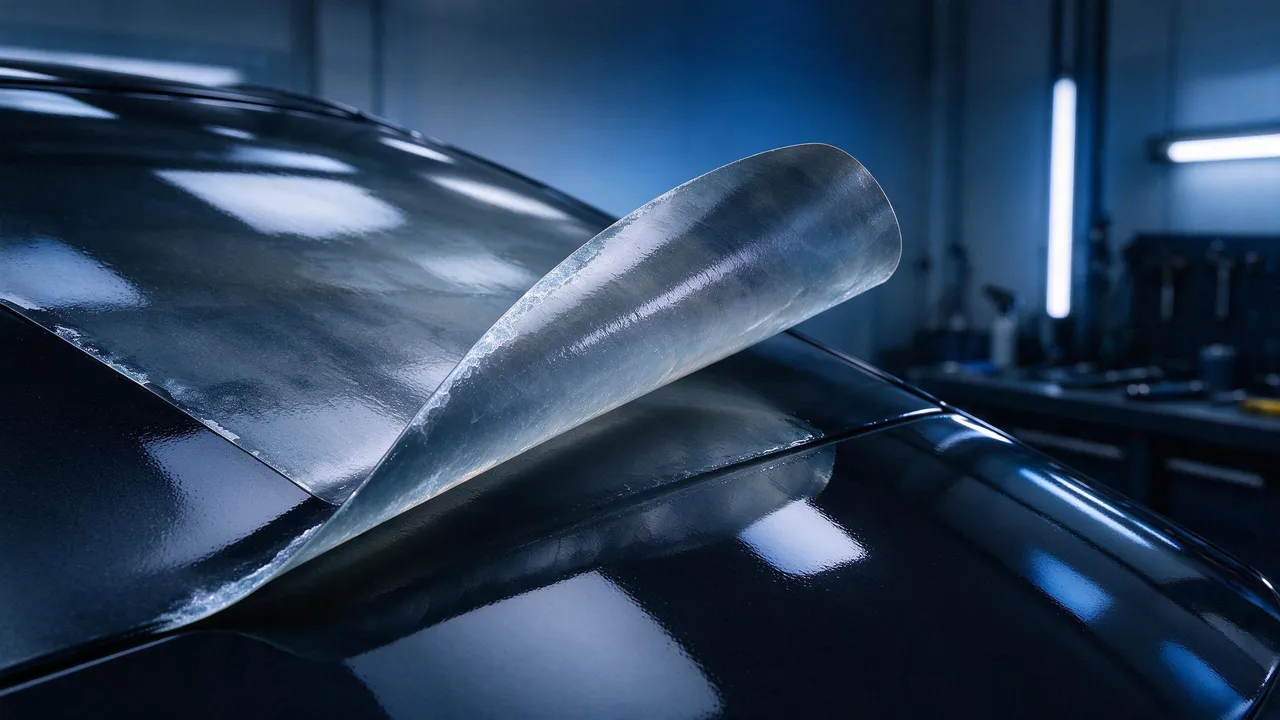
Short answer: Decide between rework and replacement by the observed defect, the film’s limits, the approved method and the full job cost. An intact surface may be a candidate for assessment, while damaged film, paint or an incorrect cut can require a different response. This matrix is a discussion aid, not authorization for a universal repair technique.
A defect often has to be assessed while a vehicle occupies the bay and the customer awaits a plan. Avoid an improvised fix: a repair attempt can add labor, disturb nearby film or still require replacement. Written decision criteria make the reasoning easier to review and communicate.
This guide compares labor, material, the risk of repeat work and customer communication. Its numerical costs and success rates are source planning examples, not verified CHISI results or industry benchmarks. Use actual product guidance and job records to adapt the matrix and re-inspection process.
On this page
Cost and risk behind the decision
Comparing only the first-pass labor with replacement labor and film misses the possibility of a return visit. Include the likely work scope, any additional material and the consequences if the initial attempt does not meet the agreed criteria.
These are hypothetical inputs, not measured probabilities. A meaningful expected-cost comparison needs your own evidence and the complete cost of repeat work.
Clear communication and recorded findings support the customer relationship, but do not guarantee trust or a claim outcome. Related claim-process planning is covered in PPF warranty programs. For the installation workflow, see PPF installation practices.
Candidates for rework assessment
Local inclusions or edge movement may be assessed for rework only when the product guidance permits it and the film and paint condition are understood.
For a bubble, moisture pocket or adhesive pattern, first confirm the condition, cure stage and approved response. Perforation, squeegee pressure and heating are product-specific operations and can affect the film; they are not automatically appropriate for every isolated mark.
The key question is whether an approved process can meet the agreed specification without further damage. Do not assume a physical change is reversible simply because the surface looks intact. Related edge considerations are discussed in PPF edge wrapping and relief cuts, where the product-specific limits still apply.
When to assess replacement
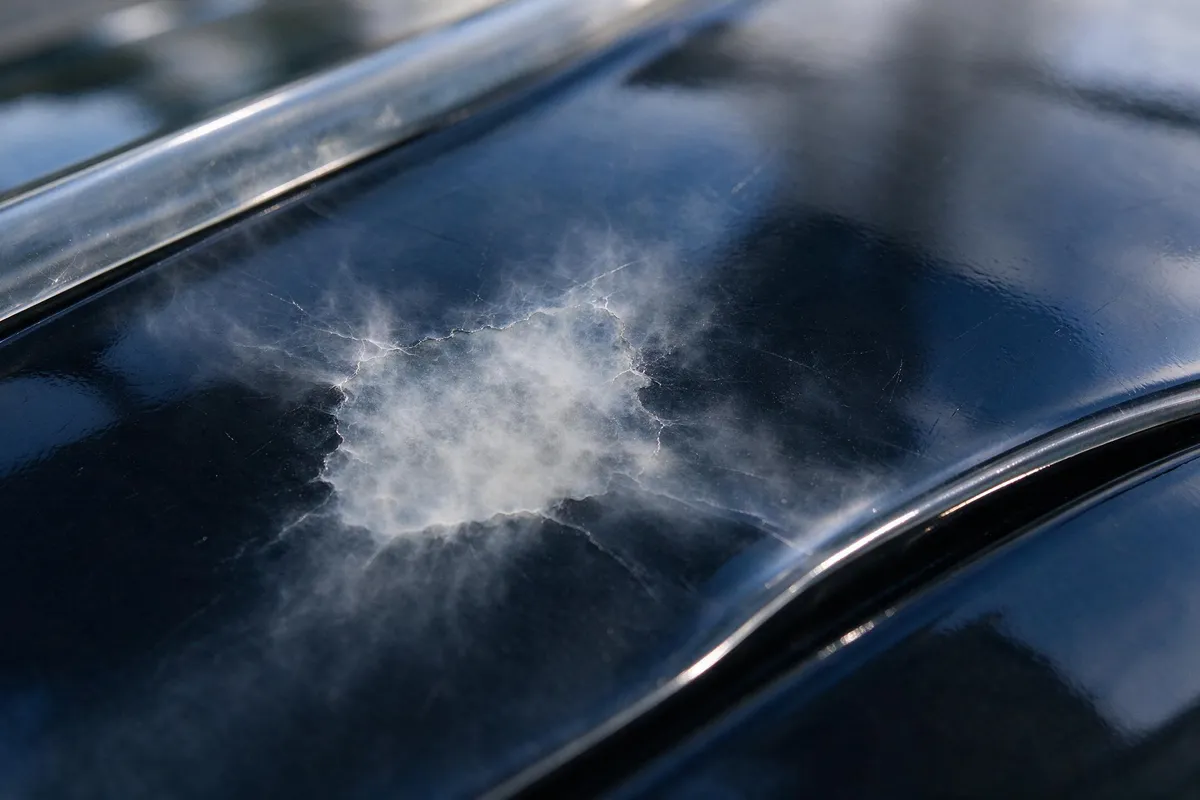
A breached top coat, severe deformation or suspected film damage requires assessment against the product’s limits. Do not assume heating or polishing will restore the intended construction. Replacement may be necessary, but the observed mark alone does not prove a particular thinning or failure mechanism.
Assess geometry errors and contamination separately from the painted substrate. A new film section may address coverage or film defects, but it does not repair a cut in the paint. Stop and agree on the appropriate response to substrate damage before further film work.
When recovery cannot be demonstrated under an approved method, reassess the plan rather than repeating an uncertain fix. Define the acceptance criteria and the point at which work stops for supplier or specialist review.
Decision matrix
Use the table as an assessment aid, not an automatic instruction. Record the observed condition, applicable product guidance and reason for the selected action. The same defect label can require a different response on another construction or painted surface.
| Observed defect | Condition to check | Response to assess |
|---|---|---|
| Small dust inclusions | Film condition and agreed acceptance criterion | Assess approved rework; no general blade or heat instruction |
| Edge rebound | Adhesive, edge cleanliness and paint condition | Confirm product-specific rework or replacement |
| Moisture pocket | Size, cure stage and surrounding film | Confirm approved response; do not assume perforation is permitted |
| Stretch whitening | Visible mark on a formed radius; cause to investigate | Assess replacement and forming conditions |
| Scratch through the top coat | Breach confirmed | Assess replacement under product guidance |
| Cut error | Coverage deviation or paint damage; assess separately | Confirm film correction and a separate paint-damage response |
| Contamination within the construction | Location and construction confirmed | Assess replacement; surface work may not reach the issue |
Cost-comparison example
These are illustrative accounting choices, not recommended charges or current prices. Compare the complete work scope for each option, including material use, repeat work and inspection; replacement is not automatically predictable or risk-free.
Build the estimate from current product quotations, equipment and labor costs, material waste and the costs for your shipping route.
Record the defect, film, paint condition, procedure and outcome. Review comparable jobs at an agreed interval to decide when rework or replacement is the better choice.
Customer communication
Explain what was observed, what each option can reasonably achieve and what remains uncertain. Honest communication supports an informed discussion, but there is no universal monetary value for trust or guaranteed effect on repeat business.
Do not infer what every customer will accept. Discuss availability, transport needs and the product-approved options before agreeing on a realistic plan.
Record the decision, assumptions, uncertainty and information shared with the customer. Keep the record factual and follow the applicable product terms.
Re-inspection
Recheck the worked area and nearby film against the same documented acceptance criteria and comparable lighting. Confirm whether the original issue is resolved and whether a new mark, crease, edge movement or coverage problem was introduced. Do not close the work solely because the tools have been put away.
| Recheck item | Method | Acceptance condition to confirm |
|---|---|---|
| Original issue | Comparable lighting and close inspection | Meets the agreed product and job criterion |
| Nearby film | Build the estimate from current product quotations, equipment and labor costs, material waste and the costs for your shipping route. | No new crease, lift or texture outside the agreed criteria |
| Edge condition | Visual check under the agreed method without disturbing the film | No new gap or other issue introduced |
| Photo record | Add dated recheck images and observations | Before-and-after records linked to the job |
Recheck photos and notes document what was observed; they do not prove long-term stability by themselves. Keep any follow-up plan and applicable care requirements with the record. Related customer guidance is in PPF care and maintenance ; use the guidance for the exact film and method rather than a universal waiting period.
Frequently asked questions
Is rework always less expensive?
No single answer applies to every job. Compare the approved work scope, actual material and labor, risk of repeat work and customer arrangements.
Can heat remove stretch whitening?
Do not assume it will recover. Confirm the observed condition, product limits and permitted response with the supplier. Damaged film may require replacement; the appearance alone does not prove that low temperature or a particular amount of thinning caused it.
Should a moisture pocket be perforated?
Not as a general rule. Confirm whether it is moisture, air or another issue, the cure stage and the manufacturer-approved method. Piercing can damage the film; recurring pockets require investigation, not an automatic diagnosis of the substrate or installation fluid.
Does who pays change the technical assessment?
The film’s limits and acceptable work methods still apply. Explain the available options, costs and uncertainty, and record the customer’s decision where relevant. An agreement does not itself establish repair suitability, warranty coverage or legal rights.
How should success rates be tracked?
Record defect category, product, method, result and follow-up period for each attempt. Do not use an undefined warranty window or copied industry average as proof.
What if recovery is uncertain?
Pause and review the defect, film and substrate with the appropriate technical contact. Replacement may be an option, but it is not automatically cheaper or suitable. Agree on a plan that meets product guidance and addresses any paint or substrate damage separately.
What if nearby film or an edge is disturbed?
Record the new finding and reassess the work scope before release. Check the affected and surrounding areas against the agreed criteria, then confirm an approved further action or replacement if needed. Do not mark the job complete while a new issue remains unresolved.
What should the decision record include?
Record the observed condition, options considered, cost assumptions, uncertainty, product guidance and information given to the customer. Keep technical acceptance and warranty or legal determinations separate; the record supports review but does not guarantee a dispute outcome.
A documented decision process
A matrix, a cost model with clear assumptions and a documented recheck make decisions easier to follow. Evaluate the process using actual outcomes and update it when the product or method changes; none of these tools guarantees that borderline work will never return.
See the linked warranty guidance for the claim process. To review this matrix against a selected film’s limits, contact our team.